August 2, 2010

The Wilhelm scream is a frequently-used film and television stock sound effect first used in 1951 for the film Distant Drums. The effect gained new popularity after it was used in Star Wars and many other blockbuster films as well as television programs and video games. The scream is often used when someone is either pierced with an arrow, falling to their death from a great height or because of an explosion.
The sound is named for Private Wilhelm, a character in The Charge at Feather River, a 1953 western in which the character is shot with an arrow. This was believed to be the second movie to use the sound effect and its first use from the Warner Brothers stock sound library.
Posted in Art |
Leave a Comment »
August 2, 2010

Omphaloskepsis [om-fuh-loh-skep-sis] is the contemplation of one’s navel as an aid to meditation. It can also be used as a pejorative referring to excessive introspection, self-absorption, or concentration on a single issue. This criticism is also often leveled at professions which are interested in themselves (e.g. movies about Hollywood or television shows about television writers). The word has several other forms, such as omphalism used to describe the spiritual practice; omphaloskeptic or omphaloskeptical, for someone who engages in navel-gazing; and omphalocentric meaning to be in a self-absorbed state.
Posted in Language, Philosophy |
Leave a Comment »
August 2, 2010
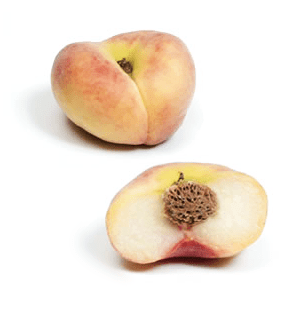
Saturn peaches are a variety of peach with white flesh and a flat shape first introduced into the U.S. from China in 1869. They are smaller and sweeter than most peach varieties. They are known by many other names, including doughnut peach, paraguayo peach, pan tao peach, and saucer peach.
Posted in Food |
Leave a Comment »
August 2, 2010

Manhattanhenge (sometimes referred to as the Manhattan Solstice) is a semiannual occurrence in which the setting sun aligns with the east–west streets of the main street grid in the borough of Manhattan in New York City. The term is derived from Stonehenge, at which the sun aligns with the stones on the solstices. It was coined in 2002 by Neil deGrasse Tyson, an astrophysicist at the American Museum of Natural History. It applies to those streets that follow the Commissioners’ Plan of 1811, which laid out a grid offset 28.9 degrees from true east–west.
The same phenomenon occurs in other cities with a uniform street grid. In Toronto, Ontario, Canada, for instance, the setting sun lines up with the east–west streets on October 25 and Feb 16, a phenomenon known locally as Torontohenge. In Chicago, Illinois, the sun lines up with the grid system on September 25, a phenomenon known similarly as Chicagohenge.
Posted in Science |
Leave a Comment »
August 2, 2010

BigDog is a dynamically stable quadruped robot created in 2005 by Boston Dynamics with Foster-Miller, the NASA Jet Propulsion Laboratory, and the Harvard University Concord Field Station. BigDog is 3 feet long, stands 2.5 feet tall, and weighs 240 pounds, about the size of a small mule. It is capable of traversing difficult terrain at 4 miles per hour, carrying 340 pounds, and climbing a 35 degree incline. Locomotion is controlled by an onboard computer that receives input from the robot’s various sensors. Navigation and balance are also managed by the control system.
Posted in Technology |
Leave a Comment »
August 1, 2010

A hypnic jerk, sleep start, or kick is an involuntary muscle twitch which occurs during hypnagogia, just as a person is beginning to fall asleep. Physically, hypnic jerks resemble the jump made when a person is startled, often accompanied by a falling sensation. It is commonly caused by irregular sleep schedules.
Posted in Health, Science |
Leave a Comment »
August 1, 2010

Kombucha [kawm-boo-chah] is a fermented tea that is often drunk for medicinal purposes. There is limited scientific information supporting any health benefit and few studies are being conducted. Kombucha is available commercially and can be made at home by fermenting tea using a visible, solid mass of yeast and bacteria which forms the kombucha culture which is often referred to as the ‘mushroom’ or the ‘mother.’
The recorded history of kombucha began in Russia during the late 19th century. In Chinese, kombucha is called hongchajun (red tea fungus). In Japanese, the drink is known as kōcha kinoko (black tea mushroom). Some promotional kombucha sources propagate the legend that this tea-based beverage originated in ancient China or Japan centuries prior to knowledge of leaf-based teas. There is little historical evidence to support this claim.
Posted in Food, Health |
Leave a Comment »
August 1, 2010
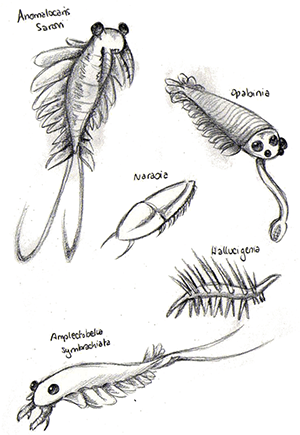
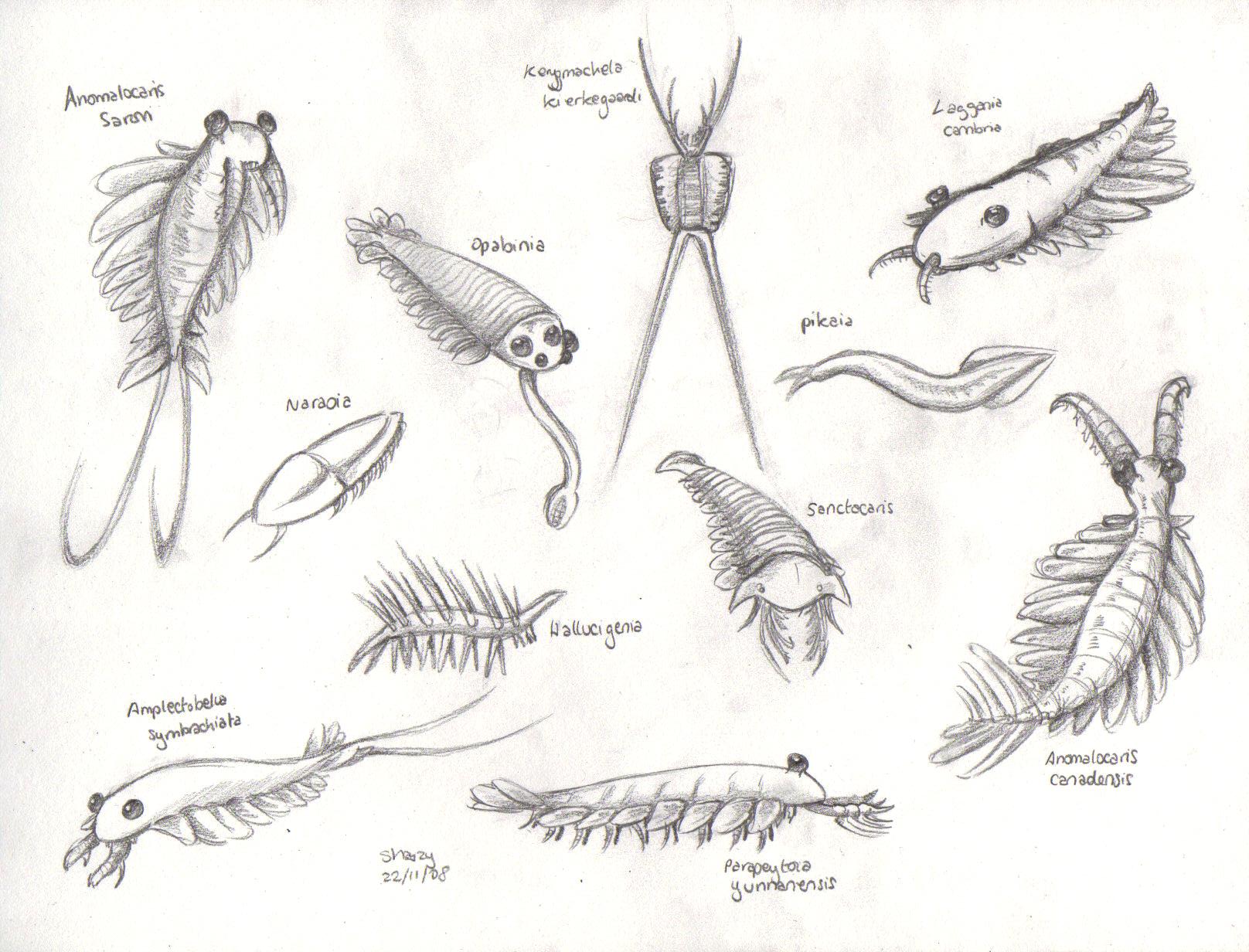
The Cambrian [kam-bree-uhn] explosion or Cambrian radiation was the relatively rapid appearance, over a period of many million years, of most major groups of complex animals around 530 million years ago, as found in the fossil record. Before about 580 million years ago, most organisms were simple, composed of individual cells occasionally organized into colonies. Over the following 70 or 80 million years the rate of evolution accelerated by an order of magnitude (as defined in terms of the extinction and origination rate of species) and the diversity of life began to resemble today’s.
The long-running puzzlement about the appearance of the Cambrian fauna, seemingly abruptly and from nowhere, centers on three key points: whether there really was a mass diversification of complex organisms over a relatively short period of time during the early Cambrian; what might have caused such rapid change; and what it would imply about the origin and evolution of animals. Interpretation is difficult due to a limited supply of evidence, based mainly on an incomplete fossil record and chemical signatures left in Cambrian rocks.
Posted in Science |
Leave a Comment »
August 1, 2010
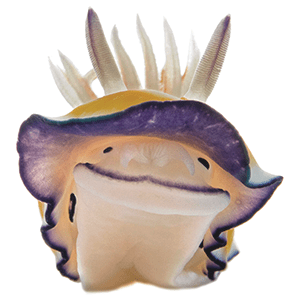
A nudibranch [noo-duh-brangk] is a marine mollusk which sheds its shell after the larval stage. They are noted for their often extraordinary colors and striking forms. More than 3,000 different species have been identified. The word ‘nudibranch’ comes from the Latin ‘nudus’ (‘naked’) and the Greek ‘brankhia’ (‘gills’).
Nudibranchs are often casually called sea slugs, but many sea slugs belong to several taxonomic groups which are not closely related to nudibranchs. A number of these other sea slugs (such as the colorful Aglajidae) are often confused with nudibranchs. Nudibranchs are found worldwide, at virtually all depths of salt water, but reach their greatest size and variation in warm, shallow waters.
read more »
Posted in Science |
Leave a Comment »
August 1, 2010
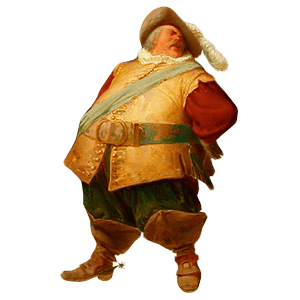
Sir John Falstaff is a fictional character who appears in three plays by William Shakespeare as a companion to Prince Hal, the future King Henry V. A fat, vainglorious, and cowardly knight, Falstaff leads the apparently wayward Prince Hal into trouble, and is ultimately repudiated after Hal becomes king. To describe someone as falstaffian is to say they are characterized by joviality and conviviality.
Posted in Art, Humor, Language |
Leave a Comment »
August 1, 2010

The Macondo Prospect (Mississippi Canyon Block 252, abbreviated MC252) is an oil and gas prospect in the United States Exclusive Economic Zone of the Gulf of Mexico, off the coast of Louisiana. The prospect was the site of the Deepwater Horizon drilling rig explosion in April 2010 that led to a major oil spill in the region.
The name Macondo is the same name as the fictitious cursed town in the novel ‘One Hundred Years of Solitude’ by Colombian nobel-prize winning writer Gabriel Garcia Marquez. Oil companies routinely assign code names to offshore prospects early in the exploration effort. This practice helps ensure secrecy during the confidential pre-sale phase, and later provides convenient names for casual reference rather than the often similar-sounding official lease names. Names in a given year or area might follow a theme such as beverages (e.g., Cognac), heavenly bodies (e.g., Mars), or even cartoon characters (e.g., Bullwinkle), but usually have no geological or geographical significance to the prospect itself.
Posted in Money, Technology |
Leave a Comment »
August 1, 2010
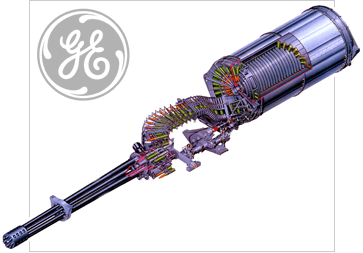
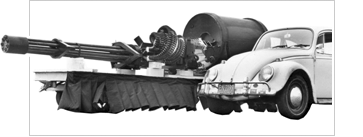
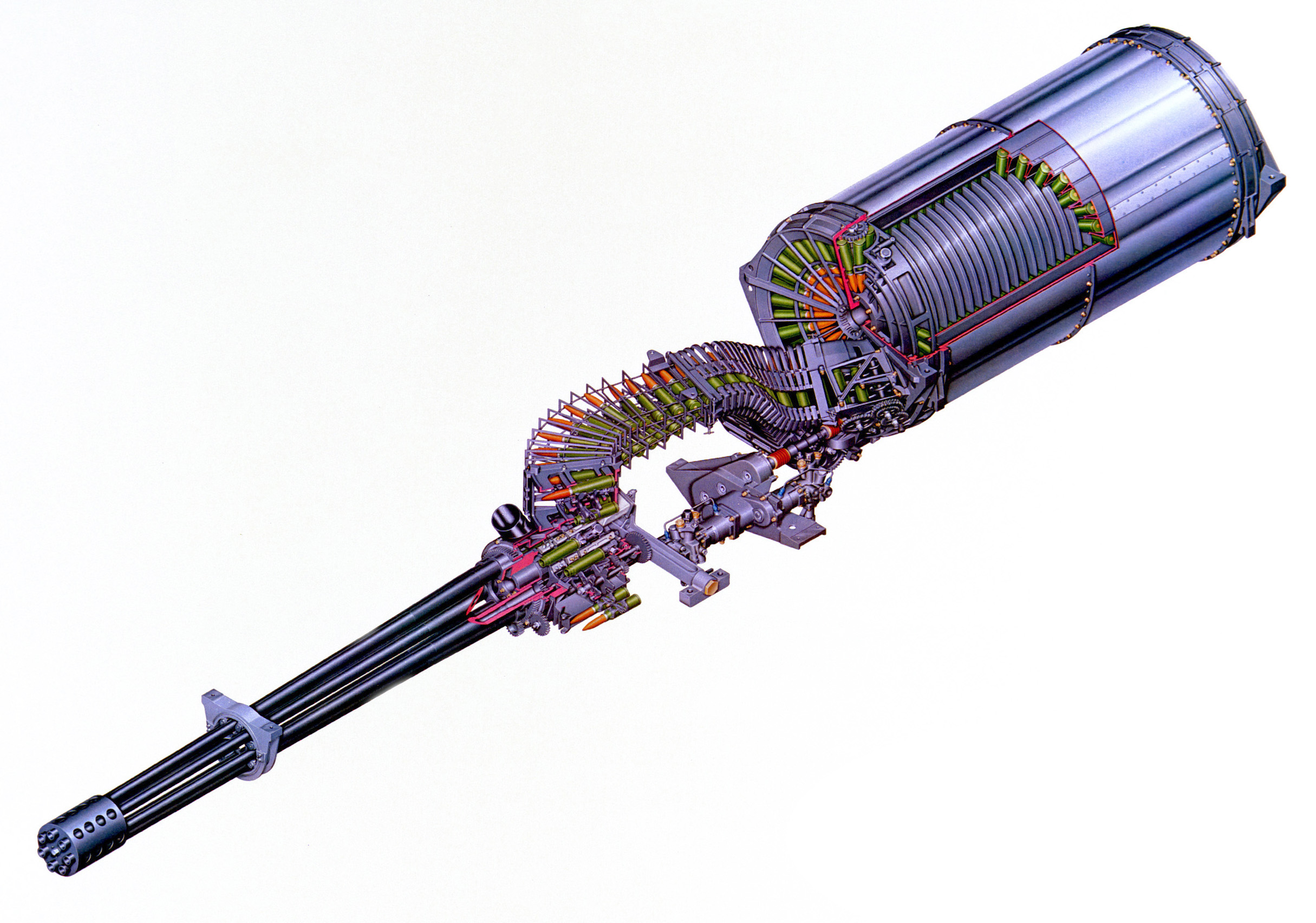
The General Electric GAU-8/A Avenger is a 30 mm, hydraulically-driven seven-barrel Gatling-type rotary cannon that is mounted on the United States Air Force’s A-10 Thunderbolt II. It is among the largest, heaviest and most powerful aircraft cannons in the United States military. Designed specifically for the anti-tank role, the Avenger delivers very powerful rounds at a high rate of fire, 3900 rounds per minute.
It was designed for the A-10 ‘Warthog’ ground attack aircraft. The entire GAU-8 assembly represents about 16% of the A-10 aircraft’s unladen weight. The recoil force of the gun is 10,000 pounds-force, which is slightly more than the output of one of the A-10’s two engines. While this recoil force is significant, in practice cannon fire only slows the aircraft a few miles per hour.
Posted in Technology, War |
Leave a Comment »






 The Daily Omnivore