September 28, 2026
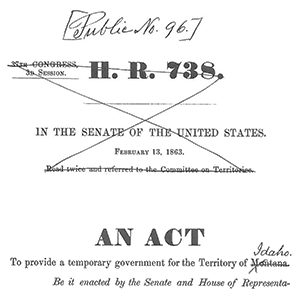
In the early 1860s, when the U.S. Congress was considering organizing a new territory around Pikes Peak in the Rocky Mountains, the name ‘Idaho‘ was popular among the Congressional committee, as they believed it to be derived from a Shoshone term meaning ‘gem of the mountains.’
Realizing in January 1861 the name was quite possibly a fabrication and not Native American at all, the U.S. Congress ultimately decided to name the area Colorado Territory when it was created. But, by the time this decision was made in February 1861, the town of Idaho Springs, Colorado had already been named after their early frontrunner for a name, Idaho. In 1863, the Territory of Idaho was formed, though ‘Montana’ was nearly its name.
read more »
Posted in Language, Politics |
Leave a Comment »
July 13, 2026

Grafton is a town in Grafton County, New Hampshire, United States. The population was 1,385 at the 2020 census. In 2004, Grafton became the focus for libertarians as part of the Free Town Project (a single-town version of the Free State Project). Grafton’s appeal as a favorable destination was due to its absence of zoning laws and a then-low property tax rate. John Babiarz, a Grafton resident and prominent member of the Libertarian Party, encouraged libertarian people to move there.
During this time, the town’s population grew by about 200 people (about 20%); nearly all of the newcomers were men. Project participants did not find themselves as welcome as they had hoped, but they voted in changes including a 30% reduction in the town’s already small budget. This resulted in eliminating funding to the county’s senior-citizens council, town offices going unheated during the winter, poorly maintained roads filled with potholes, and the Grafton Police Department being reduced to one officer (the police chief), who said he was unable to answer calls for service as the town had no money to repair the one police vehicle left.
read more »
Posted in Politics |
Leave a Comment »
July 6, 2026

In legal parlance, a peppercorn is a metaphor for a very small cash payment or other nominal consideration, used to satisfy the requirements for the creation of a legal contract. It is featured in ‘Chappell & Co Ltd v Nestle Co Ltd’ (1960), an important English contract law case where the House of Lords stated that ‘a peppercorn does not cease to be good consideration if it is established that the promisee does not like pepper and will throw away the corn.’ However, the cited passage is mere dicta, and not the basis for the decision.
In English law, and other countries with similar common law systems, a binding legal contract requires that each party must provide consideration. In other words, each party will give something of value to the other party for the contract to be considered binding. The situation is different under contracts within civil law jurisdictions because such nominal consideration can be categorized as a disguised gift.
read more »
Posted in Money, Politics |
Leave a Comment »
June 22, 2026

Front running, also known as tailgating, is the practice of entering into an equity (stock) trade, option, futures contract, derivative, or security-based swap to capitalize on advance, nonpublic knowledge of a large (‘block’) pending transaction that will influence the price of the underlying security.
In essence, it means the use of knowledge of an impending trade to engage in a personal or proprietary securities transaction in advance of that trade. Front running is considered a form of market manipulation in many markets.
read more »
Posted in Money, Politics |
Leave a Comment »
June 12, 2026
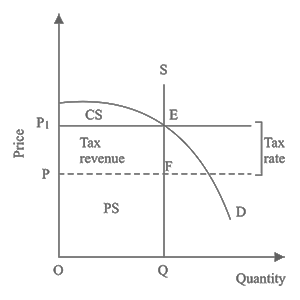
Georgism is a way of thinking about economics and land use. It is based on the ideas of Henry George, an American economist and social philosopher. Georgists believe that people should have equal access to the benefits of land, which is a natural resource. They argue that the value of land comes from the community, and that this value should therefore be shared equally among all members of society.
Georgism proposes a system of taxation that is based on the value of land. This is called a “land value tax” or “single tax.” The idea is that people should pay a tax on the value of the land they own, but not on any improvements they make to the land. This would discourage land speculation and encourage the efficient use of land. Georgists believe that this would also promote social justice, by reducing inequality and poverty.
read more »
Posted in Money, Politics |
Leave a Comment »
June 6, 2026

In accounting, a slush fund is a monetary fund or account used for miscellaneous income and expenses, particularly when these are corrupt or illegal. Such funds may be kept hidden and maintained separately from money that is used for legitimate purposes. Slush funds may be employed by government or corporate officials in efforts to pay influential people discreetly in return for preferential treatment, advance information (such as non-public information in financial transactions), and other services.
‘Slush fund’ was originally a nautical term for the cash that a ship’s crew raised by selling fat (slush) scraped from cooking pots to tallow makers. This cash was kept separate from the ship’s accounts and used to make small purchases for the crew.
read more »
Posted in Money, Politics |
1 Comment »
May 10, 2026

The Full Ginsburg is a term used in American politics to refer to a person who appears on all five American major Sunday morning talk shows on the same day: ‘This Week’ on ABC, ‘Fox News Sunday’ on Fox, ‘Face the Nation’ on CBS, ‘Meet the Press’ on NBC, and ‘State of the Union’ on CNN. ‘State of the Union’ replaced ‘Late Edition’ on CNN in January 2009.
The term is named for William H. Ginsburg, Monica Lewinsky’s lawyer during the sexual conduct scandal involving President Bill Clinton. Ginsburg was the first person to accomplish this feat, on February 1, 1998. Thirty eight people have done it since including Senators, Former Presidents, and Secretaries of State. Jack Lew, John Kerry, Denis McDonough, and Mike Pompeo have done the Full Ginsburg twice. Marco Rubio has done it three times.
read more »
Posted in Politics |
Leave a Comment »
May 1, 2026

In internet culture, chud is a pejorative term for someone with far-right political views. The term is often paired with the Chudjak, a variant of the Wojak (a meme template of a black-outlined cartoon drawing of a bald man with a wistful expression often combined with “that feel”).
Chud is commonly used as an insult in leftist circles but is sometimes employed by the far-right to relate to one another. In non-political cases, it is used to mean a foolish or unpleasant person and is sometimes contrasted with the Chad (ironic alpha) meme.
read more »
Posted in Language, Politics |
Leave a Comment »
April 13, 2026

The Mississippi Miracle is the rapid improvement of K–12 student performance in Mississippi since 2013, widely attributed to a series of policy, curriculum, and pedagogical changes initiated at the state level. The term can also be used to generally refer to improvements in student test scores in other southern states that implemented similar changes, which has also been dubbed the “Southern surge”.
The positive changes followed decades of low academic performance in the state and likely helped minimize some of the negative educational impacts of the COVID-19 pandemic.
read more »
Posted in Education, Politics |
1 Comment »
January 24, 2026

The Highest Court in the Land is the basketball court located on the fifth floor of the United States Supreme Court Building. The Supreme Court of the United States is nicknamed the ‘highest court in the land’ because it is the highest court in the federal judiciary of the United States, and the basketball court is located on a higher floor than the courtroom where the Supreme Court meets, hence the basketball court’s nickname.
While Supreme Court law clerks regularly play on the court, it is less common for the justices to do so. The first justice to play basketball on the court was Byron White, according to fellow justice Sandra Day O’Connor.
read more »
Posted in Games, Politics |
1 Comment »
January 10, 2026

A pig-butchering scam is a type of online fraud where the victim is encouraged to make increasing financial contributions over a long period, usually in the form of cryptocurrency. The term compares the initial phase of gaining the victims’ trust to the fattening of pigs before slaughtering them. Such scams are commonplace on social media and dating apps, and often involve elements of catfishing (using false identities), investment fraud, and romance scams.
The scammer builds trust with the victim through online communication, subsequently persuading them to invest in a fraudulent cryptocurrency scheme. Perpetrators are typically victims of a fraud factory, where they are lured to travel internationally under false pretenses, trafficked to another location, and forced to commit the fraud by organised crime gangs.
read more »
Posted in Money, Politics |
Leave a Comment »
January 1, 2026

A Witness Tree is a tree that was present during a grand historical or cultural event of America. Witness trees are centuries old and are known to be of great importance to the U.S. nation’s history. It is unclear how many witness trees there are, but the ones documented are archived in the Library of Congress through the Witness Tree Protection Program, which was founded in 2006.
The program was initially created to document and identify two dozen historically significant trees in the Washington DC area. The creation of the program came from the discovery of Yoshino cherry trees from the year 1910.
read more »
Posted in Politics, War |
1 Comment »



