September 16, 2010
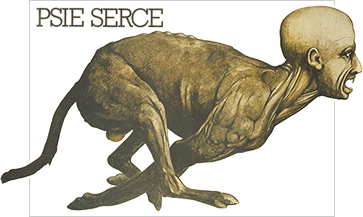

Malchik was a black mongrel stray dog living in Moscow, Russia. For about three years, Malchik lived at the Mendeleyevskaya station on the Moscow Metro. Malchick became a popular station ‘resident’ among rail employees and commuters, and territorially protected the station from drunks and other dogs.
Malchik was killed when a 21-year-old woman Yulia Romanova stabbed him with a kitchen knife. Later it was revealed that Romanova has a long history of cruelty to animals and psychiatric treatment. The incident sparked a wave of public outrage regarding the treatment of animals, and, in 2007, a monument was erected in Malchik’s honor at Mendeleyevskaya station.
Posted in World |
Leave a Comment »
September 16, 2010
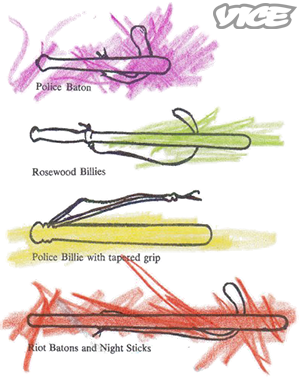
The Anarchist Cookbook, first published in 1971, is a book that contains instructions for the manufacture of explosives, rudimentary telecommunications hacking devices, and other quasi-legal and contraband items.
It was written by William Powell to protest United States involvement in the Vietnam War. Since writing the book, Powell has converted to Anglican Christianity and attempted to have the book removed from circulation.
Posted in Language, Politics, War |
Leave a Comment »
September 16, 2010

Esperanto [es-puh-rahn-toh] is the most widely spoken constructed language. Its name derives from Doktoro Esperanto, the pseudonym under which L. L. Zamenhof published the first book detailing Esperanto, the Unua Libro, in 1887. The word esperanto means ‘one who hopes’ in the language itself. Zamenhof’s goal was to create an easy to learn and politically neutral language that would serve as a universal second language to foster peace and international understanding.
Esperanto has approximately one thousand native speakers, i.e. people who learned Esperanto as one of their native languages from their parents. There is controversy over the number of people who are fluent in Esperanto. Estimates range from 10,000 to as high as two million. The users are spread in about 115 countries. Although no country has adopted the language officially, Esperanto was officially recognized by UNESCO in 1954, and is also the language of instruction in one university, the Akademio Internacia de la Sciencoj in San Marino.
Posted in Language, World |
1 Comment »
September 16, 2010


Pass the Pigs is a commercial version of the dice game, Pig, which is a folk game commonly used to teach probability concepts. Each turn involves one player throwing two model pigs, each of which has a dot on one side only. The player will have points either given or taken away, based on the way the pigs land.
For example, a ‘double trotter’ (both pigs standing upright) is worth 40 points. A ‘pig out’ (both pigs lying on their sides, one spot showing) resets the score for that turn to 0 and ends a turn. If both pigs are ‘makin’ bacon’ (touching) the player’s total score is rest. Each turn lasts until the player throwing either rolls the pigs in a way that wipes out their current turn score or decides to stop their turn, add their turn score to their total score and pass the pigs to the next player. The winner is the first player to score a total of 100.
Posted in Games |
Leave a Comment »
September 15, 2010

Smegma [smeg-muh] (Greek for ‘soap’), sometimes described as a ‘cheesy substance,’ is a combination of exfoliated (shed) epithelial cells, transudated skin oils, and moisture. It occurs in both female and male mammalian genitalia. In human females, it collects around the clitoris and in the folds of the labia minora.
In human males, smegma is produced and can collect under the foreskin. In healthy animals, smegma helps clean and lubricate the genitals. In veterinary medicine, analysis of this smegma is sometimes used for detection of urogenital tract pathogens.
Posted in Health, Language |
Leave a Comment »
September 14, 2010

For the Love of God is a sculpture by English artist Damien Hirst produced in 2007. It consists of a platinum cast of a human skull encrusted with 8,601 flawless diamonds, which weigh over 1,106.18 carats in total, including a pear-shaped pink diamond located in the forehead. Costing £14 million to produce, the work went on display at the White Cube gallery in London in an exhibition called ‘Beyond Belief’ with an asking price of £50 million. The work’s title was supposedly inspired by Hirst’s mother, who once asked, ‘For the love of God, what are you going to do next?’
Hirst said that the work was sold on August, 30 2007, for £50 million, to an anonymous consortium. Christina Ruiz, editor of The Art Newspaper, claims that Hirst had failed to find a buyer and had been trying to offload the skull for £38 million. Immediately after these allegations were made, Hirst claimed he had sold it for the full asking price, in cash, leaving no paper trail. The consortium that bought the piece included Hirst himself. Art critic David Lee commented, ‘Everyone in the art world knows Hirst hasn’t sold the skull. It’s clearly just an elaborate ruse to drum up publicity and rewrite the book value of all his other work.’
Posted in Art, Money |
Leave a Comment »
September 14, 2010

In psychology, the term jamais vu (from the French, meaning ‘never seen’) is used to describe any familiar situation which is not recognized by the observer. Often described as the opposite of déjà vu, jamais vu involves a sense of eeriness and the observer’s impression of seeing the situation for the first time, despite rationally knowing that he or she has been in the situation before. It is linked to the linguistic concept of semantic satiation (a cognitive phenomenon in which repetition causes a word or phrase to temporarily lose meaning for the listener).
Posted in Language, Science |
Leave a Comment »
September 14, 2010

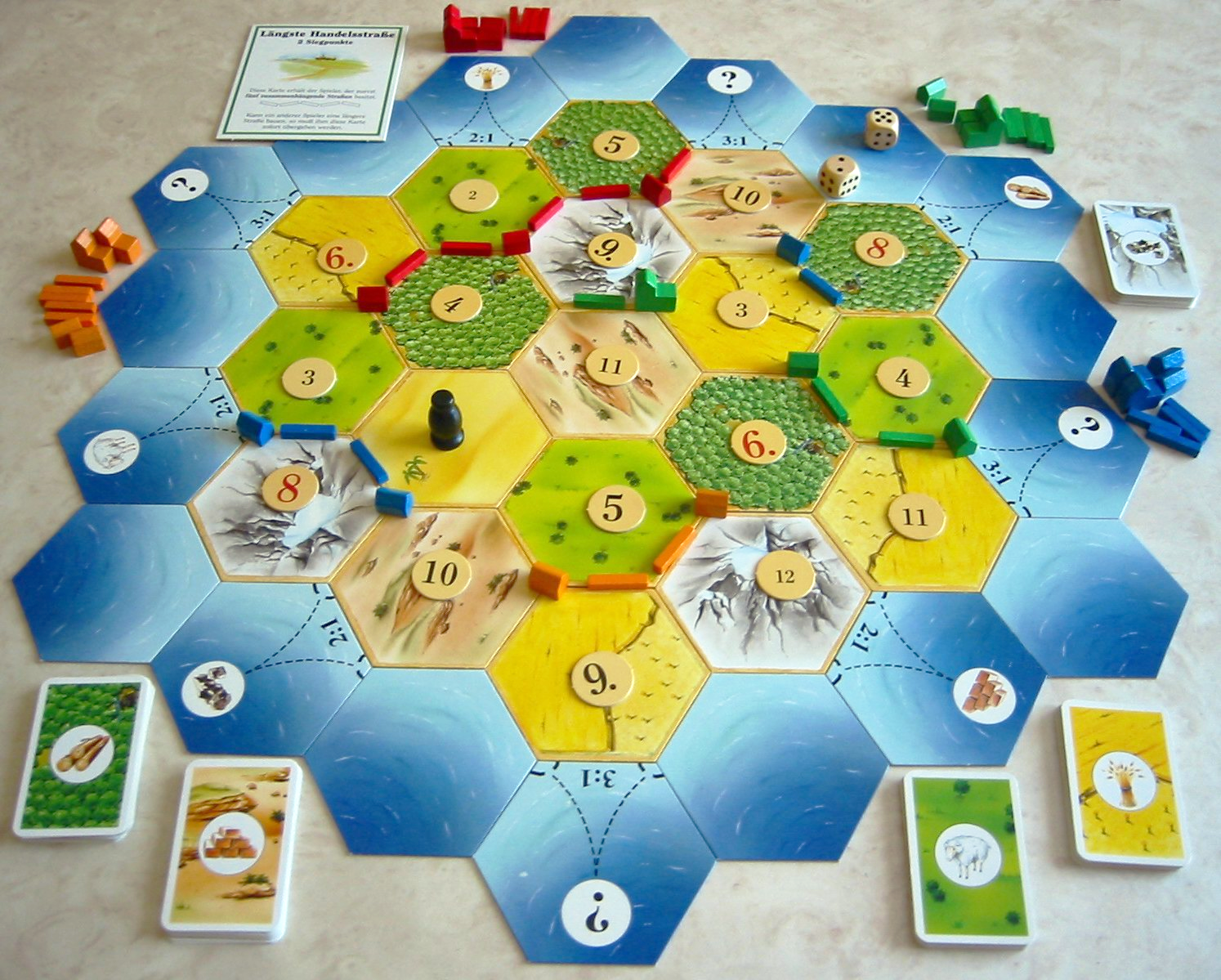
The Settlers of Catan is a board game designed by Klaus Teuber. It was first published in 1995 in Germany, where board games enjoy especially great popularity. It has sold over 15 million games and been translated into thirty languages from the original German. The players in the game represent settlers establishing colonies on the fictional island of Catan. Players build settlements, cities, and roads to connect them as they develop the island.
read more »
Posted in Games, World |
Leave a Comment »
September 14, 2010


Italo disco is a broad term, encompassing much of the dance music output in Europe during the 1980s. It is one of the world’s first forms of completely electronic dance music and evolved during the late 1970s and early 1980s in Italy, Germany, the Netherlands and other parts of Europe. Italo disco music has a distinct, futuristic and spacey sound, which was created using synthesizers, drum machines and vocoders. The term ‘Italo disco’ was marketed only in Europe in the early 1980s by the German record label ZYX Music. Prior to 1983, the music was simply considered dance or disco music from Europe.
Posted in Art, World |
Leave a Comment »
September 14, 2010

Silly Bandz are a brand of silicone rubber bands formed into shapes including animals, objects, and letters. They are distributed by BCP Imports and are normally worn as bracelets. The original shaped silicone rubber bands were created in 2002 by a Japanese design team who wanted to introduce a more environmentally-sustainable rubber band as an office product.
Robert Croak, owner of Toledo, Ohio-based BCP Imports (known for distributing the Livestrong wristbands), encountered the bands on a business trip and decided to re-purpose them as a toy by making them larger and thicker, and marketing them as a kids’ fashion accessory. The first Silly Bandz sets were sold online in November 2008, and by April of 2010 they were most popular toys sold on Amazon.com.
Posted in Money |
Leave a Comment »
September 14, 2010

The Great Pacific Garbage Patch refers to marine litter trapped in gyre (a system of rotating ocean currents) in the central North Pacific Ocean. The patch extends over an indeterminate area, with estimates ranging very widely depending on the degree of plastic concentration used to define the affected area.
The Patch is characterized by exceptionally high concentrations of plastics, chemical sludge, and other debris. Despite its size and density, it is not visible from satellite photography; it consists primarily of suspended particulates in the upper water column.
read more »
Posted in Food, Science, World |
Leave a Comment »
September 13, 2010

An announcer’s test is a test sometimes given to those wanting to be a radio or television announcer. The tests usually involve retention, memory, repetition, enunciation, diction, and using every letter in the alphabet a variety of times. One of the more well known announcer’s tests originated at Radio Central New York in the early 1940s as a cold reading test given to prospective radio talent to demonstrate their speaking ability.
There are many variants, but most begin thusly: One hen. One hen, two ducks. One hen, two ducks, three squawking geese. One hen, two ducks, three squawking geese, four limerick oysters… and so on.
Posted in Humor, Money |
1 Comment »




 The Daily Omnivore