November 18, 2010

Cisgender [sis-jen-der] is a neologism that refers to individuals who are comfortable in the gender they were assigned at birth. It contrasts ‘transgender’ on the gender spectrum. A more popular term is ‘gender normative.’ The word has its origin in the Latin-derived prefix cis, meaning ‘on the same side’. In this case, ‘cis’ refers to the alignment of gender identity with assigned gender.
The word was coined in 1995 by Carl Buijs, a transsexual man from the Netherlands. Buijs said in a usenet posting, ‘As for the origin, I just made it up. I just kept running into the problem of what to call non-trans people in various discussions, and one day it just hit me: non-trans equals cis. Therefore, cisgendered.’
Posted in Language, Politics, Sex |
Leave a Comment »
November 18, 2010

An EyeTap is a device that is worn in front of the eye that acts as a camera to record the scene available to the eye as well as a display to superimpose a computer-generated imagery on the original scene. In order to capture what the eye is seeing as accurately as possible, an EyeTap uses a beam splitter to send the same scene (with reduced intensity) to both the eye and a camera. The camera then digitizes the reflected image of the scene and sends it to a computer. The computer processes the image and then sends it to a projector.
The projector sends the image to the other side of the beam splitter so that this computer-generated image is reflected into the eye to be superimposed on the original scene. Stereo EyeTaps modify light passing through both eyes, but many research prototypes (mainly for reasons of ease of construction) only tap one eye. EyeTap is also the name of an organization founded by inventor Steve Mann to develop and promote EyeTap-related technologies such as wearable computing.
Posted in Technology |
Leave a Comment »
November 18, 2010
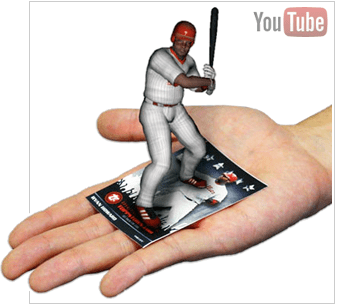

Augmented reality (AR) refers to a display in which simulated imagery, graphics, or symbology is superimposed on a view of the surrounding environment. It is related to a more general concept called mediated reality in which a view of reality is modified (possibly even diminished rather than augmented) by a computer. The term is believed to have been coined in 1990 by Thomas Caudell, an employee of Boeing at the time.
read more »
Posted in Technology, War |
Leave a Comment »
November 18, 2010


The Virtuality Continuum is a phrase used to describe a concept that there is a continuous scale ranging between the completely virtual, a Virtual Reality (VR), and the completely real: Reality. The reality-virtuality continuum therefore encompasses all possible variations and compositions of real and virtual objects. It has been somewhat incorrectly described as a concept in new media and computer science, when in fact it could belong closer to anthropology.
The concept was first introduced by industrial engineer Paul Milgram of the University of Toronto. The area between the two extremes, where both the real and the virtual are mixed, is the so-called Mixed reality. This in turn is said to consist of both Augmented Reality (AR), where the virtual augments the real, and Augmented virtuality, where the real augments the virtual.
Posted in Language, Technology |
Leave a Comment »
November 18, 2010

Prize indemnity insurance is indemnification insurance for a promotion in which the participants are offered the chance to win prizes. Instead of keeping cash reserves to cover large prizes, the promoter pays a premium to an insurance company, which then reimburses the insured should a prize be given away. One of the earliest and most common forms of prize indemnity insurance is hole-in-one insurance, which began to gain prominence during the early 1980s.
read more »
Posted in Games, Money |
Leave a Comment »
November 18, 2010

The Sokal affair was a publishing hoax perpetrated by Alan Sokal, a physics professor at New York University. In 1996, Sokal submitted an article to Social Text, an academic journal of postmodern cultural studies. The submission was an experiment to test the magazine’s intellectual rigor and, specifically, to learn if such a journal would ‘publish an article liberally salted with nonsense if it (a) sounded good and (b) flattered the editors’ ideological preconceptions.’
read more »
Posted in Humor, Language, Science |
Leave a Comment »
November 18, 2010

The Goddess movement is a loose grouping of social and religious phenomena growing out of second-wave feminism, predominantly in North America, Western Europe, Australia and New Zealand in the 1970s, which spread to the metaphysical community as well.
Spurred by the perception that women were not treated equitably by mainstream religions, many women turned to a female deity, as more in tune with their beliefs and spiritual needs. Masculine gender and male imagery were, at the time, attached to deity to the exclusion of female gender and female imagery. A unifying theme of this diverse movement is the female-ness of the deity (as opposed and contrasted to a patriarchal, male God).
Posted in Philosophy, Politics, Sex |
Leave a Comment »
November 18, 2010

The Buddhabrot is a special rendering of the Mandelbrot set which, when traditionally oriented, resembles to some extent certain depictions of the Buddha. The rendering technique was discovered and later described in a 1993 Usenet post to sci.fractals by Melinda Green. Previous researchers had come very close to finding the precise Buddhabrot technique. In 1988 Linas Vepstas relayed similar images to Cliff Pickover for inclusion in Pickover’s forthcoming book Computers, Pattern, Chaos, and Beauty.
Posted in Art, Technology |
Leave a Comment »
November 18, 2010
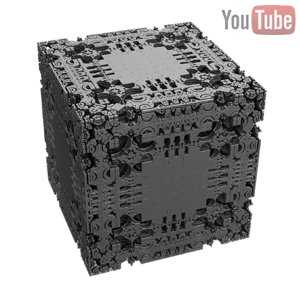
The Mandelbrot [man-del-brot] set is a mathematical fractal named after Benoît Mandelbrot, who studied and popularized it. When computed and graphed it displays an elaborate boundary which, being a fractal, does not simplify at any given magnification, meaning it shows more intricate detail the closer one looks or magnifies the image, usually called ‘zooming in.’
The Mandelbrot set has become popular outside mathematics both for its aesthetic appeal and for being a complicated structure arising from a simple definition, and is one of the best-known examples of mathematical visualization. Many mathematicians, including Mandelbrot, communicated this area of mathematics to the public.
Posted in Art, Technology |
1 Comment »
November 18, 2010

Tulip mania was a period in the Dutch Golden Age during which contract prices for bulbs of the recently introduced tulip reached extraordinarily high levels and then suddenly collapsed. At the peak of tulip mania in February 1637, some bulbs sold for more than 10 times the annual income of a skilled craftsman. The most sought after variety of tulip was the Semper Augustus; as much as 12 acres of land was reportedly offered in exchange for a single bulb. It is generally considered the first recorded speculative bubble (or economic bubble). The term ‘tulip mania’ is now often used metaphorically to refer to any large economic bubble (when asset prices deviate from intrinsic values).
Research on the tulip mania is difficult because of the limited data from the 1630s. Although these explanations are not generally accepted, some modern economists have proposed rational explanations, rather than a speculative mania, for the rise and fall in prices. For example, other flowers, such as the hyacinth, also had high prices on the flower’s introduction, which then fell dramatically. The high prices may also have been driven by expectations of a parliamentary decree that contracts could be voided for a small cost—thus lowering the risk to buyers.
Posted in Money, World |
Leave a Comment »
November 17, 2010
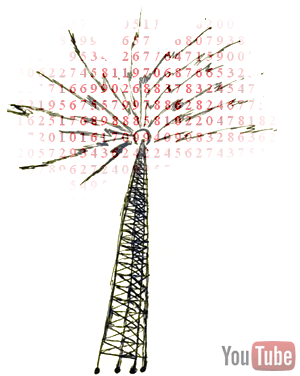
Numbers stations are shortwave radio stations of uncertain origin. They generally broadcast artificially generated voices reading streams of numbers, words, letters (sometimes using a spelling alphabet), tunes or Morse code. They are in a wide variety of languages and the voices are usually female, though sometimes male or children’s voices are used. Numbers stations appear and disappear over time (although some follow regular schedules), and their overall activity has increased slightly since the early 1990s.
Evidence supports popular assumptions that the broadcasts are used to send messages to spies. This usage has not been publicly acknowledged by any government that may operate a numbers station, but in 1892, the United States tried the Cuban Five for spying for Cuba. The group had received and decoded messages that had been broadcast from a Cuban numbers station. In 2009, the United States charged Walter Kendall Myers with conspiracy to spy for Cuba and receiving and decoding messages broadcast from a numbers station operated by the Cuban Intelligence Service.
Posted in Politics, Technology, War |
Leave a Comment »
November 17, 2010
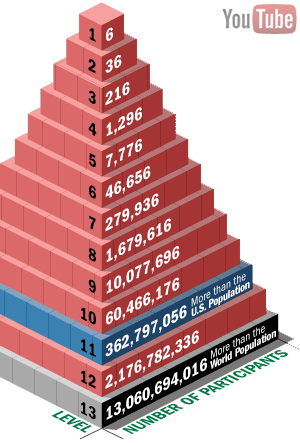
A pyramid scheme is a non-sustainable business model that involves promising participants payment primarily for enrolling other people into the scheme, rather than from any real investment or sale of products or services to the public. Pyramid schemes are a form of fraud. Pyramid schemes are illegal in many countries and have existed for at least a century, some with variations to hide their true nature.
Posted in Money, Politics |
Leave a Comment »



 The Daily Omnivore