January 20, 2011
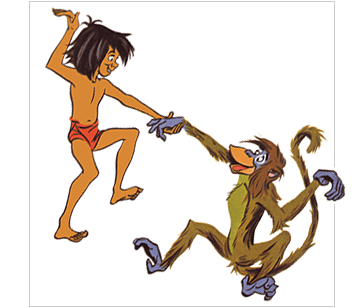
Mowgli syndrome is a term used by Wendy Doniger O’Flaherty in her 1995 book ‘Other Peoples’ Myths: The Cave of Echoes’ to describe mythological figures who succeed in bridging the animal and human worlds to become one with nature, a human animal, only to become trapped between the two worlds, not completely animal yet not entirely human.
It is also a rarely-used descriptive term for so-called feral children. The term originates from the character Mowgli, a fictional feral child from Rudyard Kipling’s ‘The Jungle Book.’
Posted in Art, Health, Language |
Leave a Comment »
January 20, 2011

The high five is a celebratory hand gesture that occurs when two people simultaneously raise one hand, about head high, and push, slide or slap the flat of their palm and hand against the palm and flat hand of their partner. The gesture is often preceded verbally by the phrase ‘Give me five’ or ‘High five.’ The origins of the term are said to belong to U.S. basketball, and the use of the phrase as a noun has been part of the Oxford English Dictionary since 1980 and as a verb since 1981.
read more »
Posted in Humor |
Leave a Comment »
January 20, 2011

K Foundation Burn a Million Quid was a performance art/ political exercise that took place in 1994, in which the K Foundation (an art duo consisting of Bill Drummond and Jimmy Cauty) burned cash in the amount of one million pounds sterling on the Scottish island of Jura. A single house brick that was manufactured from the fire’s ashes. This money represented the bulk of the K Foundation’s funds, earned by Drummond and Cauty as The KLF, one of the United Kingdom’s most successful pop groups of the early 1990s.
The incineration was recorded on a Hi-8 video camera by K Foundation collaborator Gimpo. In 1995, the film was toured around the UK, with Drummond and Cauty engaging each audience in debate about the burning and its meaning. Later that year, the duo pledged to dissolve the K Foundation and to refrain from public discussion of the burning for a period of 23 years. Despite this Drummond has spoken about the burning in 2000 and 2004. At first he was unrepentant but in 2004, he admitted to the BBC that he regretted burning the money.
Posted in Art, Money, Politics |
Leave a Comment »
January 20, 2011

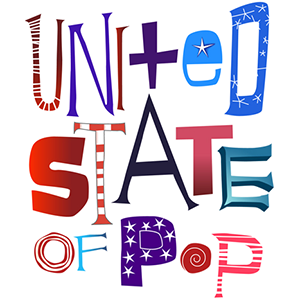
A mashup is a song or composition created by blending two or more pre-recorded songs, usually by overlaying the vocal track of one song seamlessly over the instrumental track of another. To the extent that such works are ‘transformative’ of original content, they may find protection from copyright claims under the ‘fair use’ doctrine. Though the term ‘bastard pop’ first became popular in 2001, the practice of assembling new songs from purloined elements of other tracks stretches back to the beginnings of recorded music.
If one extends the definition beyond the realm of pop, precursors can be found in Musique concrète, as well as the classical practice of (re-)arranging traditional folk material and the jazz tradition of reinterpreting standards. In addition, many elements of bastard pop culture have antecedents in hip hop and the DIY ethic of punk.
Posted in Art, Money, Politics |
Leave a Comment »
January 20, 2011

Archie Meets the Punisher or The Punisher Meets Archie was a one-shot comic book intercompany crossover published under two separate covers by Marvel Comics and Archie Comics in 1994. It featured the unlikely meeting of Marvel’s murderous vigilante, the Punisher, and Archie Comics’ all-American teenager, Archie Andrews. The book was written by Batton Lash, with artwork by John Buscema (drawing the Punisher characters) and Stan Goldberg (drawing the Archie characters).
Posted in Art, Humor, Money |
Leave a Comment »
January 19, 2011

A supertaster is a person who experiences the sense of taste with far greater intensity than average. Women are more likely to be supertasters, as are Asians and Africans. The cause of this heightened response is currently unknown, although it is thought to be, at least in part, due to an increased number of fungiform papillae (small mushroom-like structures on the tongue that house taste buds). Supertasters contrast with nontasters who have a decreased sense. The term originates with experimental psychologist Linda Bartoshuk who has spent much of her career studying genetic variation in taste perception.
In some environments, heightened taste response, particularly to bitterness, would represent an important advantage in avoiding potentially toxic plant alkaloids. However, in other environments, increased response to bitter may have limited the range of palatable foods. In a modern, energy-rich environment, supertasting may be cardioprotective, due to decreased liking and intake of fat.
Posted in Food, Language, Science |
Leave a Comment »
January 19, 2011

Percussive maintenance, also known as percussion therapy or a technical tap, is a term used to describe the malediction of an ill-behaved device to make it work, that is to say, swear at it and hit it. The origins and practice of the term are unknown, although some suggest the act became commonplace with the introduction of vacuum tube electronics. The term is a play on ‘preventive maintenance.’
Posted in Humor, Language, Technology |
Leave a Comment »
January 19, 2011


Desert Bus a minigame found in the 1999 Sega CD title: ‘Penn & Teller’s Smoke and Mirrors.’ The objective of the game is to drive a bus from Tucson, Arizona to Las Vegas, Nevada in real time at a maximum speed of 45mph. The feat requires 8 hours of continuous play to complete, since the game cannot be paused. Penn Jillette commented in his radio show that the overly realistic nature of the game was in response to Janet Reno and the controversy surrounding violent video games at the time.
read more »
Posted in Games, Humor, Technology |
Leave a Comment »
January 19, 2011

Leprosy colony money was special money which circulated only in leprosy sanatoriums due to the fear that the leprosy bacteria would infect other people. Leprosy, however, is in fact not easily transmitted by casual contact, and such transmission as there is only happens through long term, constant and intimate contact with leprosy sufferers and not contact with everyday objects used by sufferers. The system of special colony money was used between 1901 and around 1955.
Posted in Health, Money |
Leave a Comment »
January 19, 2011

OK Soda was a soft drink created by Coca-Cola in 1993 that aggressively courted the Generation X demographic with unusual advertising tactics, including endorsements and even outright negative publicity. It did not sell well in select test markets and was officially declared out of production in 1995 before reaching nation-wide distribution.
The drink’s slogan was ‘Things are going to be OK.’ The project was cancelled by Coca-Cola just seven months after its kickoff, and the soft drink was never widely released to the public.
read more »
Posted in Food, Money, Politics |
1 Comment »
January 19, 2011

The prosperity gospel is a religious belief found among Christians, primarily in the United States, centered on the notion that God provides material prosperity for those he favors. It has been defined by the belief that ‘Jesus blesses believers with riches’ or more specifically as the teaching that ‘believers have a right to the blessings of health and wealth and that they can obtain these blessings through positive confessions of faith and the ‘sowing of seeds’ through the faithful payments of tithes and offerings.’
It is not a clearly defined denomination, but a strain of belief that runs through the Pentecostal Church and a number of mainstream evangelical churches, with varying degrees of intensity. It arose in the United States after World War II championed by Oral Roberts and became particularly popular in the decade of the 1990s.
Posted in Money, Philosophy |
Leave a Comment »
January 19, 2011
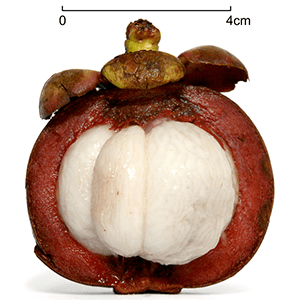
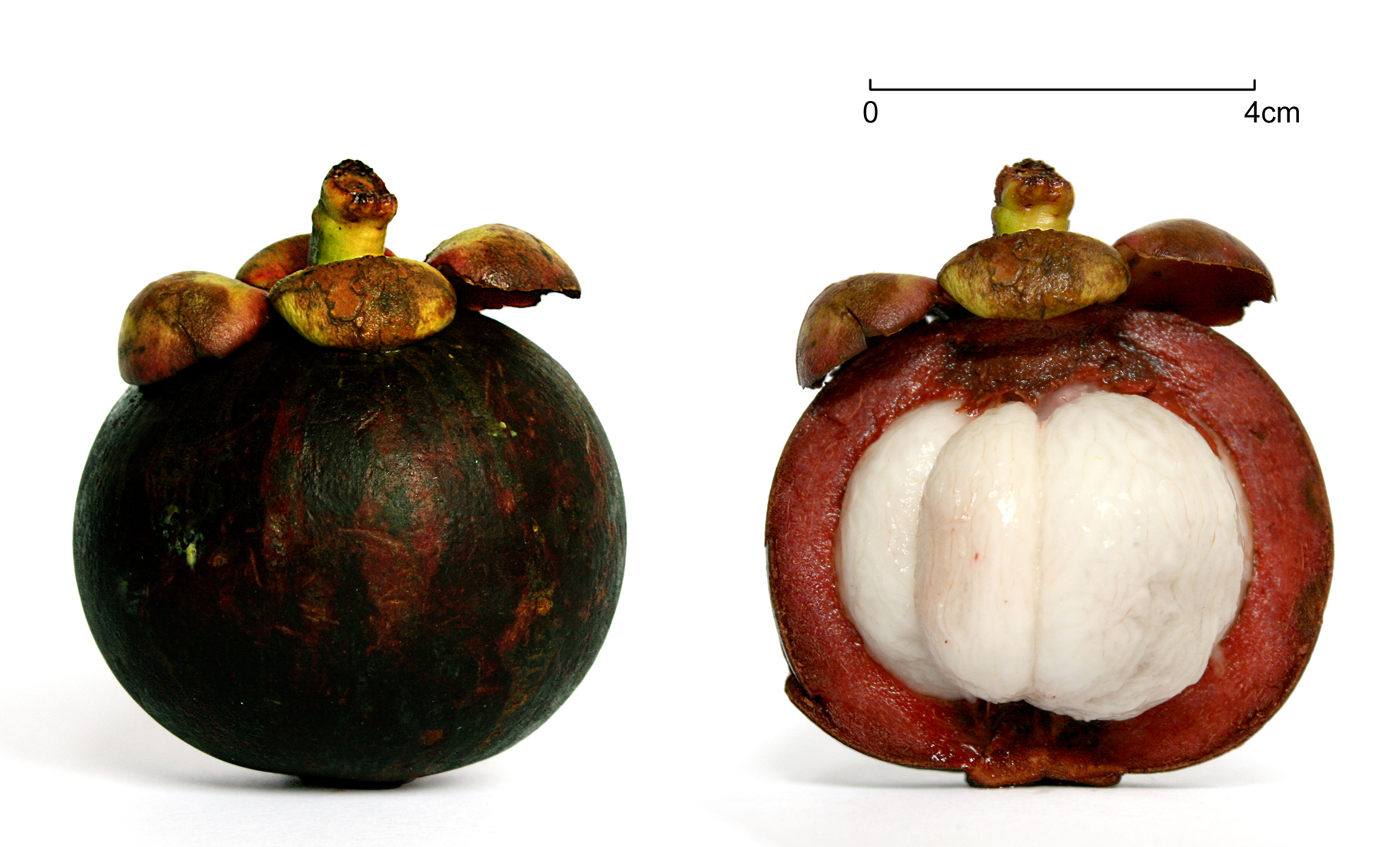
The purple mangosteen [mang-guh-steen] is a tropical evergreen tree believed to have originated in Indonesia. The rind (exocarp) of the edible fruit is deep reddish purple when ripe. Botanically an aril (like pomegranate fruit), the fragrant edible flesh can be described as sweet and tangy, citrusy with a flavour and texture similar to a peach. It is sometimes called the ‘Queen of Fruit,’ owing to an apocryphal legend of Queen Victoria offering a reward of 100 pounds sterling to anyone who could deliver to her a fresh mangosteen. An ultratropical tree, the mangosteen must be grown in consistently warm conditions, as exposure to temperatures below freezing for prolonged periods will generally kill a mature plant. Experienced horticulturists have grown this species outdoors, and brought them to fruit in extreme South Florida.
Due to restrictions on imports, mangosteen is not readily available in certain countries. Although available in Australia, for example, they are still rare in the produce sections of grocery stores in North America and Europe. Beginning in 2007 for the first time, fresh mangosteens were sold from specialty produce stores in New York City for as high as $45 per pound, but wider availability and lower prices have become common in the United States and Canada. Before ripening, the mangosteen shell is fibrous and firm, but becomes soft and easy to pry open when the fruit ripens.
Posted in Food, Money |
Leave a Comment »




 The Daily Omnivore