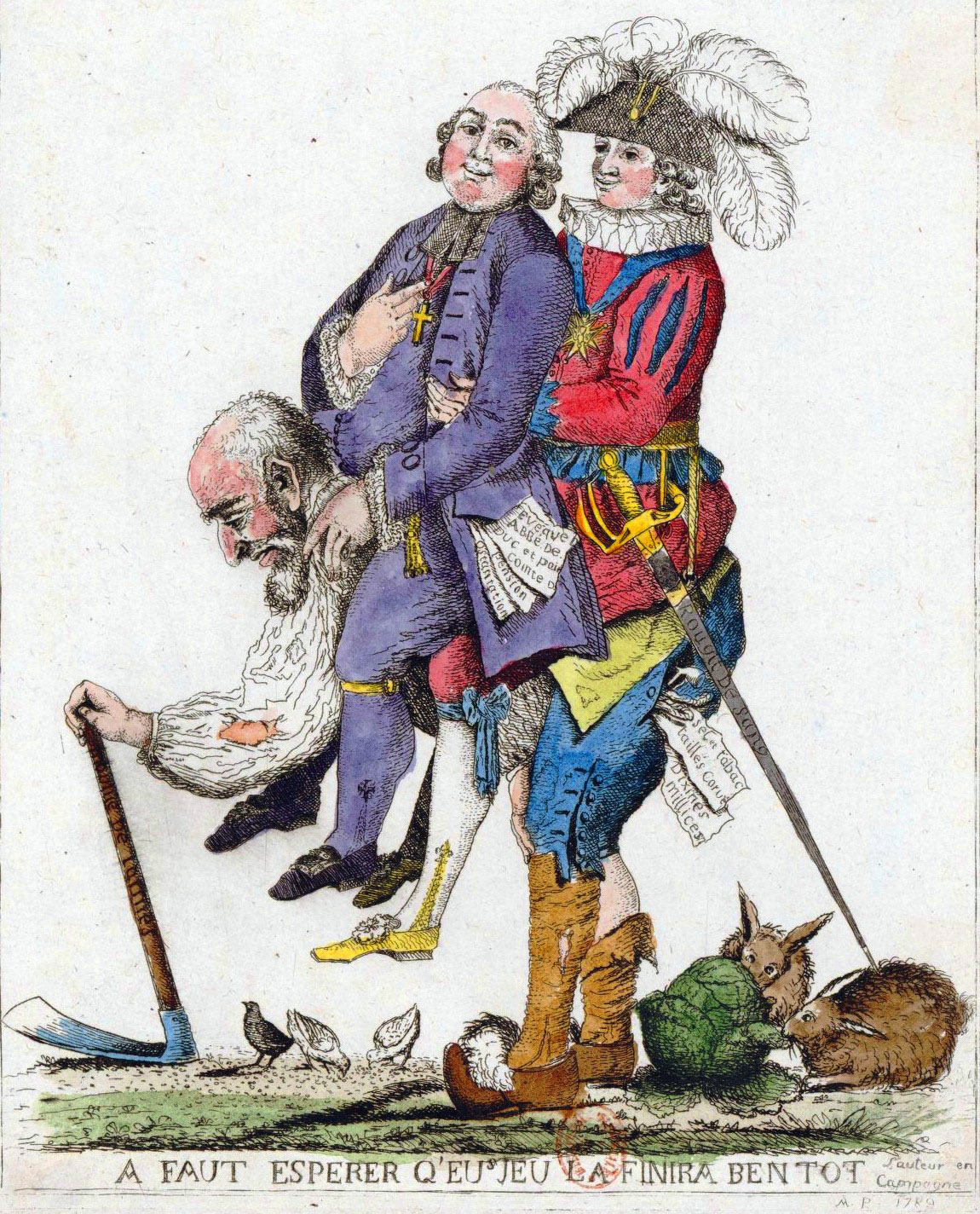
Estates of the realm were the broad divisions of a hierarchically conceived society in the Middle Ages and in Early Modern Europe. The first estate was typically the clergy, the second estate was the nobility, and the third estate was the commoners. While various realms inverted the order of the first two, commoners were universally tertiary, and often further divided into burghers (also known as bourgeoisie) and peasants; in some regions, there also was a population outside the estates.
An estate was usually inherited and based on occupation, similar to a caste. Legislative bodies or advisory bodies to a monarch were traditionally grouped along lines of these estates, with the monarch above all three estates. Meetings of the estates of the realm became early legislative and judicial parliaments. Monarchs often sought to legitimize their power by requiring oaths of fealty from the estates.


 The Daily Omnivore
Leave a comment