February 10, 2011

Flipism is a pseudophilosophy under which all decisions are made by flipping a coin. It originally appeared in the Disney comic ‘Flip Decision’ by Carl Barks, published in 1953. Barks called a practitioner of ‘Flipism’ a ‘Flippist.’ In the comic book, Donald Duck meets Professor Batty, who persuades Donald to make decisions based on flipping a coin at every crossroad of life. Donald soon gets into trouble when following this advice. He drives a one way road in the wrong direction and is fined $50.
Posted in Humor, Philosophy |
Leave a Comment »
February 10, 2011

Radical cheerleading is a form of cheerleading that originated in Florida, but has now spread across the United States as well as Canada, Europe and beyond. The idea is to ironically reappropriate the aesthetics of cheerleading, for example by changing the chants to promote feminism and left-wing causes. Radical cheerleaders often perform at demonstrations. They also often perform at feminist and other radical festivals and events.
Radical cheerleading is used at demonstrations to promote a radical message in a media-friendly, people-friendly way. It is also used to support the actions of other activists who put themselves at physical risk and to denounce infiltrators and opponents. Radical cheerleaders are often anti-authoritarian and anti-capitalist. Their cheers are usually written from scratch or by rewriting the words of popular and historic songs. Radical cheerleaders dress in diverse ways but often wear a combination of red or pink and black.
Posted in Games, Humor, Politics |
Leave a Comment »
February 10, 2011

Cat burning was a form of zoosadistic entertainment in 17th century Paris, France. People would gather dozens of cats in a net and hoist them high into the air from a special bundle onto a bonfire. Those assembled shrieked with laughter as the animals, howling with pain, were singed, roasted, and finally carbonized.
The people collected the embers and ashes of the fire and took them home, believing that they brought good luck. The French kings often witnessed these spectacles and even lit the bonfire with their own hands. In the medieval and early modern periods, cats, which were associated with vanity and witchcraft, were sometimes burned as symbols of the Devil.
Posted in Death, Philosophy, World |
1 Comment »
February 10, 2011


In American cinema, the magical negro is a supporting stock character who, by use of special insight or powers, helps the white protagonist. The word negro, now considered by many as archaic and sometimes offensive, is used intentionally to suggest that the archetype is a racial throwback, an update of the ‘Sambo’ and ‘Noble savage’ stereotypes.
African-American filmmaker Spike Lee popularized the term in 2001 while discussing films with students at Washington State University and at Yale University. The magical negro is a subset of the more generic ‘numinous negro,’ a term coined by Richard Brookhiser in National Review for saintly, respected or heroic black protagonists or mentors.
Posted in Art, Politics |
Leave a Comment »
February 10, 2011
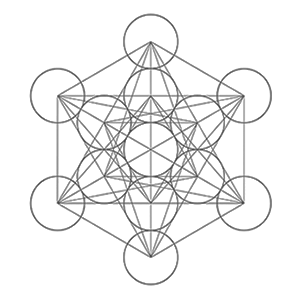
Sacred geometry ascribes symbolic and sacred meanings to certain geometric shapes and certain geometric proportions. It is associated with the belief that a god is the geometer (geometry mathematician) of the world. The geometry used in the design and construction of religious structures such as churches, temples, mosques, religious monuments, altars, and tabernacles has sometimes been considered sacred. The concept applies also to sacred spaces such as temenoi, sacred groves, village greens, and holy wells, and the creation of religious art.
The belief that a god created the universe according to a geometric plan has ancient origins. Plutarch attributed the belief to Plato, writing that ‘Plato said God geometrizes continually’ In modern times, the mathematician Carl Friedrich Gauss adapted this quote, saying ‘God arithmetizes.’ As late as Johannes Kepler (1571–1630), a belief in the geometric underpinnings of the cosmos persisted among some scientists.
read more »
Posted in Art, Philosophy, Technology |
Leave a Comment »
February 10, 2011

Jenkem is an alleged hallucinogenic recreational drug composed of noxious gas formed from fermented sewage. In the mid to late 1990s, several reports stated that Jenkem was being used by Zambian street children. The surfacing of the drug, or rumors of its existence, has caused at least one US municipality to amend its city ordinance regarding substances that cannot be legally inhaled to include organic substances.
Posted in Drugs, Humor |
1 Comment »
February 10, 2011

Nickelodeon compounds refers to a number of molding substances for children’s play that were created and sold by the children’s television channel Nickelodon and toy company Mattel in the 1990s. Like most molding compounds, they could be kept in their container to retain plasticity, or molded and allowed to harden overnight. They featured a wide variety of compounds with different attributes. The first compound, whose idea was taken from the show ‘You Can’t Do That on Television,’ was Nickelodeon ‘Slime,’ first manufactured in the 1980s.
The most popular compound, ‘Gak,’ was inspired by the game show ‘Double Dare.’ It made a ‘fart’ noise when squeezed into its clear, star-shaped container. In 1994 ‘Floam,’ originally called ‘bubble-gak,’ a compound composed of microbeads in a foam-like substance, was released. ‘Smud’ was much like Play-Doh, but slicker and would not dry out if left out of its container. ‘Skweeez’ was also like Play-Doh but had a more Marshmallow-like feel. ‘Gooze’ was similar to ‘Gak’ but more watery. ‘Sqand,’ or ‘Magic sand,’ begins as ordinary sand, but is dyed and coated in a hydrophobic substance.
Posted in Humor, Money, Technology |
Leave a Comment »
February 9, 2011
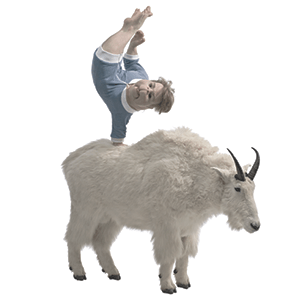
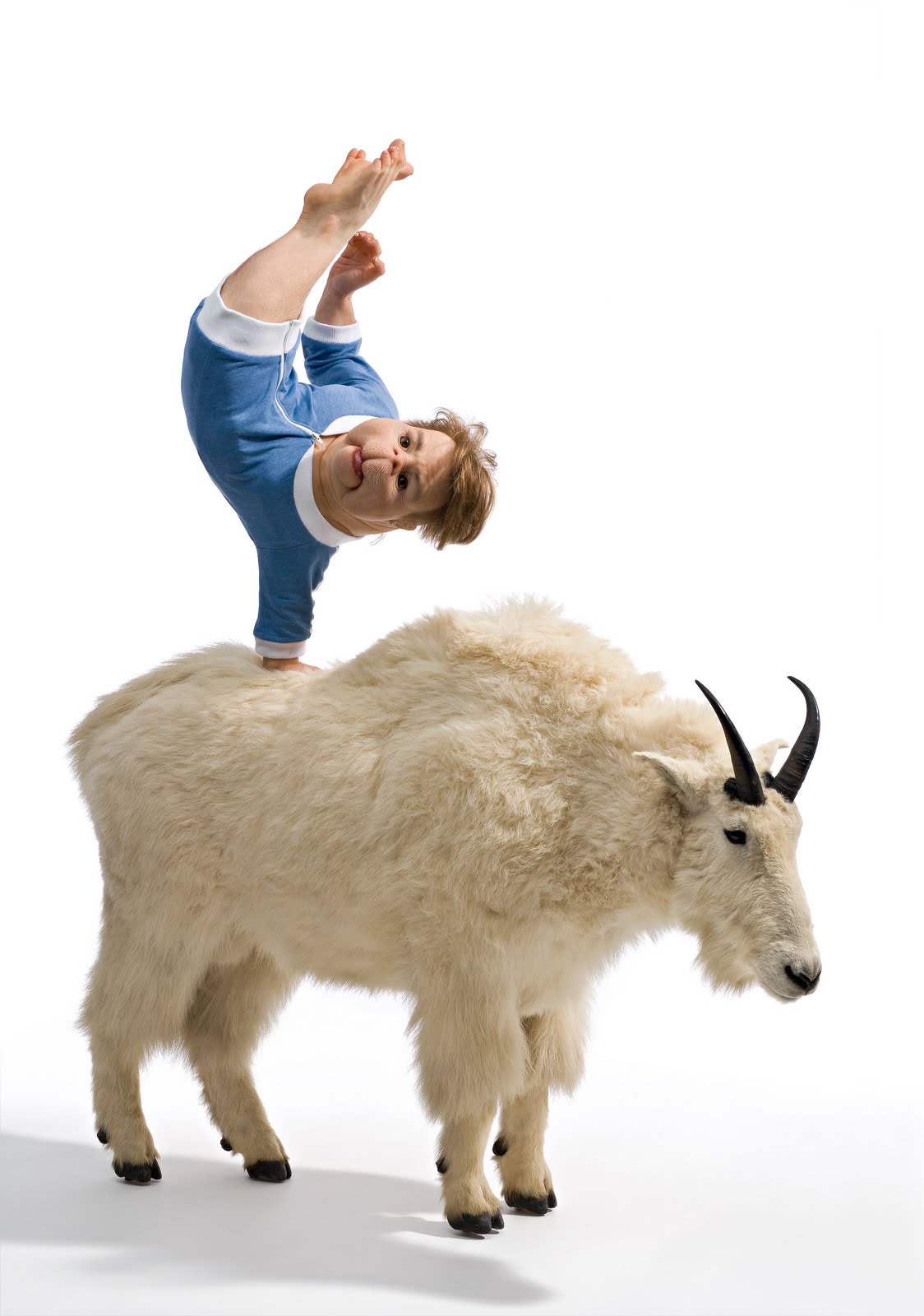
Patricia Piccinini (born in 1965 in Freetown, Sierra Leone) is an Australian artist and hyperrealist sculptor. Her art work came to prominence in Australia in the late 1990s.
Her major artworks often reflect her interests in issues such as bioethics, biotechnologies and the environment. Other Australian artists who work in a similar idiom are Martine Corompt, Sam Jinks and Ron Mueck.
Posted in Art, Money, Politics |
Leave a Comment »
February 9, 2011

The Casio F91W is an inexpensive quartz digital watch, manufactured by the Japanese firm Casio Computer Co., Ltd.. It was introduced in 1991. This watch is widely available throughout the world. It is widely noticeable due to its classic Casio shape. Prices vary, normally in the $7.50 – $15 range. United States intelligence officials have identified the F91W as a watch that terrorists often use when constructing time bombs.
Posted in Money, Technology, World |
Leave a Comment »
February 9, 2011

In Japan, a junior idol is a child or early teenager pursuing a career in glamour modeling (called gravure modeling in Japan) or pornography. However, child actors, musicians, and J-pop singers (whose musical genre is often termed idol pop) can also be considered junior idols. The primary divisions are divided by years U-18, U-15, and U-12, but there are also more recent partitions designated as U-10, U-6, and U-3 to reflect changes in the marketplace and idol fan communities.
Japan, which has long been relatively tolerant of the open sale and consumption of sexually oriented material, has developed a brisk trade in works that in many other countries might be considered child pornography. Recently however, public officials are moving to place tighter restrictions on the provocative depictions of young girls that are prevalent in magazines, DVDs and online.
read more »
Posted in Politics, Sex, World |
Leave a Comment »
February 9, 2011

St. Matthew Island is a remote island in the Bering Sea in Alaska. The island has a land area of 138 sq mi, making it the 43rd largest island in the United States. In 1944, 29 reindeer were introduced to the island by the United States Coast Guard to provide an emergency food source. The coast guard abandoned the island a few years later, leaving the reindeer. Subsequently, the reindeer population rose to about 6,000 by 1963 and then died off in the next two years to 43 animals.
A scientific study attributed the population crash to the limited food supply in interaction with climatic factors (the winter of 1963-64 was exceptionally severe in the region). By the 1980s, the reindeer population had completely died out. American ecologist, Garrett Hardin cited the ‘natural experiment’ of St. Matthew Island of the reindeer population explosion and collapse as a paradigmatic example of the consequences of overpopulation.
Posted in Politics, Science, World |
Leave a Comment »
February 9, 2011
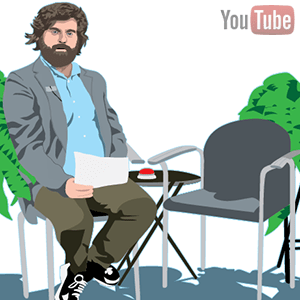
Between Two Ferns With Zach Galifianakis is an interview series on Funny or Die hosted by Zach Galifianakis. Zach conducts interviews with popular celebrities between two potted ferns. The show is filmed to resemble a low-budget amateur production fit for public access television. He maintains an awkward and sometimes antagonistic demeanor with his guests, asking them bizarre and inappropriate questions mixed with off-handed non sequiturs.
Posted in Art, Humor |
Leave a Comment »




 The Daily Omnivore