February 27, 2011

A third-culture kid (TCK) is someone who, as a child, has spent a significant period of time in one or more culture(s) other than his or her own, thus integrating elements of those cultures and their own birth culture, into a third culture. TCKs tend to have more in common with one another, regardless of nationality, than they do with non-TCKs from their passport country. TCKs are often multilingual and highly accepting of other cultures. Although moving between countries may become an easy thing for some TCKs, after a childhood spent in other cultures, adjusting to their passport country often takes years.
Before World War II, 66% of TCKs came from missionary families, and 16% came from business families. After World War II, with the increase of international business and the rise of two international superpowers, the composition of international families changed. Sponsors are generally broken down into five categories: missionary (17%), business (16%), government (23%), military (30%), and “other” (14%). Some TCK families migrate for work independently of any organization based in their country of origin.
Posted in Language, Politics, World |
Leave a Comment »
February 27, 2011
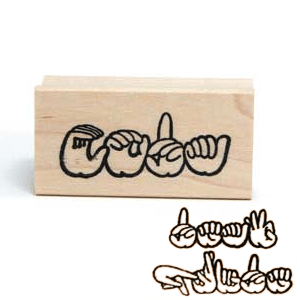
A child of a deaf adult, often known by the acronym CODA, is a person who was raised by a deaf parent or guardian. Many CODAs identify with both deaf and hearing cultures. The organization CODA (Children of Deaf Adults) was established in 1983 for hearing children of deaf adults in the United States. CODA began hosting annual conferences in 1986, in Fremont, California. The conferences have grown, taking on an international status with attendees hailing from worldwide.
Posted in Health, Language, Politics |
Leave a Comment »
February 27, 2011

SweeTango, a registered trademark for a cultivar of apples produced in Minneiska, Minnesota. It is a newly released hybrid brand apple that debuted in 2009. It is a pinkish apple consisting of a yellow background that is intermittent with red coloration. The surface of the apple has several distinguishing visual characteristics. The prominent white lenticels appear freckle-like on the fruit. The name comes from those that have tasted this new brand of apple. They say they taste sweet as well as tart at the same time, sweet and tangy.
University of Minnesota produced this variety of apple from their breeding program. Their 80 acre Horticultural Research Center near Victoria, Minnesota, produced the Minneiska variety apple from Honeycrisp and Zestar apple varieties, which they also specially breed. Others apple varieties they have developed in their facility are Fireside, Haralson, and Honeygold.
Posted in Food, Money, Science |
Leave a Comment »
February 27, 2011

Maoz is a chain of falafel fast food restaurants, serving purely vegetarian fare and promoting the ‘vegetarian lifestyle.’ The chain was founded by a husband and wife, Nahman Milo and Sima Bar-On, Israelis, who were living in Amsterdam. The first restaurant opened in 1991, and the first store outside The Netherlands opened in 1996. There are now 22 franchises globally, located in the Netherlands, The United States, France, Spain, the United Kingdom, Australia, and India.
Originally, restaurants offered only falafel, but the menu in some locations has since been expanded to include other vegetarian items, such as pommes frites (Belgian-style french fries). Muma Vegetarian is a copycat restaurant in Los Angeles.
Posted in Food, Money, World |
Leave a Comment »
February 27, 2011

In business, economics or investment, market liquidity is an asset’s ability to be sold without causing a significant movement in the price and with minimum loss of value. Money, or cash in hand, is the most liquid asset, and can be used immediately to perform economic actions like buying, selling, or paying debt, meeting immediate wants and needs. An act of exchange of a less liquid asset with a more liquid asset is called liquidation. Liquidity also refers both to a business’s ability to meet its payment obligations, in terms of possessing sufficient liquid assets, and to such assets themselves.
Posted in Language, Money |
Leave a Comment »
February 27, 2011
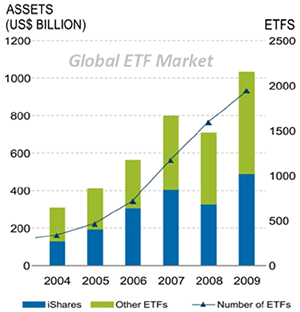
An exchange-traded fund (ETF) is an investment fund traded on stock exchanges, much like stocks. An ETF holds assets such as stocks, commodities, or bonds and trades at approximately the same price as the net asset value of its underlying assets over the course of the trading day.
An ETF combines the valuation feature of a mutual fund, which can be bought or sold at the end of each trading day for its net asset value, with the liquidity feature of a stock, which trades throughout the trading day at prices that may be more or less than its net asset value. ETFs have been available in the US since 1993 and in Europe since 1999. ETFs traditionally have been index funds, but in 2008 the U.S. Securities and Exchange Commission began to authorize the creation of actively managed ETFs.
Posted in Money |
Leave a Comment »
February 27, 2011

Rhythms del Mundo (lit. ‘World Rhythms’) is a 2006 nonprofit album, which fuses Cuban musicians including Ibrahim Ferrer and Omara Portuondo of the Buena Vista Social Club with artists such as Dido, Arctic Monkeys, U2, Coldplay, Sting, Jack Johnson, Maroon 5, Franz Ferdinand, Kaiser Chiefs and others. A follow-up album, Rhythms del Mundo Classics, was released in 2009. Album proceeds benefits the environmental nonprofit organization Artists Project Earth, which raises funds for climate change projects and disaster relief efforts.
Posted in Art, Money, Politics |
Leave a Comment »
February 24, 2011


Takashi Miike (b. 1960) is a highly prolific and controversial Japanese filmmaker. He has directed over seventy theatrical, video, and television productions since his debut in 1991. In the years 2001 and 2002 alone, Miike is credited with directing fifteen productions.
His films range from violent and bizarre to dramatic and family-friendly. He gained international fame in 2000 when his romantic horror film Audition (1999) played at international film festivals. He has since gained a strong cult following in the West that is growing with the increase in DVD releases of his works.
Posted in Art |
1 Comment »
February 24, 2011

Cibo Matto (meaning ‘crazy food’ in Italian) was a New York City-based band formed by two Japanese women, Yuka Honda and Miho Hatori, in 1994. The lyrics in their songs are primarily concerned with food and their sound has been described as a combination of Jazz, Hip-Hop, Brazilian music, African Drumming, and Disco samples. While the two founding members of the group are Japanese expatriates, they are not especially popular in Japan; the group did not gain nearly as large a following in Japan as it did in the United States.
Posted in Art |
Leave a Comment »
February 24, 2011

The Go! Team are an English sextet. They combine indie rock and garage rock with a mixture of blaxploitation and Bollywood soundtracks, double dutch chants, old school hip hop and distorted guitars similar to the style of Sonic Youth. Their songs are a mix of live instrumentation and samples from various sources. The band’s vocals vary between performances: while live vocals are handled mostly by Ninja (with Tsuchida and Fukami-Taylor also singing some solos), vocals on record consist of sampled and guest voices, not just Ninja’s.
Posted in Art |
Leave a Comment »
February 24, 2011

Miike Snow are a Swedish indie pop band formed in 2007. The band consists of producing team Christian Karlsson and Pontus Winnberg, also known as Bloodshy & Avant. The name ‘Miike Snow’ is said to have come from one of their friends called Mike Snow, with the spelling of ‘Miike’ coming from the Japanese film director Takashi Miike.
Posted in Art |
Leave a Comment »
February 24, 2011
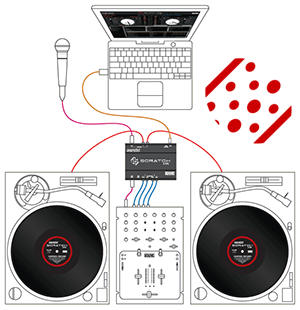
Vinyl emulation software allows the user to physically manipulate the playback of digital audio files on a computer using the turntables as an interface. Vinyl emulation normally uses special vinyl records which are played on conventional turntables. The result is digital audio playback that feels like it can be manipulated like a vinyl record.
However, there is always a short delay between the needle’s reading of the time code and the software’s playback of the audio. This delay is usually between 6 and 30 milliseconds. The delay is treated as a figure of merit for vinyl emulation products. A shorter delay allows the DJ to have better response and control of the music. In some countries, including the United Kingdom and Finland, a digital DJ license is required to legally play copyrighted music with vinyl emulation software.
Posted in Art, Technology |
Leave a Comment »


 The Daily Omnivore