July 11, 2011
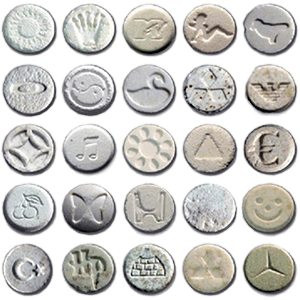
Designer drug is a term used to describe drugs which are created (or marketed, if they had already existed) to get around existing drug laws, usually by modifying the molecular structures of existing drugs to varying degrees, or less commonly by finding drugs with entirely different chemical structures that produce similar subjective effects to illegal recreational drugs.
The term ‘designer drug’ was first coined by law enforcement in the 1980s, and has gained widespread use. However the first appearance of what would now be termed designer drugs occurred well before this, in the 1920s. Following the passage of the second International Opium Convention in 1925 which specifically banned morphine and the diacetyl ester of morphine, heroin, a number of alternative esters of morphine quickly started to be manufactured and sold.
read more »
Posted in Drugs, Health, Politics |
Leave a Comment »
July 11, 2011

Synthetic cannabis is a psychoactive herbal and chemical product which, when consumed mimics the effects of cannabis. It is best known by the brand names K2 and Spice, both of which have largely become genericized trademarks used to refer to any synthetic cannabis product. A type of synthetic cannabis sold in Australasia is known as Kronic.
Professor John W. Huffman who first synthesized many of the cannabinoids used in synthetic cannabis is quoted as saying, ‘People who use it are idiots. You don’t know what it’s going to do to you.’ Heavy Spice users who cut back are known to experience withdrawal symptoms, similar to those associated with withdrawing from the use of narcotics. The lack of an antipsychotic chemical, similar to cannabidiol found in natural cannabis, may make synthetic cannabis more likely to induce psychosis than natural cannabis.
read more »
Posted in Drugs, Health, Politics |
Leave a Comment »
July 11, 2011
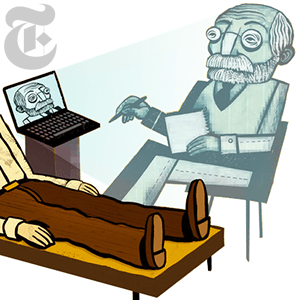
Telepsychiatry is the application of Telemedicine to the field of Psychiatry. It has been the most successful of all the telemedicine applications so far, because of its need for only a good videoconferencing facility between the patient and the psychiatrist, especially for follow-up. There are sub-specialties like forensic telepsychiatry, in which the patient is typically an inmate accessing the psychiatrist who is from a supporting institution, and home-based telepsychiatry, whereby the patient is in his own home or office, accessing the physician via webcam and high-speed internet. Another common application is for patients in rural or under served areas, and there are a large number of grassroots telepsychiatry programs springing up in the United States and elsewhere to address this problem.
A recent innovation is the development of the subspecialty of emergency psychiatry via telemedicine. Research is currently on-going to develop the unique guidelines required to provide consultation for emergency psychiatric patients such as the evaluation of the suicidal, homidical, violent, psychotic, depressed, manic, and acutely anxious patient. Emergency telepsychiatry services are being provided to hospital emergency departments, jails, community mental health centers, substance abuse treatment facilities, and schools.
Posted in Health, Technology |
1 Comment »
July 11, 2011

Turntable.fm was a social media website that allowed users to interactively share music. The site was run by Billy Chasen, who started it in January 2011 using revenue generated by his previous start-up. The service allowed users to create ‘rooms,’ which other users could join. Designated users, so-called ‘DJs,’ chose songs to be played to everyone in that room, while all users were able to talk with one another through a text interface.
The service opened to the public in May 2011, and by late June had already reached 140,000 active users. The company used the Digital Millennium Copyright Act to license the music that was played on the website; because of this, only individuals from the US were allowed to use the service.
Posted in Games, Money, Technology |
Leave a Comment »
July 11, 2011
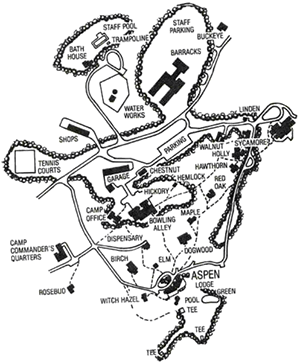
Camp David is the country retreat of the President of the United States and his guests. It is located in low wooded hills about 100 km (60 mi) northwest of Washington, D.C., on the property of Catoctin Mountain Park in Maryland. It is officially known as Naval Support Facility Thurmont and technically a military installation; staffing is primarily provided by the Navy and Marine Corps.
It was originally built as a camp for federal government agents and their families, by the Works Progress Administration, starting in 1935. In 1942, it was converted to a presidential retreat by Franklin D. Roosevelt and renamed Shangri-La. Camp David received its present name from Dwight D. Eisenhower, in honor of his father and grandson, both named David.
read more »
Posted in Politics, War |
Leave a Comment »
July 9, 2011

Fluxus—a name taken from a Latin word meaning ‘to flow’—is an international network of artists, composers and designers noted for blending different artistic media and disciplines in the 1960s. They have been active in Neo-Dada noise music and visual art as well as literature, urban planning, architecture, and design. Fluxus is sometimes described as intermedia.
The origins of Fluxus lie in many of the concepts explored by composer John Cage in his experimental music of the 1950s. Cage explored notions of indeterminacy in art, through works such as ‘4’ 33″,’ which influenced Lithuanian-born artist George Maciunas. Maciunas (1931–1978) organized the first Fluxus event in 1961 at the AG Gallery in New York City and the first Fluxus festivals in Europe in 1962.
read more »
Posted in Art, Language, Money |
Leave a Comment »
July 8, 2011

Max is a visual programming language for music and multimedia developed and maintained by San Francisco-based software company Cycling ’74. During its 20-year history, it has been widely used by composers, performers, software designers, researchers, and artists for creating innovative recordings, performances, and installations.
The Max program itself is highly modular, with most routines existing in the form of shared libraries. As a result, Max has a large userbase of programmers not affiliated with Cycling ’74 who enhance the software with commercial and non-commercial extensions to the program.
read more »
Posted in Art, Technology |
Leave a Comment »
July 8, 2011

Jean-Yves Prieur (b.1964), aka Kid Loco is a French electronic musician, DJ, remixer and producer. His style has been compared to Air and Dimitri from Paris. His best-known album is ‘A Grand Love Story’ (1997), and he has also compiled and mixed a DJ mix album for the ‘Another Late Night’ series on Azuli Records.
He has worked with Jarvis Cocker (of Pulp), with Italian band The Transistors (Maurizio Mansueti and Luca Cirillo) and Glasgow bands A Band Called Quinn and Mogwai, and produced the album ‘Too Late To Die Young’ by the British group, Departure Lounge.
Posted in Art, World |
Leave a Comment »
July 8, 2011

Dr. Octagon was a fictional character created by American rapper Keith Thornton, better known as Kool Keith. First appearing on Thornton’s 1996 debut solo album, ‘Dr. Octagonecologyst,’ Dr. Octagon is an extraterrestrial time traveling gynecologist and surgeon from the planet Jupiter. Thornton performed and released three albums under the alias. The character was murdered by another of his characters, Dr. Dooom on Thornton’s 1999 album ‘First Come, First Served,’ and was briefly revived before once again being killed on Thornton’s 2008 album ‘Dr. Dooom 2,’ in response to the release of ‘The Return of Dr. Octagon,’ an album largely produced without Thornton’s involvement.
In Dr. Octagonecologyst, Dr. Octagon is described as having yellow eyes, green skin, and a pink-and-white Afro. Further tracks detail a list of services offered by Octagon, who claims to treat chimpanzee acne and moosebumps, and relocate saliva glands. Octagon is described as being incompetent, as many of his surgery patients die as he conducts his rounds. He often engages in sexual intercourse with female patients and nurses. Octagon’s uncle, Mr. Gerbik, is described as being half shark, having the skin of an alligator, and is 208 years old.
read more »
Posted in Art, Humor |
1 Comment »
July 8, 2011

A perverse incentive is an incentive that has an unintended and undesirable result which is contrary to the interests of the incentive makers. Perverse incentives are a type of unintended consequences. For example, 19th century palaeontologists traveling to China used to pay peasants for each fragment of dinosaur bone (dinosaur fossils) that they produced. They later discovered that the peasants dug up the bones and then smashed them into many pieces, greatly reducing their scientific value, to maximise their payments. In Hanoi, under French colonial rule, a program paying people a bounty for each rat pelt handed in was intended to exterminate rats. Instead, it led to the farming of rats. Funding fire departments by the number of fire calls made is intended to reward the fire departments that do the most work. However, it may discourage them from fire-prevention activities, which reduce the number of fires.
In 1696, the English Parliament adopted a tax under which dwellings were to be assessed according their number of windows. Although the tax was intended to be progressive in that it exempted houses with fewer than ten windows from the bulk of the assessment, in operation it exacerbated the gap in living conditions between rich and poor as landlords were incentivized to brick up tenement windows to reduce their tax liability, leaving working-class tenants with insufficient light and ventilation. In 2007, the Bangkok, Thailand police switched to punitive pink armbands adorned with the cute Hello Kitty cartoon character when the tartan armbands that had been intended to be worn as a badge of shame for minor infractions were instead treated as collectibles by offending officers forced to wear them.
Posted in Language, Money, Politics |
Leave a Comment »
July 8, 2011


The cobra effect occurs when the solution to a problem, makes the problem worse. The term is used to illustrate the causes of wrong stimulation in economy and politics. The term stems from an anecdote set at the time of British rule of colonial India. The British government was concerned about the number of venomous cobra snakes. The Government therefore offered a reward for every dead snake. Initially this was a successful strategy as large numbers of snakes were killed for the reward. Eventually however the Indians began to breed cobras for the income.
When this was realized the reward was canceled, but the cobra breeders set the snakes free and the wild cobras consequently multiplied. The apparent solution for the problem made the situation even worse. A similar incident occurred in Hanoi, under French colonial rule, where a program paying people a bounty for each rat pelt handed in was intended to exterminate rats. Instead, it led to the farming of rats.
Posted in Humor, Money, Politics |
1 Comment »
July 8, 2011
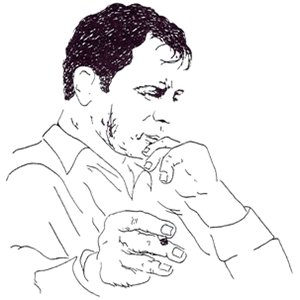
Moody Street Irregulars (subtitled ‘A Jack Kerouac Newsletter’) was an American publication dedicated to the history and the cultural influences of Jack Kerouac and the Beat Generation. Edited and published by Joy Walsh, it featured articles, memoirs, reviews and poetry. Published from Clarence Center, New York, it had a run of 28 issues from Winter 1978 to 1992. The title of the publication derives from the Baker Street Irregulars, a group of street urchins often employed by Sherlock Holmes in the novels by Sir Arthur Conan Doyle.
The magazine’s approach is indicated by the contents of issue number 9 (1981), a special ‘Vanity of Duluoz’ (Kerouac’s semi-autobiographical novel) issue including essays and articles by Gregory Stephenson, John Clellon Holmes, Carolyn Cassady, plus an interview with William S. Burroughs by Jennie Skerl. Issue number 11 (Spring/Summer 1982) was a special ‘French Connection’ issue, featuring articles and essays about Kerouac, his French-Canadian ancestry and his popularity in Quebec.
Posted in Art, Language |
Leave a Comment »




 The Daily Omnivore