August 4, 2011
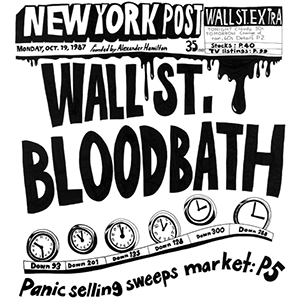
A stock market crash is a sudden dramatic decline of stock prices across a significant cross-section of a stock market, resulting in a significant loss of paper wealth. Crashes are driven by panic as much as by underlying economic factors. They often follow speculative stock market bubbles.
Stock market crashes are social phenomena where external economic events combine with crowd behavior and psychology in a positive feedback loop where selling by some market participants drives more market participants to sell. Generally speaking, crashes usually occur under the following conditions: a prolonged period of rising stock prices and excessive economic optimism, a market where P/E ratios exceed long-term averages, and extensive use of margin debt and leverage by market participants.
read more »
Posted in Money, Politics, Science |
1 Comment »
August 4, 2011

Recession shapes are used by economists to describe different types of recessions. There is no specific academic theory or classification system for recession shapes; rather the terminology is used as an informal shorthand to characterize recessions and their recoveries. The most commonly used terms are V-shaped, U-shaped, W-shaped, and L-shaped recessions. The letters can also be applied referring to the recoveries (ie ‘V-shaped recovery’).
In a V-shaped recession, the economy suffers a sharp but brief period of economic decline with a clearly defined trough, followed by a strong recovery. V-shapes are the normal shape for recession: ‘There is a strong historical ‘snap back’ relationship between the strength of economic recovery and the severity of the preceding recession. Thus, recessions and their recoveries have a tendency to trace out a ‘V’ shape.’
read more »
Posted in Money, Politics |
Leave a Comment »
August 4, 2011

Whole grains are cereal grains that contain cereal germ, endosperm, and bran, in contrast to refined grains, which retain only the endosperm. Whole Grains can generally be sprouted while refined grains generally will not sprout. Wholemeal products are made by grinding whole grains in order to make whole grain flour. Whole grains are a natural source of protein as well as a source of carbohydrates and are made into many different kinds of foods.
There are multiple grains such as cereal grains (e.g. wheat, brown rice, oats, barley, corn, and rye) as well as pseudocereals (e.g. quinoa and buckwheat) that may be labeled whole grains. Common whole grain products include: whole wheat bread, whole wheat pasta, rolled oats, and popcorn. By contrast, common refined-grain products include: white rice, white bread, hominy, and pasta.
read more »
Posted in Food, Health |
Leave a Comment »
August 4, 2011

Grain milk is a milk substitute made from fermented grain or from flour. Grain milk can be made from oats, spelt, rice, rye, einkorn wheat or quinoa, and looks very similar to cow’s milk. It has a lower protein content and a higher carbohydrate content than cow’s milk. Just as cow’s milk is often fortified, grain milks may have calcium and some vitamins (especially B12) added to them.
Grain milk is low in saturated fat and contains no lactose, which is beneficial for those who are lactose intolerant. Grain milk also lacks milk protein, making it suitable for vegans and people with milk allergies. Flavored grain milk can come in plain, vanilla, chocolate or a variety of other flavors. There are also grain milk cream and desserts available.
Posted in Food, Health |
Leave a Comment »
August 4, 2011

Milk is a white liquid produced by the mammary glands of mammals. It is the primary source of nutrition for infants before they are able to digest other types of food. Early-lactation milk contains colostrum, which carries the mother’s antibodies to the baby and can reduce the risk of many diseases in the baby. The precise components of raw milk vary by species and by a number of other factors, but it contains significant amounts of saturated fat, protein and calcium as well as vitamin C.
In almost all mammals, milk is fed to infants through breastfeeding, either directly or by expressing the milk to be stored and consumed later. Some cultures, historically or currently, continue to use breast milk to feed their children until they are seven years old. Human infants sometimes are fed fresh goat milk, but there are known risks in this practice, such as developing a host of allergic reactions.
read more »
Posted in Food, Health, Science |
Leave a Comment »
August 4, 2011

Jack Herer (1939 – 2010) was an American cannabis activist and the author of ‘The Emperor Wears No Clothes,’ a book which has been used in efforts to decriminalize cannabis. A former Goldwater Republican, he believed that the cannabis plant should be decriminalized because it has been shown to be a renewable source of fuel, food, and medicine that can be grown in virtually any part of the world. A specific strain of cannabis has been named after Herer that has won several awards, including the 7th High Times Cannabis Cup. He ran for US President twice, in 1988 (1,949 votes) and 1992 (3,875 votes) as the Grassroots Party candidate. In July 2000, he suffered a minor heart attack and a major stroke, resulting in difficulties speaking and moving the right side of his body. He mostly recovered, and claimed in 2004 that treatment with amanita muscaria, a psychoactive mushroom had cured him. He died six years later, aged 70.
European experts on hemp, like Dr. Hayo Van der Werf and Dr. Ivan Bûcsa, criticized Herer’ for making unrealistic claims regarding the potential of hemp, for example: Herer claimed that hemp produces higher yields than other crops. Van der Werf argue that is simply wrong. Under most favorable growing conditions, other crops such as maize, sugar beet or potato produced similar dry matter yields. Herer also claimed that hemp hurds, which make up 60 to 80 % of the stem dry weight, contain 77 % cellulose. Van der Werf argue that is wrong. Cellulose content of hemp hurds has been found to vary between 32 and 38 %. Possibly, Herer confused the hurds, which form the woody core of the hemp stem, with the bark, which forms the outer layer of the hemp stem. The bark contains the long bast fibers which are used in textile manufacturing.
Posted in Drugs, Money, Politics |
1 Comment »
August 3, 2011

The Acid Tests were a series of parties held by Ken Kesey in the San Francisco Bay Area during the mid 1960s, centered entirely around the use of, experimentation with, and advocacy of, the psychedelic drug LSD, also known as ‘acid.’ The name ‘Acid Test’ was coined by Kesey, after the term ‘acid test’ used by gold miners in the 1850s.
He advertised the parties with posters that read, ‘Can YOU Pass The Acid Test?,’ and the name was later popularized in Tom Wolfe’s 1968 book, ‘The Electric Kool-Aid Acid Test.’ Musical performances by the Grateful Dead were commonplace, along with black lights, strobe lights, and fluorescent paint. The Acid Tests are notable for their influence on the LSD-based counterculture of the San Francisco area and subsequent transition from the beat generation to the hippie movement.
Posted in Drugs, Games, Humor |
Leave a Comment »
August 3, 2011

The Electric Kool-Aid Acid Test is a work of literary journalism by Tom Wolfe, published in 1968. Using techniques from the genre of hysterical realism and pioneering new journalism, the ‘nonfiction novel’ tells the story of Ken Kesey and his band of Merry Pranksters.
The book follows the Pranksters across the country driving in a psychedelic painted school bus dubbed ‘Furthur,’ reaching what they considered to be personal and collective revelations through the use of LSD and other psychedelic drugs. The book also describes the Acid Tests, early performances by The Grateful Dead, and Kesey’s exile to Mexico.
Posted in Art, Drugs, Language |
Leave a Comment »
August 2, 2011

Sky lanterns, also known as Kongming Lantern are airborne paper lanterns found in some Asian cultures. They are constructed from oiled rice paper on a bamboo frame, and contain a small candle or fuel cell composed of a waxy flammable material. When lit, the flame heats the air inside the lantern, thus lowering its density causing the lantern to rise into the air. The sky lantern is only airborne for as long as the flame stays alight, after which the lantern floats back to the ground.
According to popular lore, the Kongming Lantern was the first hot air balloon, said to be invented by the Chinese sage and military strategist Zhuge Liang, whose reverent term of address (i.e. Chinese style name) was Kongming. They were first deployed at the turn of the 3rd century as a type of signaling balloon or, it is claimed, as a type of spy blimp in warfare. Alternatively the name may come from the lantern’s resemblance to the hat Kongming is traditionally shown to be wearing.
read more »
Posted in Games, Technology, World |
Leave a Comment »
August 2, 2011
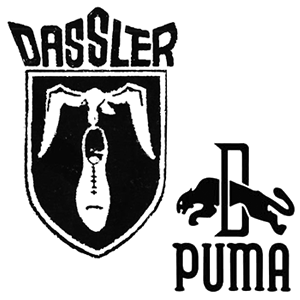
Rudolf Dassler (1898 – 1974) was the German founder of the sportswear company PUMA and the older brother of Adidas founder, Adolf ‘Adi’ Dassler. The brothers were partners in a shoe company Adi started, Gebrüder Dassler Schuhfabrik (Dassler Brothers Shoe Factory). Rudi joined in 1924, however the brothers became rivals following World War II and started their own companies in 1948. Initially calling the new company ‘Ruda,’ it was soon changed to its present name of Puma. Puma is the word for cougar in German as well as other languages. Under his direction, Puma remained a small provincial company. Only under the direction of his son, Armin Dassler, did it become the worldwide known company it remains today.
With the rise of Adolf Hitler in the 1930s, both Dassler brothers joined the Nazi Party, with Rudolf reputed as being the more ardent National Socialist. Rudolf was drafted, and later captured, while Adi stayed behind to produce boots for the Wehrmacht (Nazi military). During the war, a growing rift between the pair reached a breaking point after an Allied bomb attack in 1943 when Adi and his wife climbed into a bomb shelter that Rudolf and his family were already in: ‘The dirty bastards are back again,’ Adi said, apparently referring to the Allied war planes, but Rudolf was convinced his brother meant him and his family. Rudolf, upon his capture by American troops, was suspected of being a member of the SS, information supposedly supplied by none other than his brother Adi.
Posted in Games, Money, War |
Leave a Comment »
August 2, 2011

Adolf Dassler (1900 – 1978), known as ‘Adi,’ was the founder of the German sportswear company Adidas. Trained as a cobbler, Dassler started to produce his own sports shoes in his mother’s laundry after his return from World War I. His father, Christoph, who worked in a shoe factory, and the Zehlein brothers, who produced the handmade spikes for track shoes in their blacksmith’s shop, supported Dassler in starting his own business. In 1924, his older brother Rudolf joined the business, which became the Gebrüder Dassler Schuhfabrik (Dassler Brothers Shoe Factory). At the 1928 Olympics, Dassler equipped several athletes, laying the foundation for the international expansion of the company. During the 1936 Summer Olympics in Berlin, Dassler equipped Jesse Owens of the USA with his shoes. Owens went on to win four gold medals in that Olympics.
With the rise of Adolf Hitler in the 1930s, both Dassler brothers joined the Nazi Party, with Rudolf reputed as being the more ardent National Socialist. Rudolf was drafted, and later captured, while Adi stayed behind to produce boots for the Wehrmacht (Nazi military). The war exacerbated the differences between the brothers and their wives. Rudolf, upon his capture by American troops, was suspected of being a member of the SS, information supposedly supplied by none other than his brother Adi. By 1948, the rift between the brothers widened. Rudolf left the company to found Puma on the other side of town (across the Aurach River), and Adolf Dassler renamed the company Adidas after his own nickname (Adi Dassler).
Posted in Games, Money, War |
Leave a Comment »
August 1, 2011

Billy Preston (1946 – 2006) was an African American rhythm and blues musician from Houston, Texas, raised mostly in Los Angeles. In addition to his career as a solo artist, Preston collaborated with some of the greatest names in the music industry, including The Beatles, The Rolling Stones, Nat King Cole, Little Richard, Ray Charles, Elton John, Eric Clapton, Bob Dylan, Aretha Franklin, and Johnny Cash. He played the Fender Rhodes electric piano and the Hammond organ on the Get Back sessions in 1969.
Preston began playing piano while sitting on his mother’s lap at age three, and he was considered something of a child prodigy on piano and organ. By the age of 10 he was performing in the bands of gospel singers Mahalia Jackson, James Cleveland, and Andrae Crouch. In the 1960s he performed with Little Richard and Ray Charles, and in 1963, aged just 16, he played organ on the Sam Cooke album ‘Night Beat.’ He also began a recording career as a solo artist with the 1965 album ‘The Most Exciting Organ Ever.’
read more »
Posted in Art |
Leave a Comment »



 The Daily Omnivore