June 4, 2012
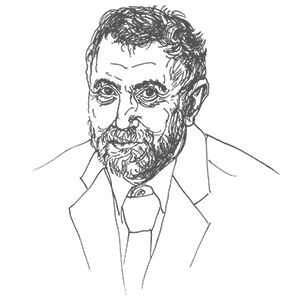
‘The Theory of Interstellar Trade‘ is a paper written in 1978 by economist Paul Krugman. The paper was first published in 2010 in the journal ‘Economic Inquiry.’ He described the paper as something he wrote to cheer himself up when he was an oppressed assistant professor, caught up in the academic rat race.
Krugman analyzed the question of how interest rates on goods in transit should be computed when the goods travel at close to the speed of light. This is a problem because the time taken in transit will appear less to an observer traveling with the goods than to a stationary observer.
read more »
Posted in Humor, Money, Technology |
1 Comment »
June 4, 2012
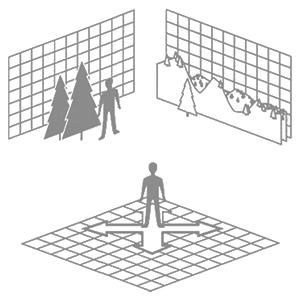
‘Ship in a Bottle‘ is a ‘Star Trek: The Next Generation’ episode (season six) where a sentient holodeck character, Professor James Moriarty, puts the Enterprise in jeopardy in his quest to be freed from confines of holographic environments.
Data and La Forge are enjoying a Sherlock Holmes holodeck program when the two notice that a character programmed to be left-handed was actually right-handed. They call Lt. Barclay to repair the holodeck, but as he checks the status of the Sherlock Holmes programs, he encounters an area of protected memory. He activates it to find the artificial sentient Professor James Moriarty character projected into the Holodeck, who appears to have memory since his creation (‘Elementary, Dear Data’ in season three: Geordi asks the holodeck to make a Sherlock Holmes villain that can defeat Data, creating a foe more powerful than originally planned).
read more »
Posted in Art, Games, Technology |
Leave a Comment »
June 4, 2012

An impossible bottle is a bottle that has an object inside it that does not appear to fit through the mouth of the bottle, a type of mechanical puzzle.
The ship in a bottle is a traditional type of impossible bottle. Other common objects used include matchboxes, decks of cards, tennis balls, racket balls, Rubik’s Cubes, padlocks, knots, and scissors.
read more »
Posted in Games |
1 Comment »
June 3, 2012

A wobbulator is an electronic device primarily used for the alignment of receiver or transmitter intermediate frequency strips. It is usually used in conjunction with an oscilloscope, to enable a visual representation of a receivers passband to be seen, hence, simplifying alignment; it was used to tune early consumer AM radios. The term ‘wobbulator’ is a portmanteau of wobble and oscillator. A ‘wobbulator’ (without capitalization) is a generic term a frequency-modulated RF oscillator, also called a ‘sweep generator.’
A wobulator was used in some old microwave signal generators to create what amounted to frequency modulation. When capitalized ‘Wobbulator’ refers to the trade name of a specific brand of RF/IF alignment generator. The Wobbulator was made by a company known as TIC (Tel-Instrument Company). The Wobbulator generator, designated model 1200A, when connected to an oscilloscope and television receiver under test, would display a representation of the receiver’s RF/IF response curves with ‘markers’ defining critical frequency reference points as a response curve on the oscilloscope screen. Such an amplitude-versus-frequency graph is also often referred to as a Bode (pronounced ‘bodee’) plot.
Posted in Technology |
Leave a Comment »
June 3, 2012

Alva Noto is a stage name of sound artist Carsten Nicolai who uses art and music as complementary tools to create microscopic views of creative processes.
He is a member of the music groups Signal (with Frank Bretschneider and Olaf Bender aka Byetone) and Cyclo (with Ryoji Ikeda).
read more »
Posted in Art, Technology, World |
Leave a Comment »
June 1, 2012
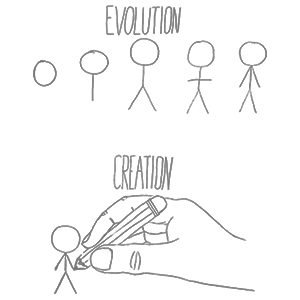
Irreducible complexity is an argument by proponents of intelligent design that certain biological systems are too complex to have evolved from simpler, or ‘less complete’ predecessors, through natural selection acting upon a series of advantageous naturally occurring, chance mutations.
The argument is central to intelligent design, and is rejected by the scientific community at large, which overwhelmingly regards intelligent design as pseudoscience. Irreducible complexity is one of two main arguments (both discredited) used by intelligent design proponents, the other being specified complexity (which singles out patterns that are both specified and complex as markers of design by an intelligent agent).
read more »
Posted in Philosophy, Science |
1 Comment »


 The Daily Omnivore