October 2, 2012

Old Bay Seasoning is a blend of herbs and spices that is currently marketed in the United States by McCormick & Company, and produced in Maryland.
It is produced in the Chesapeake Bay area where it was developed by German immigrant Gustav Brunn in the 1940s, and where the seasoning is very popular to this day. At that time, crabs were so plentiful that bars in Baltimore offered them free and seasonings like Old Bay were created to encourage patrons to purchase more beverages.
read more »
Posted in Food |
1 Comment »
October 2, 2012

‘The End of Work: The Decline of the Global Labor Force and the Dawn of the Post-Market Era’ is a non-fiction book by American economist Jeremy Rifkin, published in 1995.
Rifkin contended that worldwide unemployment would increase as information technology eliminated tens of millions of jobs in the manufacturing, agricultural, and service sectors. He predicted devastating impact of automation on blue-collar, retail and wholesale employees.
read more »
Posted in Language, Money, Technology |
Leave a Comment »
October 2, 2012
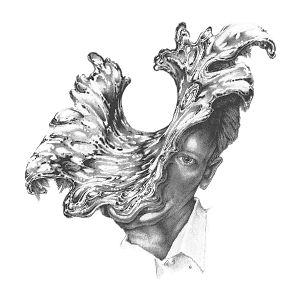
An infomorph is a virtual body of information that can possess emergent features such as personality. The term was first described in Charles Platt’s 1991 novel ‘The Silicon Man,’ where it refers to a single biological consciousness transferred into a computer through a process of mind transfer. In the book, a character refers to an infomorph as ‘intelligence held in a computer memory,’ and an ‘information entity.’
Russian artificial intelligence theorist Alexander Chislenko uses the same word in his 1996 essay ‘Networking in the Mind Age,’ to refer to a software agent that possesses distributed intelligence. Whether the vision shared in Platt’s novel will ever be more than a theory is uncertain, but computing power is still increasing exponentially, and the ‘Future of Humanity Institute’ at Oxford University have considered the philosophical and technical feasibility of this theory at some point in the future.
read more »
Posted in Philosophy, Technology |
1 Comment »
October 2, 2012


Whole brain emulation or mind uploading (sometimes called mind transfer) is the hypothetical process of transferring or copying a conscious mind from a brain to a non-biological substrate by scanning and mapping a biological brain in detail and copying its state into a computer system or another computational device.
The computer would have to run a simulation model so faithful to the original that it would behave in essentially the same way as the original brain, or for all practical purposes, indistinguishably. The simulated mind is assumed to be part of a virtual reality simulated world, supported by an anatomic 3D body simulation model. Alternatively, the simulated mind could be assumed to reside in a computer inside (or connected to) a humanoid robot or a biological body, replacing its brain.
read more »
Posted in Health, Philosophy, Technology |
6 Comments »
October 2, 2012

A posthuman is a concept originating notably in the fields of science fiction, futurology, contemporary art, and philosophy.
These multiple and interactive origins have contributed to profound confusion over the similarities and differences between the posthuman of ‘posthumanism’ (a line of philosophical reasoning) and the posthuman of ‘transhumanism’ (an intermediary form between the human and the hypothetical posthuman).
read more »
Posted in Health, Philosophy, Technology |
1 Comment »
October 2, 2012
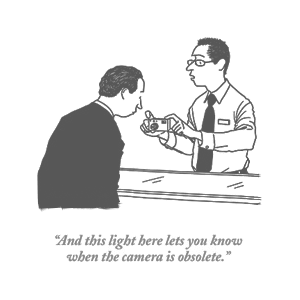
Obsolescence [ob-suh-les-uhns] is the state of being which occurs when an object, service or practice is no longer wanted even though it may still be in good working order. Obsolescence frequently occurs because a replacement has become available that has advantages which outweigh the inconveniences related to purchasing the replacement. Obsolete refers to something that is already disused or discarded, or antiquated. Typically, obsolescence is preceded by a gradual decline in popularity.
Driven by rapid technological changes, new components are developed and launched on the market with increasing speed. The result is a dramatic change in production methods of all components and their market availability. A growing industry sector is facing issues where life cycles of products no longer fit together with life cycles of required components.
read more »
Posted in Money, Technology |
1 Comment »
October 1, 2012

A technology evangelist is a person who attempts to build a critical mass of support for a given technology in order to establish it as a technical standard in a market that is subject to network effects (when such effects are present, the value of a product or service is dependent on the number of others using it).
Professional technology evangelists are often employed by firms which seek to establish their proprietary technologies as de facto standards or to participate in setting non-proprietary open standards. Non-professional technology evangelists may act out of altruism or self-interest (e.g., to gain the benefits of early adoption or the network effect).
read more »
Posted in Language, Money, Technology |
2 Comments »
October 1, 2012

The Cult of Mac is a book by technology writer Leander Kahney about fanaticism for the Apple product line. Professor of marketing Russell Belk argues that, like a religion, the Cult of Mac is a belief system that helps its followers understand technology and the world.
The attitude of Apple sympathizers and fans is viewed by many as being ‘cult-like.’ According to neurological research cited by the BBC on their ‘Secrets of the Superbrands’ documentary, the response from the brain of an Apple enthusiast when viewing the brand-related symbols and imagery is similar to the one of a religious devotee when exposed to religious symbols and images. Apple founder Steve Jobs is compared to a god figure and savior, and his life story is said to resemble Joseph Campbell’s heroic adventure myths. Jobs was often viewed as a saintly figure to Mac users.
read more »
Posted in Money, Philosophy, Technology |
1 Comment »
October 1, 2012
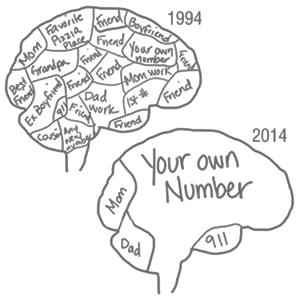
‘Is Google Making Us Stupid? What the Internet is doing to our brains’ is a magazine article by technology writer Nicholas G. Carr highly critical of the Internet’s effect on cognition. It was published in ‘The Atlantic’ magazine as a six-page cover story in 2008.
Carr’s main argument is that the Internet might have detrimental effects on cognition that diminish the capacity for concentration and contemplation. Despite the title, the article is not specifically targeted at Google, but more at the cognitive impact of the Internet and World Wide Web.
read more »
Posted in Education, Health, Technology |
Leave a Comment »
October 1, 2012

‘The Extended Mind‘ is a book in the field of philosophy of mind edited by MIT philosopher Richard Menary. It contains several papers by different philosophers. The ‘extended mind thesis’ (EMT) refers to an emerging concept that addresses the question as to the division point between the mind and the environment by promoting the view of active externalism.
The EMT proposes that some objects in the external environment are utilized by the mind in such a way that the objects can be seen as extensions of the mind itself. Specifically, the mind is seen to encompass every level of the cognitive process, which will often include the use of environmental aids.
read more »
Posted in Health, Philosophy, Technology |
Leave a Comment »
October 1, 2012

Nensha (Chinese: ‘spirit photography’ literally ‘sense inception’), better known to English speakers as ‘thoughtography’ or ‘projected thermography’ or ‘nengraphy,’ is the ability to psychically ‘burn’ images from one’s mind onto surfaces, or even into the minds of others.
It is common in fiction, and made noteworthy by ‘The Ring’ media franchise. While the term ‘thoughtography’ has been in the English lexicon since 1913, the more recent term ‘projected thermography’ is a neologism originating from the 2002 U.S. remake of ‘The Ring.’
read more »
Posted in Death, Philosophy, Science |
Leave a Comment »
October 1, 2012

Ectoplasm [ek-tuh-plaz-uhm] (Greek: ‘ektos,’ meaning ‘outside,’ and ‘plasma,’ meaning ‘something formed or molded’) is a term coined by French physiologist Charles Richet to denote a substance or spiritual energy ‘exteriorized’ by physical mediums (individuals who claim a spiritual connection to the dead).
Ectoplasm is said to be associated with the formation of spirits; however since World War II reports of ectoplasmic phenomena have declined and many psychical researchers doubt whether genuine cases ever existed. Ectoplasm is said to be formed by physical mediums when in a trance state. This material is excreted as a gauze-like substance from orifices on the medium’s body and spiritual entities are said to drape this substance over their nonphysical body, enabling them to interact in the physical and real universe. According to mediums, the ectoplasm can not occur in light conditions as the ectoplasmic substance would disintegrate.
read more »
Posted in Death, Philosophy, Science |
Leave a Comment »


 The Daily Omnivore