August 3, 2013

Darren Foreman (b. 1982), better known as Beardyman, is a musician from London renowned for his beatboxing skills and use of live looping technology. He was given the nickname ‘Beardyman’ because a name was quickly needed for a flyer for an early show, and he had a beard at the time.
As well as accomplished solo beatboxer, Beardyman was inspired by MC Xander to use music technology such as the Korg Kaoss Pad 3 in order to loop and sample his vocals. Through his use of looping tools he effectively produces whole DJ sets where the records are constructed live from his vocalisations, as well as live production of original material.
read more »
Posted in Art, Technology |
Leave a Comment »
August 2, 2013

Primary Colors is a 1998 film based on the book ‘Primary Colors: A Novel of Politics,’ a roman à clef (novel about real life, overlaid with a façade of fiction) about Bill Clinton’s first presidential campaign in 1992, which originally had been published anonymously, but was revealed to have been written by journalist Joe Klein, who had been covering Clinton’s campaign for ‘Newsweek.’
The film was directed by Mike Nichols and starred John Travolta, Emma Thompson, Billy Bob Thornton, and Kathy Bates. Bates was nominated for an Academy Award for Best Supporting Actress for her performance, and the film itself was nominated for an Academy Award for Best Adapted Screenplay.
read more »
Posted in Art, Politics |
Leave a Comment »
August 2, 2013
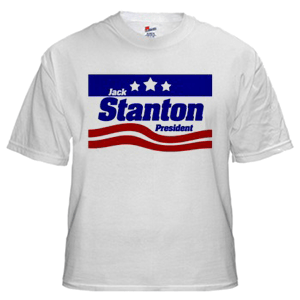
‘Primary Colors: A Novel of Politics’ is a 1996 roman à clef, a work of fiction that purports to describe real life characters and events — namely, Bill Clinton’s first presidential campaign in 1992. It has been compared to two other novels about American politics; Robert Penn Warren’s ‘All the King’s Men’ (1946) and ‘O: A Presidential Novel’ (2011). The book was originally published by an anonymous author, who was later found to be columnist Joe Klein. Klein completed a sequel of sorts, ‘The Running Mate’ in 2000, focusing on the ‘Primary Colors’ character of Charlie Martin.
An early reviewer opined that the author wished to remain unknown because ‘Anonymity makes truthfulness much easier.’ Later commentators called the publishing of the book under an anonymous identity an effective marketing strategy that produced more publicity for the book, and thus more sales, without calling into question the author’s actual inside knowledge.
read more »
Posted in Language, Politics |
Leave a Comment »
August 1, 2013
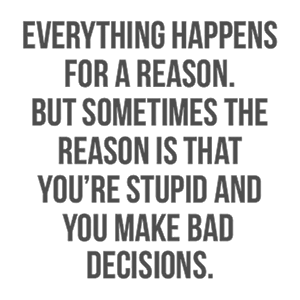
Tough love is an expression used when someone treats another person harshly or sternly with the intent to help them in the long run. The phrase was evidently coined by American politician Bill Milliken when he wrote the book ‘Tough Love’ in 1968 and has been used by numerous authors since then.
In most uses, there must be some actual love or feeling of affection behind the harsh or stern treatment to be defined as tough love. For example, genuinely concerned parents refusing to support their drug-addicted child financially until he or she enters drug rehabilitation would be said to be practicing tough love. Athletic coaches who maintain strict rules and highly demanding training regimens, but who care about their players, could also be said to be practicing tough love.
read more »
Posted in Health, Language, Love |
Leave a Comment »
August 1, 2013

A thought-terminating cliché is a commonly used phrase, sometimes passing as folk wisdom, used to propagate cognitive dissonance (discomfort caused by holding conflicting thoughts). Though the phrase in and of itself may be valid in certain contexts, its application as a means of dismissing dissent or justifying fallacious logic is what makes it thought-terminating.
The term was popularized by American psychiatrist Robert Jay Lifton in his 1956 book ‘Thought Reform and the Psychology of Totalism.’ Lifton said, ‘The language of the totalist environment is characterized by the thought-terminating cliché. The most far-reaching and complex of human problems are compressed into brief, highly reductive, definitive-sounding phrases, easily memorized and easily expressed. These become the start and finish of any ideological analysis.’
read more »
Posted in Humor, Language |
Leave a Comment »
August 1, 2013
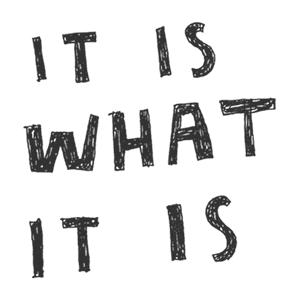
A platitude [plat-i-tood] is a trite, meaningless, or prosaic statement, generally directed at quelling social, emotional, or cognitive unease. The word derives from ‘plat,’ French word for ‘flat.’ Platitudes are geared towards presenting a shallow, unifying wisdom over a difficult topic. However, they are too overused and general to be anything more than undirected statements with ultimately little meaningful contribution towards a solution.
Examples could be statements such as ‘Meet in the middle,’ ‘Everybody has a right to an opinion,’ ‘Everything happens for a reason,’ ‘It is what it is,’ and ‘Do what you can.’ Platitudes are generally a form of thought-terminating cliché.
Posted in Language |
Leave a Comment »


 The Daily Omnivore