September 24, 2013

‘Music for a French Elevator and Other Short Format Oddities by The Books‘ is a 2006 release by NY electronic duo The Books. It is a compendium on mini CD of four pieces created for the ‘1%’ art and sound installation in the Ministry of Culture in Paris, France in 2004.
The pieces were created to be played in the elevator of the Ministry, giving the release its title. Following the initial four tracks (those designed for the elevator) are ‘several ‘classic’ spoken word tracks’ taken from The Books’ sample libraries.
Posted in Art, World |
Leave a Comment »
September 24, 2013
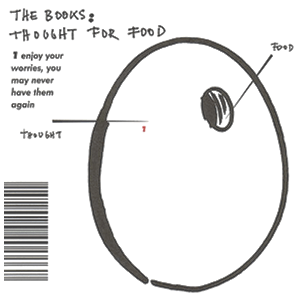
The Books were an American duo consisting of guitarist and vocalist Nick Zammuto and cellist Paul de Jong. Their releases typically incorporated samples of obscure sounds and speech. They released three critically acclaimed albums on the German label Tomlab, and released their fourth studio album, ‘The Way Out,’ on Temporary Residence Limited in 2010.
Zammuto and de Jong met in New York City in 1999 as they shared the same apartment building. De Jong invited Zammuto to dinner at his apartment, where he played him some of his collection of audio and video samples, including a Shooby Taylor scat record. Zammuto said of their meeting that ‘we both kind of knew at that moment that we listened (to music) in interesting ways and had similar approaches to music.’ Soon after, they began playing what they considered to be pop music, in comparison to their own works, under the name ‘The Books.’
read more »
Posted in Art |
Leave a Comment »
September 23, 2013

‘NBA Jam‘ is an arcade game first developed by Midway in 1993 by programmer and game designer Mark Turmell. The game featured 2-on-2 basketball and is one of the first sports games to offer NBA-licensed teams and players, and their real digitized likenesses. Midway had previously released such sports games as ‘Arch Rivals’ in 1989 (another 2-on-2 basketball game, on which NBA Jam’s gameplay is based), ‘High Impact’ in 1990, and ‘Super High Impact’ in 1991, but ‘NBA Jam’ was the company’s first major hit.
The game became exceptionally popular, and generated a significant amount of money for arcades after its release, creating revenue of $1 billion in quarters. Its success gave rise to a new genre of sports games which were based around fast, action-packed gameplay and exaggerated realism, a formula which Midway would also later apply to the sports of football (‘NFL Blitz’), and hockey (‘2 on 2 Open Ice Challenge’).
read more »
Posted in Games, Money, Technology |
1 Comment »
September 22, 2013
Clive Thompson (b. 1968) is a Canadian freelance journalist, blogger and science and technology writer. Thompson graduated from the University of Toronto with majors in political science and English. He previously worked for ‘Canada’s Report on Business’ magazine and ‘Shift’ magazine, then became a freelance contributor for ‘The New York Times Magazine,’ ‘The Washington Post, and several other publications. He writes about digital technologies and their social and cultural impact
He started his science and technology blog, ‘Collision Detection,’ in 2002. Thompson lives in Brooklyn with his wife Emily Nussbaum who is the TV critic for ‘The New Yorker.’
Posted in Language, Technology |
Leave a Comment »
September 21, 2013
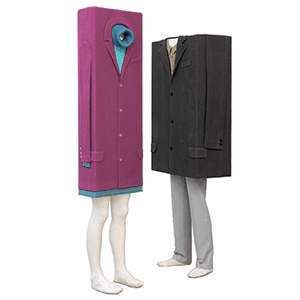
Erwin Wurm (b. 1954) is an Austrian artist; since the late 1980s, he has developed an ongoing series of ‘One Minute Sculptures,’ in which he poses himself or his models in unexpected relationships with everyday objects close at hand, prompting the viewer to question the very definition of sculpture. He seeks to use the ‘shortest path’ in creating a sculpture — a clear and fast, sometimes humorous, form of expression. As the sculptures are fleeting and meant to be spontaneous and temporary, the images are only captured in photos or on film.
Most Recently, Erwin Wurm has worked on a series of sculpture titled ‘Fat Car,’ which depict ‘puffy, obese, life-size sculptures that bulge like overfilled sacks.’ The first of this series was developed with Opel designers but they were unsuccessful in achieving the kind of shape that Wurm had in mind. In order to create the quality of fat, the artist uses polyurethane foam and styrofoam covered with lacquer.
read more »
Posted in Art, Humor |
1 Comment »
September 20, 2013

‘See You Next Wednesday‘ is a recurring gag in most of the films directed by John Landis, usually referring to a fictional film that is rarely seen and never in its entirety. Each instance seems to be a completely different film. Landis got the title from ‘2001: A Space Odyssey’; it is the last line spoken by Frank Poole’s father during Poole’s videophone conversation.
In Landis’ first film, ‘Schlock’ (1973), SYNW is mentioned twice and shown as a poster. Brief casting and plot descriptions are given each time it is mentioned, making it clear that this is in fact two different films both titled ‘See You Next Wednesday.’ In the sketch comedy film ‘The Kentucky Fried Movie’ (1977), the film is a melodrama presented in ‘Feel-Around,’ a technique where an usher stands behind each movie patron and does things to them as they occur in the film, enhancing the movie-going experience, at least until the scene where the woman puts a knife to the man’s throat.
read more »
Posted in Art, Humor |
Leave a Comment »
September 20, 2013
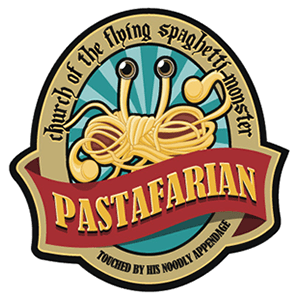
A parody religion or mock religion is an imitation belief system that challenges spiritual convictions of others, often through humor, satire, and/or burlesque (literary ridicule). They are frequently created to address specific religions, sects, gurus, cults, and or new religious movements, but may also be a parody of no particular religion, instead parodying the concept of religious belief itself. In some parody religions, emphasis is on making fun and being a convenient excuse for pleasant social interaction among like-minded, e.g. the Church of the SubGenius. Other parody religions target a specific religion, sect, cult, or new religious movement.
Several religions that are classified as parody religions have a number of relatively serious followers who embrace the perceived absurdity of these religions as spiritually significant, a decidedly postmodern approach to religion. For instance, in Discordianism (begun in 1965), it may be hard to tell if even these ‘serious’ followers are not just taking part in an even bigger joke. This joke, in turn, may be part of a greater path to enlightenment, and so on ad infinitum.
read more »
Posted in Humor, Philosophy |
Leave a Comment »
September 19, 2013

Spooning is a sexual position and a cuddling technique. The name derives from the way that two spoons may be positioned side by side, with bowls aligned. In the sexual spoons position, the penetrative partner lies on one side, with knees bent. The receptive partner also lies on the same side, with back pressed against the penetrative partner’s front. Both partners’ upper bodies may be pressed together or separated with just the pelvises connecting, and their legs can also rest on top of each other. The receptive partner may have to lift the upper knee to allow for easier penetration.
This rear-entry position allows for a great deal of physical intimacy, as there is full-body contact which allows for cuddling. However, there is little visual stimulation for either partner, as they are not facing one another and cannot see each other’s bodies fully. Variations on this position include the partners lying on their sides face-to-face or in the ‘scissors’ position. The spoons position may be preferable for couples who have just woken up or are very tired. It may be used if the woman is pregnant, even during the last trimester, because it does not put any pressure on the abdomen.
Posted in Language, Sex |
Leave a Comment »
September 19, 2013


Kleptothermy [klep-toh-thur-mee] is any form of thermoregulation by which an animal shares in the metabolic thermogenesis of another animal. It may or may not be reciprocal, and occurs in both endotherms and ectotherms. Its most common form is huddling. Some species of ectotherms including lizards and snakes increase their effective mass by clustering tightly together. It is also widespread among gregarious endotherms such as bats and birds (such as the mousebird and emperor penguin) where it allows the sharing of body heat (particularly among juveniles).
In at least one case this is not reciprocal, and might be accurately described as heat-stealing. Some male Canadian red sided garter snakes engage in female mimicry by producing fake pheromones after emerging from hibernation. This causes rival males to cover them in a mistaken attempt to mate, and so transfer heat to them. This allows those males that mimic females to become more quickly revitalized after hibernation (which depends upon raising their body temperature), giving them an advantage in their own attempts to mate.
Posted in Health, Language, Science |
Leave a Comment »
September 18, 2013
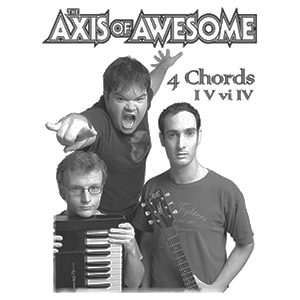
The I-V-vi-IV progression (the pop-punk chord progression) is a common chord progression popular across several genres of music. It involves the I, V, vi, and IV chords; for example, in the key of C major, this would be: C-G-Am-F. The V is often replaced by iii (‘Price Tag’), III (‘If We Ever Meet Again’ chorus), ii (‘Halo’), I (‘Doesn’t Mean Anything’), bVII (‘Firework’ first verse), II (‘Try Too Hard’ by P!nk), IV (‘I Gotta Feeling’).
It can also be used in the form vi-IV-I-V, which was dubbed the ‘sensitive female chord progression’ by Boston Globe Columnist Marc Hirsh. In C major this would be Am-F-C-G (Am-F-C-G/B voicing is very common in modern pop music). Hirsh first noticed the chord progression in the song ‘One of Us’ by Joan Osborne. He claimed it was used by many members of the Lilith Fair in the late 1990s.
Posted in Art, Humor, Money |
1 Comment »
September 17, 2013
Human–robot interaction (HRI) is the study of interactions between humans and robots; it is a multidisciplinary field with contributions from artificial intelligence, robotics, natural language understanding, design, and social sciences.
The basic goal of HRI is to define a general human model that could lead to principles and algorithms allowing more natural and effective interaction between humans and robots. Research ranges from how humans work with remote, tele-operated unmanned vehicles to peer-to-peer collaboration with anthropomorphic robots. Many in the field of HRI study how humans collaborate and interact and use those studies to motivate how robots should interact with humans.
read more »
Posted in Technology |
1 Comment »
September 16, 2013

Moral Mazes is a 1988 book from sociologist Robert Jackall that documents an investigation into the world of corporate managers in the United States. In the introduction, Jackall writes that he ‘went into these organizations to study how bureaucracy – the prevailing organizational form of our society – shapes moral consciousness.’ He called the book, ‘an interpretive sociological account of how managers think the world works.’
Jackall describes the ‘fundamental rules of corporate life’: ‘(1) You never go around your boss. (2) You tell your boss what he wants to hear, even when your boss claims that he wants dissenting views. (3) If your boss wants something dropped, you drop it. (4) You are sensitive to your boss’s wishes so that you anticipate what he wants; you don’t force him, in other words, to act as a boss. (5) Your job is not to report something that your boss does not want reported, but rather to cover it up. You do your job and you keep your mouth shut.’
read more »
Posted in Language, Money, Politics |
2 Comments »


 The Daily Omnivore