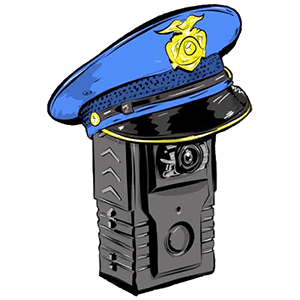
Body worn video (BWV), including what is referred to as a body worn camera (BWC), is a video recording system that is typically utilized by law enforcement to record their interactions with the public, gather video evidence at crime scenes, and has been known to increase both officer and citizen accountability. BWCs are notable because their placement, often on the front of a shirt, provides for first person perspective and ultimately a more complete chain of evidence.
Body worn video was first adopted by British police in 2005, appearing in the form of small-scale tests conducted by the Devon and Cornwall Police. In 2006, the first significant deployments of BWV were undertaken as part of the Domestic Violence Enforcement Campaign. The basic command units equipped with the head cameras recorded everything that happened during an incident from the time of arrival which led to the ‘preservation of good-quality first disclosure evidence from the victim.’
The evidence gathered was deemed especially useful in the way of supporting prosecutions if the victim was reluctant to give evidence or press charges. This led the Home Office to publish a report stating that ‘evidence gathering utilizing this equipment has the potential radically to enhance the police performance at the scene of a wide range of incidents.’ The same report concluded that system had ‘the ability to significantly improve the quality of the evidence provided by police officers at incidents.’ Despite being hailed as a tool to enhance the quality of evidence, by 2007 the focus was beginning to shift away from exclusively benefitting prosecutions. The Home Office highlighted that BWV also had the significant potential to ‘prevent and deter crime.’ In addition, the final report on the national pilot program announced that complaints against the officers wearing the cameras had been reduced to zero and time spent on paperwork had been reduced by almost a quarter. In 2008, Hampshire Police began to use the technology in parts of the Isle of Wight and the main land. These were the first steps that paved the way for Chief Constable Andy Marsh becoming the national lead for BWV.
Pioneers of BWV in the UK began to drive the need to review the legislation surrounding the use of the equipment. In 2009 the Security Industry Authority concluded that a closed-circuit television (CCTV) licence could be extended to cover the use of a body camera. The summary stated that a CCTV licence was required to review footage from a body camera and that a door supervision or security guard licence was required to operate a body camera if security activities were also being performed. In 2010, five years after the first BWV venture, over 40 UK police areas were using body cameras to varying degrees. The project has been a huge success, with proponents touting increased public reassurance, reduction in crime, increased early guilty pleas, quicker resolution of complaints, and reductions in assaults on officers.
While the BWV industry had been steadily growing in the UK, other countries around the world had been adopting the technology and conducting research themselves. 2012 saw the start of the year-long Rialto study in California, which would continue into early 2013. Amongst the conclusions made from the study were a reduction in the use-of-force and complaints against officers. The report states ‘the findings suggest more than a 50% reduction in the total number of incidents of use-of-force compared to control-conditions, and nearly ten times more citizens’ complaints in the 12-months prior to the experiment.’ Other police departments in the States, such as the Albuquerque Police Department have experimented with or deployed body-worn camera systems.
Body worn video has become increasingly discussed as a means of ensuring accountability as instances of police brutality and controversial killings such as the shooting of Michael Brown become more prominent in the public eye. The American Civil Liberties Union has advocated for the use of body-worn cameras by both police departments and U.S. Customs and Border Protection, granted that safeguards are in place to protect the privacy of both officers and civilians. However, they have opposed the use of such systems for parking enforcement officers, fire marshals, building inspectors, or other code enforcement officers. Some police unions have criticized the introduction of body worn video systems, claiming they can affect the judgement of police officers when placed in life-or-death situations. Nonetheless, body worn video systems have generally been welcomed by the public. Police services in Canada such as the Calgary Police Service have trialed body worn video systems, but such systems are not widely used. Police unions in Canada have been opposed to body worn video systems, citing privacy and cost concerns.
One of the first controversies regarding a BWC took place in June 2013, when two Daytona Beach police officers approached 37-year-old Christine Chippewa in a parking lot under Seabreeze Bridge. The officers subsequently arrested her, after one turned off his camera. After Chippewa’s arrest, she filed a complaint of excessive force and the department investigated. Officer Justin Ranum resigned, and Officer Matthew Booth was reportedly fired. The complainant received a $20,000 settlement with the city of Daytona Beach and all charges against her were dropped.


 The Daily Omnivore