November 30, 2023

Q* (pronounced ‘Q-star’) is an alleged internal project by OpenAI dedicated to the application of artificial intelligence in logical and mathematical reasoning. In November 2023, certain employees of OpenAI reportedly raised concerns with the company’s board, suggesting that Q* might signify the imminent emergence of artificial general intelligence. The reported work involves performing math on the level of grade-school students.
Math requires abstract reasoning and a firm grasp of logical principles. It’s not just about recognizing patterns or processing language, but about understanding and applying mathematical concepts and rules. Mathematics also demands precision and consistent application of rules, unlike many language tasks where approximations or multiple interpretations can be acceptable. An AI model that can reliably perform grade-school level math marks a significant advancement in the field, indicating progress towards more sophisticated and logically rigorous AI systems.
read more »
Posted in Technology |
Leave a Comment »
November 27, 2023
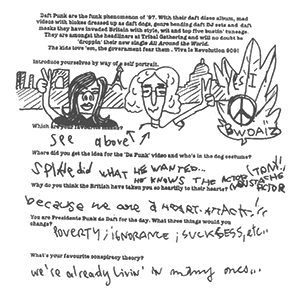
‘Jockey Slut’ was a British music magazine that ran from 1993 to 2004, starting as a bi-monthly fanzine focused on dance music and club culture before becoming a monthly publication in 1999 following acquisition by Swinstead Publishing. The magazine distinguished itself through music-centered coverage that balanced witty fanzine-style writing with irreverent humor, giving early coverage to influential acts like The Chemical Brothers, Daft Punk, and The Streets, while also featuring rock and indie music. Its readers tended to refer to the magazine as just ‘The Slut.’
After transitioning to a quarterly format with increased online presence in 2004, the magazine closed in May of that year, leaving behind a legacy of being one of the first publications to feature interviews with many now-legendary electronic music artists.
read more »
Posted in Art |
1 Comment »
November 26, 2023
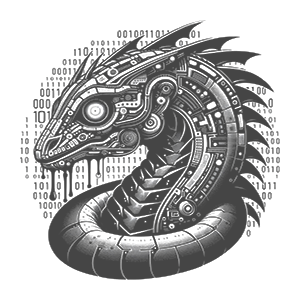
Roko’s basilisk [bas-uh-lisk] is a thought experiment which states that an otherwise benevolent artificial superintelligence (AI) in the future would be incentivized to create a virtual reality simulation to torture anyone who knew of its potential existence but did not directly contribute to its advancement or development, in order to incentivize said advancement.
It originated in a 2010 post at discussion board LessWrong, a technical forum focused on analytical rational enquiry. The thought experiment’s name derives from the poster of the article (Roko) and the basilisk, a mythical creature capable of destroying enemies with its stare.
read more »
Posted in Philosophy, Technology |
Leave a Comment »
November 14, 2023
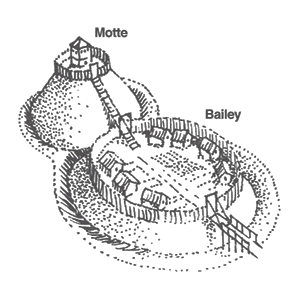
The motte-and-bailey fallacy (named after the motte-and-bailey castle) is a form of argument and an informal fallacy where an arguer conflates two positions that share similarities, one modest and easy to defend (the ‘motte’) and one much more controversial and harder to defend (the ‘bailey’).
The arguer advances the controversial position, but when challenged, insists that only the more modest position is being advanced. Upon retreating to the motte, the arguer can claim that the bailey has not been refuted (because the critic refused to attack the motte) or that the critic is unreasonable (by equating an attack on the bailey with an attack on the motte).
read more »
Posted in Language, Politics |
Leave a Comment »


 The Daily Omnivore