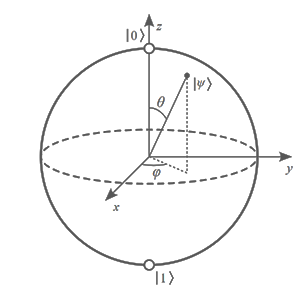
In quantum computing, quantum supremacy or quantum advantage is the goal of demonstrating that a programmable quantum computer can solve a problem that no classical computer can solve in any feasible amount of time, irrespective of the usefulness of the problem. The term was coined by Caltech theoretical physicist John Preskill in 2011, but the concept dates to Russian mathematician Yuri Manin’s 1980 and theoretical physicist Richard Feynman’s 1981 proposals of quantum computing.
Conceptually, quantum supremacy involves both the engineering task of building a powerful quantum computer and the computational-complexity-theoretic task of finding a problem that can be solved by that quantum computer and has a superpolynomial speedup over the best known or possible classical algorithm for that task.
read more »


 The Daily Omnivore