May 27, 2025
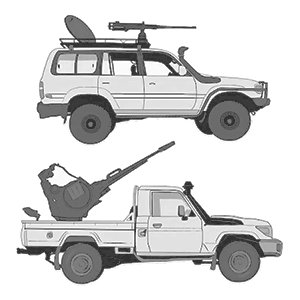
The Toyota War of 1987 was the last phase of the Chadian–Libyan War. It takes its name from the Toyota pickup trucks, primarily the Toyota Hilux and the Toyota Land Cruiser, used to provide mobility for the Chadian troops as they fought against the Libyans, and as technicals, non-standard tactical vehicles (NSTV) modified to carry heavy weapons for combat use.
The 1987 war resulted in a heavy defeat for Libya, which, according to American sources, lost one tenth of its army, with 7,500 men killed and US$1.5 billion worth of military equipment destroyed or captured. Chadian forces suffered 1,000 deaths.
read more »
Posted in Money, War, World |
Leave a Comment »
May 13, 2025
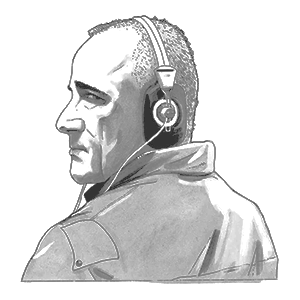
Zersetzung [zer-set-zung] (German for ‘decomposition’ and ‘disruption’) was a psychological warfare technique used by the Ministry for State Security (Stasi) to repress political opponents in East Germany during the 1970s and 1980s. Zersetzung served to combat alleged and actual dissidents through covert means, using secret methods of abusive control and psychological manipulation to prevent anti-government activities.
Among the defining features of it was the widespread use of offensive counterespionage methods as a means of repression. People were commonly targeted on a preemptive and preventive basis, to limit or stop activities of political dissent and cultural incorrectness that they may have gone on to perform, and not on the basis of crimes they had actually committed. Zersetzung methods were designed to break down, undermine, and paralyze people behind ‘a facade of social normality’ in a form of ‘silent repression.’
read more »
Posted in Politics, World |
1 Comment »


 The Daily Omnivore