July 25, 2025

Flâneur [flah-neyr] is a French term for a type of urban male ‘stroller,’ ‘lounger,’ ‘saunterer,’ or ‘loafer.’ Traditionally depicted as male, a flâneur is an ambivalent figure of urban affluence and modernity, representing the ability to wander detached from society, for an entertainment from the observation of the urban life. Flânerie is the act of strolling, with all of its accompanying associations. A near-synonym of the noun is boulevardier.
The flâneur was first a literary type from 19th-century France, essential to any picture of the streets of Paris. The word carried a set of rich associations: the man of leisure, the idler, the urban explorer, the connoisseur of the street. Drawing on the work of Charles Baudelaire who described the flâneur in his poetry and 1863 essay ‘The Painter of Modern Life,’ Walter Benjamin promoted 20th-century scholarly interest in the flâneur as an emblematic archetype of urban, modern (even modernist) experience.
read more »
Posted in Language, World |
1 Comment »
July 15, 2025
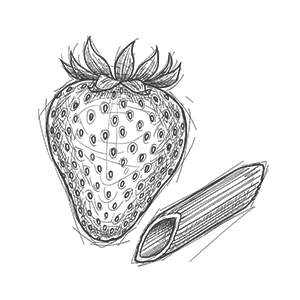
Pasta with strawberries (makaron z truskawkami) is a dish from Polish cuisine. It is made by pouring a strawberry and cream sauce over cooked pasta. The dish may be eaten at lunch or as a dessert, and is often served in schools. In Polish culture, pasta with strawberries is often considered to be a nostalgic food associated with childhood. The dish became famous worldwide at Wimbledon 2025, when Polish tennis player, Iga Świątek, said that pasta with strawberries is one of her favorite meals.
The origins of pasta with strawberries are unknown, but strawberries are popularly eaten with similar dishes in Poland. In Polish cuisine, strawberries may be added to rice and soups or stuffed into pierogi. Pasta with strawberries is commonly eaten in summer, as strawberry season lasts from May until July. During this time, strawberries are ripe and inexpensive. Kashubian strawberries are considered to be especially desirable for this dish, since they are reputed to have a high quality taste and aroma.
read more »
Posted in Food, World |
Leave a Comment »


 The Daily Omnivore