November 19, 2025
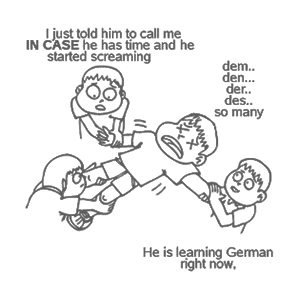
In grammar, case changes what a noun, adjective, or pronoun does in a sentence. It is a set of forms which depend on the syntax (how the words go together). Case is an example of inflection, which is often an affix, a part of a word that is added to other words, that signals a grammatical relationship. Long ago, Old English used several cases, but Modern English does not normally use cases except in pronouns.
In Latin, nouns pack several ideas into one word. Nouns must be masculine (Latin: ends in -us), feminine (ends in -a) or neutral (ends in -um). Also, adjectives must agree with the nouns by changing their endings. English is one of the few European languages that does not usually have gender for nouns.
read more »
Posted in Language, World |
1 Comment »
November 13, 2025

The Funk Brothers were a group of Detroit-based session musicians who performed the backing to most Motown recordings from 1959 until the company moved to Los Angeles in 1972.
Its members are considered among the most successful groups of studio musicians in music history. Among their hits are ‘My Girl,’ ‘I Heard It Through the Grapevine,’ ‘Baby Love,’ ‘ I Was Made to Love Her,’ ‘Papa Was a Rollin’ Stone,’ ‘The Tears of a Clown,’ ‘Ain’t No Mountain High Enough,’ and ‘Heat Wave’. Some combination of the members played on each of Motown’s 100-plus U.S. R&B number one singles and 50-plus U.S. Pop number ones released from 1961 to 1972.
read more »
Posted in Art, Money |
1 Comment »
November 8, 2025
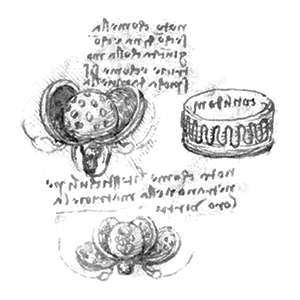
Commonplace books (or commonplaces) are personal notebooks used to compile any information the owner finds interesting or useful. They can variously contain notes, proverbs, adages, aphorisms, maxims, recipes, quotes, letters, poems, tables of weights and measures, prayers, legal formulas, and other professional references. They have been kept from antiquity, and were kept particularly during the Renaissance and in the nineteenth century.
Entries are most often organized under systematic subject headings and differ functionally from journals or diaries, which are chronological and introspective.
read more »
Posted in Language, Philosophy, Science |
Leave a Comment »


 The Daily Omnivore