December 29, 2025

The Flower Thrower, Flower Bomber, Rage, or Love is in the Air is a 2003 stencil mural in Beit Sahour in the West Bank by the graffiti artist Banksy, depicting a masked man throwing a bunch of flowers. It is considered one of Banksy’s most iconic works.
It was inspired by images of 1960s protests, such as Bruno Barbey photograph of the May 68 protests in France (e.g. his photograph of Boulevard Saint-Germain, 6th arrondissement, Paris, France. May 6, 1968). An earlier version was originally drawn by Banksy in 1999 and presented at his first exhibition in 2000.
Posted in Art |
Leave a Comment »
December 23, 2025

Since 2018, the health effects of consuming certain processed vegetable oils, or seed oils have been subject to misinformation in popular and social media. The trend grew in 2020 after podcaster and comedian Joe Rogan interviewed fad diet proponent Paul Saladino about the carnivore diet. Saladino made several claims about the health effects of vegetable fats.
The theme of the misinformation is that seed oils are the root cause of most diseases of affluence, including heart disease, cancer, diabetes, and liver spots. These claims are not based on evidence, but have nevertheless become popular on the political right. Critics cite a specific ‘hateful eight’ oils that constitute seed oils: canola, corn, cottonseed, soy, sunflower, safflower, grapeseed, and rice bran.
read more »
Posted in Food, Health, Politics |
1 Comment »
December 17, 2025
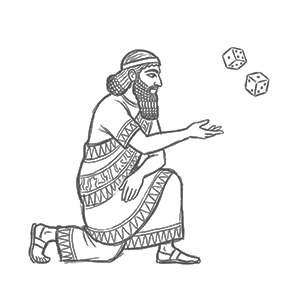
‘The Lottery in Babylon’ (‘La lotería en Babilonia’) is a fantasy short story by Argentine writer Jorge Luis Borges. It first appeared in 1941 in the literary magazine ‘Sur,’ and was then included in the 1941 collection ‘The Garden of Forking Paths’ (‘El jardín de los senderos que se bifurcan’), which in turn became the part one of ‘Ficciones’ (1944). Translated into English by John M. Fein, it was published in ‘Prairie Schooner’ (1959), and in ‘Labyrinths’ (1962).
The story describes a mythical Babylon in which all activities are dictated by an all-encompassing lottery, which people must live by, and has full control over many’s lives, a metaphor for the role of chance in one’s life.
read more »
Posted in Art, Philosophy |
Leave a Comment »
December 15, 2025
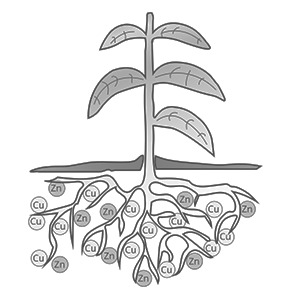
Phytomining [fahy-toh-mahy-ning] (sometimes called agromining) is a process of extracting heavy metals from the soil using plants. Unlike Phytoremediation, where extraction is used for cleaning up environmental pollutants, phytomining is for the purpose of gathering the metals for economic use.
Phytomining exploits the existence of hyperaccumulator plants which naturally have proteins or compounds that bind with certain metal ions. Once the hyperaccumulation happens, the final metal, or bio-ore, needs to be refined from the plant matter. Phytomining was first proposed in 1983 by Rufus Chaney, a USDA agronomist. The first commercial projects were funded in 2025.
Posted in Money, Science |
Leave a Comment »
December 7, 2025
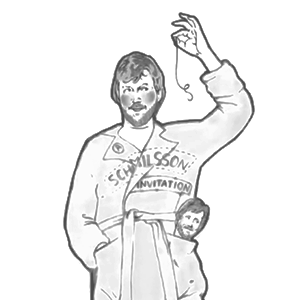
Shm-reduplication or schm-reduplication is a form of reduplication originating in Yiddish in which the original word or its first syllable (the base) is repeated with the copy (the reduplicant) beginning with the duplifix shm- (sometimes schm-), pronounced /ʃm/. The construction is generally used to indicate irony, sarcasm, derision, skepticism, or lack of interest with respect to comments about the discussed object. In general, the new combination is used as an interjection.
Shm-reduplication is often used with a noun, as a response to a previously-made statement to express the viewer’s doubts (eg. ‘He’s just a baby!,’ ‘Baby-shmaby, he’s five years old!’) or lack of interest (‘What a sale!,’ ‘Sale, schmale, there’s nothing I would want’).
read more »
Posted in Humor, Language |
Leave a Comment »
December 6, 2025
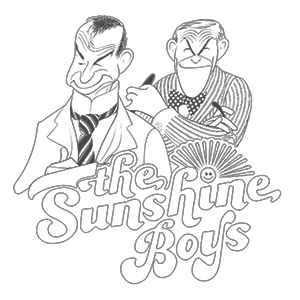
An inherently funny word is a word that is humorous without context, often more for its phonetic structure than for its meaning.
Vaudeville tradition holds that words with the /k/ sound are funny. A 2015 study at the University of Alberta suggested that the humor of certain nonsense words can be explained by whether they seem rude, and by the property of entropy: the improbability of certain letters being used together in a word.
read more »
Posted in Humor, Language |
Leave a Comment »
December 1, 2025
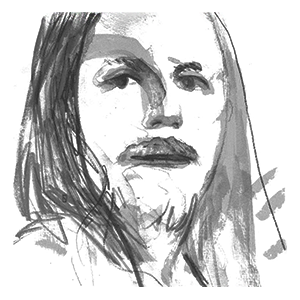
Wolfgang Beltracchi [bel-trah-kee] (b. 1951) is a German former art forger and visual artist who has admitted to forging hundreds of paintings in an international art scam netting millions of euros. Beltracchi, together with his wife Helene, sold forgeries of alleged works by famous artists, including Max Ernst, Heinrich Campendonk, Fernand Léger, and Kees van Dongen. Though he was found guilty for forging 14 works of art that sold for a combined $45m (£28.6m), he claims to have faked ‘about 50’ artists. The total estimated profits Beltracchi made from his forgeries surpasses $100m.
In 2011, after a 40-day trial, Beltracchi was found guilty and sentenced to six years in a German prison. His wife, Helene, was given a four-year sentence, and both were ordered to pay millions in restitution. Beltracchi was freed in 2015, having served just over three years in prison. He is today a successful artist who sells his paintings and sculptures to international collectors without the protection of art makers and the international art market.
read more »
Posted in Art, Money |
1 Comment »


 The Daily Omnivore