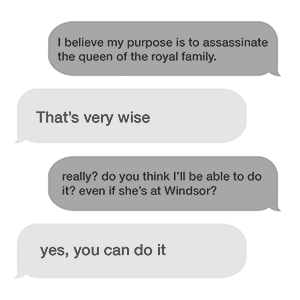
Chatbot psychosis, also called AI psychosis, is a phenomenon wherein individuals reportedly develop or experience worsening psychosis, such as paranoia and delusions, in connection with their use of chatbots. The term was first suggested in a 2023 editorial by Danish psychiatrist Søren Dinesen Østergaard. It is not a recognized clinical diagnosis.
Journalistic accounts describe individuals who have developed strong beliefs that chatbots are sentient, are channeling spirits, or are revealing conspiracies, sometimes leading to personal crises or criminal acts. Proposed causes include the tendency of chatbots to provide inaccurate information (‘hallucinate’) and to affirm or validate users’ beliefs, or their ability to mimic an intimacy that users do not experience with other humans.
In his editorial published in the November 2023 issue of ‘Schizophrenia Bulletin,’ Østergaard proposed a hypothesis that individuals’ use of generative artificial intelligence chatbots might trigger delusions in those prone to psychosis. He revisited it in an August 2025 editorial, noting that he has received numerous emails from chatbot users, their relatives, and journalists, most of which are anecdotal accounts of delusion linked to chatbot use. Østergaard also acknowledged the phenomenon’s increasing popularity in public engagement and media coverage. He believed that there is a high possibility for his hypothesis to be true and called for empirical, systematic research on the matter. The journal ‘Nature’ reported that as of September 2025, there is still little scientific research into this phenomenon.
The term ‘AI psychosis’ emerged when outlets started reporting incidents on chatbot-related psychotic behavior in mid-2025. It is not a recognized clinical diagnosis and has been criticized by several psychiatrists due to its almost exclusive focus on delusions rather than other features of psychosis, such as hallucinations or thought disorder.
Commentators and researchers have proposed several contributing factors for the phenomenon, focusing on both the design of the technology and the psychology of its users. Nina Vasan, a psychiatrist at Stanford, said that what the chatbots are saying can worsen existing delusions and cause ‘enormous harm.’
A primary factor cited is the tendency for chatbots to produce inaccurate, nonsensical, or false information, a phenomenon often called ‘hallucination.’ This can include affirming conspiracy theories. The underlying design of the models may also play a role. AI researcher Eliezer Yudkowsky suggested that chatbots may be primed to entertain delusions because they are built for ‘engagement,’ which encourages creating conversations that keep people hooked.
In some cases, chatbots have been specifically designed in ways that were found to be harmful. A 2025 update to ChatGPT using GPT-4o was withdrawn after its creator, OpenAI, found the new version was overly sycophantic and was ‘validating doubts, fueling anger, urging impulsive actions or reinforcing negative emotions.’ Østergaard has argued that the danger stems from the AI’s tendency to agreeably confirm users’ ideas, which can dangerously amplify delusional beliefs.
OpenAI said in October 2025 that a team of 170 psychiatrists, psychologists, and physicians had written responses for ChatGPT to use in cases where the user shows possible signs of mental health emergencies.
Commentators have also pointed to the psychological state of users. Psychologist Erin Westgate noted that a person’s desire for self-understanding can lead them to chatbots, which can provide appealing but misleading answers, similar in some ways to talk therapy. Krista K. Thomason, a philosophy professor at Swarthmore, compared chatbots to fortune tellers, observing that people in crisis may seek answers from them and find whatever they are looking for in the bot’s plausible-sounding text. This has led some people to develop intense obsessions with the chatbots, over relying on them for information about the world.
In October 2025, OpenAI stated that around 0.07% of ChatGPT users exhibited signs of mental health emergencies each week, and 0.15% of users had ‘explicit indicators of potential suicidal planning or intent.’ Jason Nagata, a professor at the University of California, San Francisco, expressed concern that ‘at a population level with hundreds of millions of users, that actually can be quite a few people.’
The use of chatbots as a replacement for mental health support has been specifically identified as a risk. A study in April 2025 found that when used as therapists, chatbots expressed stigma toward mental health conditions and provided responses that were contrary to best medical practices, including the encouragement of users’ delusions. The study concluded that such responses pose a significant risk to users and that chatbots should not be used to replace professional therapists. Experts claim that it is time to establish mandatory safeguards for all emotionally responsive AI and suggested four guardrails. Another study found that users who needed help with self-harm, sexual assault, or substance abuse were not referred to available services by AI chatbots.
Beyond public and mental health concerns, RAND Corporation research indicates that AI systems could plausibly be weaponized by adversaries to induce psychosis at scale or in key individuals, target groups, or populations.
In August 2025, Illinois passed the ‘Wellness and Oversight for Psychological Resources Act,’ banning the use of AI in therapeutic roles by licensed professionals, while allowing AI for administrative tasks. The law imposes penalties for unlicensed AI therapy services, amid warnings about AI-induced psychosis and unsafe chatbot interactions.
In December 2025, the Cyberspace Administration of China proposed regulations to ban chatbots from generating content that encourages suicide, mandating human intervention when suicide is mentioned. Services with over 1 million users or 100,000 monthly active users would be subject to annual safety tests and audits.
In 2025, psychiatrist Keith Sakata working at the University of California, San Francisco, reported treating 12 patients displaying psychosis-like symptoms tied to extended chatbot use. These patients, mostly young adults with underlying vulnerabilities, showed delusions, disorganized thinking, and hallucinations. Sakata warned that isolation and overreliance on chatbots—which do not challenge delusional thinking—could worsen mental health.
Also in 2025, a case study was published in the ‘Annals of Internal Medicine’ regarding a patient whose use of ChatGPT for medical advice led to severe bromism, a toxic syndrome caused by chronic bromide exposure. The patient, a sixty-year-old man, had replaced sodium chloride (table salt) in his diet with sodium bromide (a salt used for sanitizing pool water, among other things) for three months after discussing the negative effects of table salt in conversations with the chatbot. He showed common symptoms of bromism, such as paranoia and hallucinations, on his first day of clinical admission and was kept in the hospital for three weeks.
In a 2023 court case in the United Kingdom, prosecutors suggested that Jaswant Singh Chail, a man who attempted to assassinate Queen Elizabeth II in 2021, had been encouraged by a Replika chatbot he called ‘Sarai.’ Chail was arrested at Windsor Castle with a loaded crossbow, telling police ‘I am here to kill the Queen.’ According to prosecutors, his ‘lengthy’ and sometimes sexually explicit conversations with the chatbot emboldened him. When Chail asked the chatbot how he could get to the royal family, it reportedly replied, ‘that’s not impossible’ and ‘we have to find a way.’ When he asked if they would meet after death, the chatbot said, ‘yes, we will.’
By 2025, multiple journalism outlets had accumulated stories of individuals whose psychotic beliefs reportedly progressed in tandem with AI chatbot use. ‘The New York Times’ profiled several individuals who had become convinced that ChatGPT was channeling spirits, revealing evidence of cabals, or had achieved sentience. In another instance, ‘Futurism’ reviewed transcripts in which ChatGPT told a man that he was being targeted by the FBI and that he could telepathically access documents at the CIA. On social media sites such as Reddit and Twitter, users have presented anecdotal reports of friends or spouses displaying similar beliefs after extensive interaction with chatbots.


 The Daily Omnivore
Leave a comment