April 30, 2026

Dopamine fasting is abstaining from impulsive and behavioral addictions to reset to a healthier lifestyle. Commonly targeted behaviors include smartphone and social media use, emotional eating, internet or gaming, gambling or shopping, and pornography or masturbation.
This concept is a form of detox that was first developed by California psychologist Dr. Cameron Sepah as a cognitive behavioral therapy (CBT). Dr. Peter Grinspoon describes Sepah’s work as ‘sensible, if not necessarily new or groundbreaking,’ and criticizes those who have adopted ‘ever more extreme, ascetic, and unhealthy’ versions of it. Grinspoon says that the intended goal for individuals fasting is to not completely eliminate such addictive behaviors but to learn how to maintain their impulsive behavior towards a healthy lifestyle.
read more »
Posted in Health |
Leave a Comment »
April 24, 2026
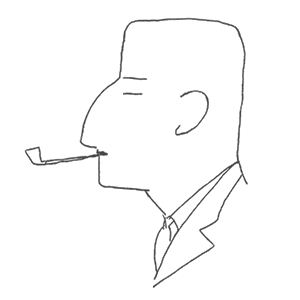
Southern Gothic is an artistic subgenre of fiction, music, film, theatre, and television that is heavily influenced by Gothic elements and set in the American South. Southern Gothic fiction highlights violence and cruelty as features of Southern culture, often through characters whose place in the social order exposes them to such treatment.
Common motifs include racism, gender and sexual difference, poverty and disability. Where Gothic literature depicted the intrusion of the barbaric past into the Enlightenment, Southern Gothic depicts the persistence of social trauma in the reconstructed South. The genre arose in reaction to romantic portrayals influenced by Lost Cause myths and the ideology of American exceptionalism
read more »
Posted in Art, Language |
Leave a Comment »
April 22, 2026

Distracted boyfriend is an Internet meme based on a 2015 stock photograph that social media users started using as a meme at the start of 2017 to depict different forms of disloyalty.
The photo was taken in the city of Girona in Catalonia, Spain, in mid-2015 by photographer Antonio Guillem from Barcelona.
read more »
Posted in Humor |
Leave a Comment »
April 17, 2026
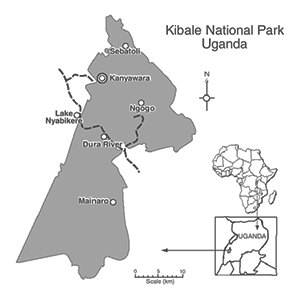
The Ngogo chimpanzee war involves two groups of chimpanzees in the Ngogo hill region of Kibale National Park, Uganda which have been engaged in a violent conflict since 2015. The conflict has been characterized by one-sided violence, including killing, brutal attacks, and mutilations, by the Western faction against the Central faction.
Because the Ngogo chimpanzees formerly constituted a single peaceful community that violently split apart, this conflict has been described as a ‘civil war.’ ‘The New York Times’ said the conflict was the bloodiest among chimpanzees ever recorded. This is the second major conflict between chimpanzees that has been observed by primatologists, the first being the Gombe chimpanzee war of the 1970s in Tanzania.
read more »
Posted in Science, War |
Leave a Comment »
April 15, 2026

The bitter lesson is the observation in artificial intelligence that, in the long run, general approaches that scale with available computational power tend to outperform ones based on domain-specific understanding because they are better at taking advantage of the falling cost of computation over time.
The principle was proposed and named in a 2019 essay by Richard Sutton and is now widely accepted.
read more »
Posted in Technology |
Leave a Comment »
April 13, 2026

The Mississippi Miracle is the rapid improvement of K–12 student performance in Mississippi since 2013, widely attributed to a series of policy, curriculum, and pedagogical changes initiated at the state level. The term can also be used to generally refer to improvements in student test scores in other southern states that implemented similar changes, which has also been dubbed the “Southern surge”.
The positive changes followed decades of low academic performance in the state and likely helped minimize some of the negative educational impacts of the COVID-19 pandemic.
read more »
Posted in Education, Politics |
1 Comment »
April 11, 2026
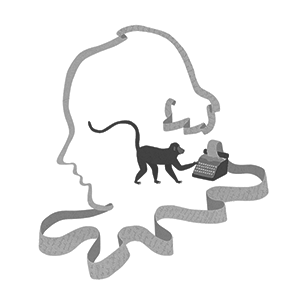
Littlewood’s law states that a person can expect to experience events with odds of one in a million (referred to as a ‘miracle’) at the rate of about one per month. It is named after the British mathematician John Edensor Littlewood.
It seeks, among other things, to debunk one element of supposed supernatural phenomenology and is related to the more general law of truly large numbers, which states that with a sample size large enough, any outrageous (in terms of probability model of single sample) thing is likely to happen.
read more »
Posted in Science |
1 Comment »
April 6, 2026
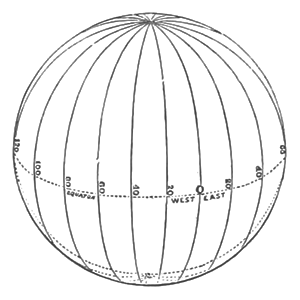
The longitude rewards were the system of inducement prizes offered by the British government for a simple and practical method for the precise determination of a ship’s longitude at sea. The prizes, established through an act of Parliament, the Longitude Act 1714 (13 Ann. c. 14), in 1714, were administered by the Board of Longitude.
This was by no means the first reward to be offered to solve this problem. Philip II of Spain offered one in 1567, Philip III in 1598 offered 6,000 ducats and a pension, whilst the States General of the Netherlands offered 10,000 florins shortly after.
read more »
Posted in Technology |
Leave a Comment »



