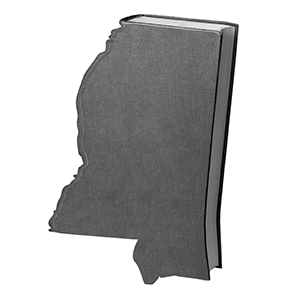
The Mississippi Miracle is the rapid improvement of K–12 student performance in Mississippi since 2013, widely attributed to a series of policy, curriculum, and pedagogical changes initiated at the state level. The term can also be used to generally refer to improvements in student test scores in other southern states that implemented similar changes, which has also been dubbed the “Southern surge”.
The positive changes followed decades of low academic performance in the state and likely helped minimize some of the negative educational impacts of the COVID-19 pandemic.
Mississippi students were performing a full grade level below their peers around the country as recently as 2013, but by 2024, they were performing nearly half a grade level above the average U.S. student. The Miracle has been accredited to various causes working together, principally driven in Mississippi by the Literacy-Based Promotion Act (LBPA) and in other states by similar forces and trends.
Mississippi has been the poorest state in the United States for decades, and by a significant margin. It has the highest percentage of population of African-Americans, the highest percentage of Americans living in poverty, and places last or nearly last on a host of measures, to the point that the satirical phrase “Thank God for Mississippi” exists in other low-performing states, since Mississippi usually spares them the shame of being last.
Education was no exception; in 2013, the National Assessment of Educational Progress (NAEP) ranked Mississippi in 49th place nationally for fourth-grade literacy, with the average fourth-grade student receiving a reading score of 209, considerably lower than the national average of 221. Seeing this, Mississippi attempted to tackle the problem with the Literacy-Based Promotion Act, a bill introduced to improve student’s reading skills ‘So That Every Student Completing Third Grade Reads At Or Above Grade Level.’ Similar circumstances inspired Florida, Louisiana, Tennessee, and Arkansas, among other states, to tackle their own struggling education systems.
Mississippi’s LBPA contained four different fundamental provisions meant to ensure student success. The first was support for teachers. Mississippi’s classroom teachers were not expected to change the trajectory of their students alone. Instead, money was devoted to hiring highly trained reading coaches to support students, as well as special literacy-based professional development for all teachers. This embrace of phonics ducation and the near-complete rejection of whole language theory was a key component of the program’s success.
The second provision was early detection of literacy problems. Schools began to screen students at a young age for issues in literacy so that they would be able to have access to specialized services that would help them catch up and achieve mastery. Tests are given three times annually from kindergarten through third grade, and students who show a lack of proficiency receive support corresponding to their needs.
Third was supporting struggling readers. Schools were given direction on how to best address the needs and gaps detected by all this testing. Each struggling child receives an Individualized Reading Plan, which is crafted by a joint effort of parents and teachers. Parent involvement was and is vital for student mastery of reading.
And fourth, the law required mandatory retention of students who do not pass a 3rd-grade reading test. Students in 3rd grade are given multiple opportunities to pass a reading test, often known as the ‘third-grade gate.’ Students who repeatedly earn less than a passing grade on the test are retained and do not proceed to fourth grade, instead being assigned to a teacher with expertise in helping struggling readers. While precise figures are hard to come by, it is estimated that roughly 6.5% of Mississippi third-graders were held back in 2023, with the vast majority of these students having failed to pass the reading test. This was a lower proportion of students than were held back in previous years.
Mississippi Governor Tate Reeves said of introducing mandatory retention of struggling students: ‘Many folks said, ‘Look, you can’t do that. If you do that, fifty percent of our kids are going to be held back or sixty percent of our kids are going to be held back.’ But we had the exact opposite experience. What actually happened is we raised the level of expectations, and Mississippians did what Mississippians do. They rose up and they met those increased expectations.’
Today, even without any adjustments for demographics, Mississippi ranks ninth in fourth-grade literacy. African-Americans in Mississippi outperform African-Americans in 47 of the other 49 states in reading, and Mississippi’s Hispanic students lead the nation for their demographic in reading (and second place in math). These improvements are also taking place in Arkansas, Florida, and Louisiana, though less dramatically. These results also hold true (though less dramatically) in math; as students across the four southern states experience more success in reading, they are also showing more progress in math.
This growth has carried over to a large degree to eighth-grade students. While in 2013, Mississippi students were 13 points behind their nationwide peers in both reading and mathematics, by 2023, the gap had narrowed to just 6 points in the former and 7 points in the latter. However, Mississippi officials are aware that the improvement of older students is not as dramatic as that of younger students, and steps are being taken to address this.
Louisiana students have also historically performed very poorly compared to their peers across the nation. After implementing their own literacy reforms, including the Steve Carter Literacy Program, scores have risen dramatically. After adjusting for demographics, Louisiana now ranks in the top ten states for education nationally. Alongside Mississippi, Louisiana is one of only six states whose scores improved from 2013 to 2022.
Whole language learning and balanced literacy, sometimes derogatively called ‘vibes-based learning,’ is on the decline nationally as a result of districts and states around the country noticing the Mississippi Miracle. Other states, such as New York and Wisconsin, are implementing phonics-based curricula and strategies, sometimes referred to as the Science of reading.
States that did not implement the reforms that Mississippi, Louisiana, Arkansas and Florida utilized have suffered; Oklahoma, for instance, passed a bill in 2012 that mirrored the LBPA, only to pass a new law two years later that defanged the law. This was done to avoid actually holding back the students that could not read at grade level. Oklahoma’s scores have since plummeted and the state ranks near the bottom of the NAEP’s list.


 The Daily Omnivore