August 6, 2023

The Jewish-American patronage of Chinese restaurants became prominent in the 20th century, especially among Jewish New Yorkers. It has received attention as a paradoxical form of assimilation by embracing an unfamiliar cuisine that eased the consumption of non-kosher foods.
Factors include the relative absence of dairy products compared to European cuisines, concern over German and Italian antisemitic regimes in the 1930s and the proximity of Jewish and Chinese immigrants to each other in New York City.
read more »
Posted in Food, Philosophy, World |
Leave a Comment »
July 20, 2023
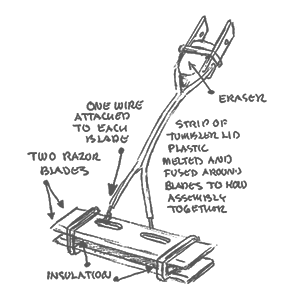
A spread is a prison meal made by inmates. Spreads are often made with commissary ingredients, such as instant ramen and corn puffs. Spreads can be simple meals, or elaborate and inventive combinations of ingredients.
Spreads may be used to supplement or replace the government-mandated meals provided to prisoners by the prison, due to the unpalatable and insubstantial nature of many prison meals.
read more »
Posted in Food, Politics |
Leave a Comment »
July 9, 2023

Muntzing is reducing the components inside an electronic appliance to the minimum required for it to function in most operating conditions, reducing design margins above minimum requirements toward zero.
The term is named after Earl “Madman” Muntz, a car and electronics salesman, who was not formally educated or trained in any science or engineering discipline. Muntz built a low part TV in the 1950s.
read more »
Posted in Language, Money, Technology |
Leave a Comment »
July 5, 2023

In machine learning, a stochastic [stuh-kas-tik] parrot is a large language model (LLM) that is good at generating convincing language, but does not actually understand the meaning of the language it is processing. The term was coined by computational linguistics professor Emily M. Bender in the 2021 artificial intelligence research paper ‘On the Dangers of Stochastic Parrots: Can Language Models Be Too Big?’
Stochastic means ‘random and involving chance or probability.’ A stochastic parrot,’ according to Bender, is an entity ‘for haphazardly stitching together sequences of linguistic forms … according to probabilistic information about how they combine, but without any reference to meaning.’ Less formally, the term refers to ‘large language models that are impressive in their ability to generate realistic-sounding language but ultimately do not truly understand the meaning of the language they are processing.’
read more »
Posted in Humor, Language, Technology |
1 Comment »
June 2, 2023

Gaming the system (also rigging, abusing, cheating, milking, playing, working, or breaking the system, or gaming or bending the rules) can be defined as using the rules and procedures meant to protect a system to, instead, manipulate the system for a desired outcome. Although the term generally carries negative connotations, gaming the system can be used for benign purposes in the undermining and dismantling of corrupt or oppressive organisations.
The first known documented use of the term ‘gaming the system’ is in 1975. According to James Rieley, a British advisor to CEOs and an author, structures in companies and organizations (both explicit and implicit policies and procedures, stated goals, and mental models) drive behaviors that are detrimental to long-term organizational success and stifle competition. For some, error is the essence of gaming the system, in which a gap in protocol allows for errant practices that lead to unintended results.
read more »
Posted in Games, Language |
Leave a Comment »
May 23, 2023

Vicarious embarrassment (also known as secondhand, empathetic, or third-party embarrassment and also as ‘Spanish shame’ or Fremdschämen in German) is the feeling of embarrassment from observing the embarrassing actions of another person.
Unlike general embarrassment, vicarious embarrassment is not caused by participating in an embarrassing event, but instead by witnessing (verbally and/or visually) another person experience an embarrassing event. These emotions can be perceived as pro-social, and some say they can be seen as motives for following socially and culturally acceptable behavior. Vicarious embarrassment is often seen as an opposite to schadenfreude, which is the feeling of pleasure or satisfaction at misfortune, humiliation or embarrassment of another person.
read more »
Posted in Art, Science |
Leave a Comment »
May 19, 2023

Balconing is the name given in Spain to the act of jumping into a swimming pool from a balcony or falling from height while climbing from one balcony to another, performed by foreign tourists during holidays. The term was formed through a combination of the Spanish-language word balcón (‘balcony’) and the English-language suffix ‘-ing,’ in reference to the origin of most practitioners.
In 2010 and 2011, a spate of injuries and deaths attributed by the Spanish press to ‘balconing’ occurred among tourists in the Balearic Islands (including Mallorca and Ibiza). Videos of people jumping into pools from balconies were posted on video sharing websites such as YouTube, which were alleged to have played a role in the spread of the phenomenon. A similar phenomenon has been described in college-related events in the United States.
read more »
Posted in Death, World |
Leave a Comment »
May 19, 2023

Pale Male (1990-2023) was a red-tailed hawk that resided in and near New York City’s Central Park from the 1990s until 2023. Birdwatcher and author Marie Winn gave him his name because of the unusually light coloring of his head. He was one of the first red-tailed hawks known to have nested on a building rather than in a tree and is known for establishing a dynasty of urban-dwelling red-tailed hawks.
Each spring, bird watchers set up telescopes alongside Central Park’s Model Boat Pond to observe his nest and chicks at 927 Fifth Avenue. Although it has been suggested that over the years that Pale Male could have died and been replaced by a similarly colored bird without the change being observed, there is no strong evidence to confirm or deny this possibility.
read more »
Posted in Science |
1 Comment »
May 16, 2023

Kudzu [kuhd·zoo] (also called Japanese arrowroot or Chinese arrowroot) is a group of climbing, coiling, and trailing deciduous perennial vines native to much of East Asia, Southeast Asia, and some Pacific islands, but invasive in many parts of the world, primarily North America.
The vine densely climbs over other plants and trees and grows so rapidly that it smothers and kills them by blocking most of the sunlight and taking root space. The plants are in the genus Pueraria, in the pea family Fabaceae, subfamily Faboideae. Kudzu is edible, but often sprayed with herbicides.
read more »
Posted in Food, Science, World |
Leave a Comment »
May 15, 2023
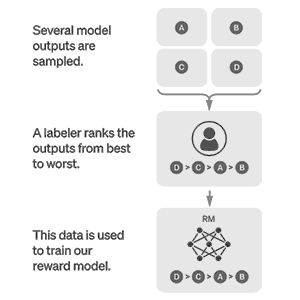
In machine learning, reinforcement learning from human feedback (RLHF) is a method of training AI models by learning from responses by humans about its performance. If an AI model makes a prediction or takes an action that is incorrect or suboptimal, human feedback can be used to correct the error or suggest a better response.
Over time, this helps the model to learn and improve its responses. RLHF is used in tasks where it’s difficult to define a clear, algorithmic solution but where humans can easily judge the quality of the AI’s output (e.g. if the task is to generate a compelling story, humans can rate different AI-generated stories on their quality, and the AI can use their feedback to improve its story generation skills).
read more »
Posted in Technology |
Leave a Comment »
May 11, 2023

Plate smashing is a Greek custom involving the intentional smashing of plates or glasses during celebratory occasions. While it occurs more rarely today, it continues to be seen on certain occasions, such as weddings, although plaster plates are more likely to be used. The custom probably derives from an ancient practice of ritually ‘killing’ plates on mourning occasions, as a means of dealing with loss.
Breaking plates may also be related to the ancient practice of conspicuous consumption, a display of one’s wealth, as plates or glasses are thrown into a fireplace following a banquet instead of being washed and reused. 1969, the autocratic military dictatorship of Georgios Papadopoulos, banned plate smashing. Another modern variation on the custom is for diners at small Greek restaurants or tavernas to buy trays of flowers that they can throw at singers and each other.
Posted in Money, World |
Leave a Comment »
April 27, 2023

System D is a manner of responding to challenges that require one to have the ability to think quickly, to adapt, and to improvise when getting a job done. The term gained wider popularity after appearing in the 2006 publication of Anthony Bourdain’s ‘The Nasty Bits.’ Bourdain references finding the term in Nicolas Freeling’s memoir, ‘The Kitchen,’ about Freeling’s years as a Grand Hotel cook in France.
The term is a direct translation of French Système D. The letter D refers to any one of the French nouns ‘débrouille,’ ‘débrouillardise,’ or ‘démerde’ (French slang). The verbs se débrouiller and se démerder mean ‘to make do,’ ‘to manage, ‘especially in an adverse situation. Basically, it refers to one’s ability and need to be resourceful.
read more »
Posted in Food, Language, World |
Leave a Comment »


 The Daily Omnivore