December 9, 2013
A heckler is a person who harasses and tries to disconcert others with questions, challenges, or gibes. They are often known to shout disparaging comments at a performance or event, or to interrupt set-piece speeches, with the intent of disturbing performers and/or participants.The term originates from the textile trade, where to heckle was to tease or comb out flax or hemp fibers.
The additional meaning, to interrupt speakers with awkward or embarrassing questions, was added in Scotland, and specifically perhaps in early nineteenth century Dundee, a famously radical town where the hecklers who combed the flax had established a reputation as the most radical and belligerent element in the workforce. In the heckling factory, one heckler would read out the day’s news while the others worked, to the accompaniment of interruptions and furious debate.
read more »
Posted in Art, Humor, Language |
2 Comments »
December 7, 2013

Tribalism [trahy-buh-liz-uhm] implies the possession of a strong cultural or ethnic identity that separates one member of a group from the members of another group. It is a precondition for members of a tribe to possess a strong feeling of identity for a true tribal society to form. While tribal society no longer strictly exists in the western world, tribalism is arguably undiminished. People have postulated that the human brain is hard-wired towards tribalism due to its evolutionary advantages.
Many tribes refer to themselves with their language’s word for ‘people,’ while referring to other, neighboring tribes with various epithets. For example, the term ‘Inuit’ translates as ‘people,’ but they were known to the Ojibwe by a name ‘Eskimo’ translating roughly as ‘eaters of raw meat.’
read more »
Posted in Politics, Science |
Leave a Comment »
December 6, 2013

Black Pete (‘Zwarte Piet‘) is the companion of Saint Nicholas (‘Sinterklaas,’ from which the English term ‘Santa Claus’ is derived) in the folklore of the Low Countries (primarily Belgium and the Netherlands). Like Santa Claus, Zwarte Piet is a hybrid stock character of pagan origin.
The characters of Zwarte Pieten appear only in the weeks before Saint Nicholas’s feast, first when the saint is welcomed with a parade as he arrives in the country (generally by boat, having traveled from Madrid, Spain). The tasks of the Zwarte Pieten are mostly to amuse children, and to scatter pepernoten, kruidnoten and strooigoed (special sinterklaas candies) for those who come to meet the saint as he visits stores, schools, and other places.
read more »
Posted in Philosophy, Politics, World |
3 Comments »
December 5, 2013

Personal genomics [jee‐noh-miks] (sequencing and analysis of the genome of an individual) employs several techniques, including single-nucleotide polymorphism (SNP) analysis chips (typically 0.02% of the genome), or partial or full genome sequencing. Once the genotypes are known, the individual’s genotype can be compared with the published literature to determine likelihood of trait expression and disease risk.
Automated sequencers have increased the speed and reduced the cost of sequencing, making it possible to offer genetic testing to consumers. 23andMe sells mail order kits for SNP genotyping. The information is stored in a user profile and used to estimate the genetic risk of the consumer for over 240 diseases and conditions, as well as ancestry analysis.
read more »
Posted in Health, Money, Technology |
Leave a Comment »
December 4, 2013
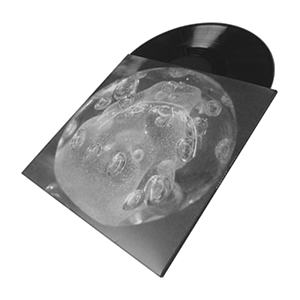
Darkside is the collaboration of electronic musician Nicolas Jaar and Brooklyn multi-instrumentalist Dave Harrington who met as students at Brown University. Harrington was recommended to Jaar by frequent collaborator Will Epstein when he was looking for a third musician for his live band, with the three subsequently touring together to support Jaar’s 2011 album ‘Space Is Only Noise.’
Darkside first formed during a Berlin stop on this tour. Jaar and Harrington were writing in their hotel room together when their converter plug popped, filling their room with smoke and forcing them to finish the song in the hallway on a laptop. Upon returning to New York, they continued to write together, developing their sound in their Brooklyn studio.
read more »
Posted in Art |
Leave a Comment »
December 3, 2013

Electric is the twelfth studio album by English synthpop duo Pet Shop Boys, released in 2013. Stuart Price produced the album. He stated that his goal was for every track to have a ‘euphoric, fresh feel to it.’ The more dance-influenced nature of ‘Electric’ was a response to the ‘reflective mood’ of their previous album, ‘Elysium.’
In support of the album, the duo embarked on the ‘Electric’ tour in March 2013 at the Cumbre Tajín festival in Veracruz, Mexico, where they debuted two songs from the album: ‘Axis’ and a cover of Bruce Springsteen’s 2007 song ‘The Last to Die.’ The tour’s first official date took place at the Movistar Arena in Santiago, Chile two months later.
Posted in Art |
Leave a Comment »
December 2, 2013

The tongue map or taste map is a common misconception that different sections of the tongue are exclusively responsible for different basic tastes. Although widely taught in schools, this was scientifically disproven by later research; all taste sensations come from all regions of the tongue, although parts may be more sensitive to certain flavors. The theory behind this map originated from a paper written by Harvard psychologist Edwin G. Boring, which was a translation of a 1901 German paper.
The paper showed minute differences in threshold detection levels across the tongue. These small differences were later taken out of context by textbooks in declaring discrete taste regions. So, while some parts of the tongue may be able to detect a taste before the others do, all parts are equally good at conveying the qualia of all tastes. Threshold sensitivity may differ across the tongue, but intensity of sensation does not.
Posted in Food, Health |
Leave a Comment »
December 1, 2013
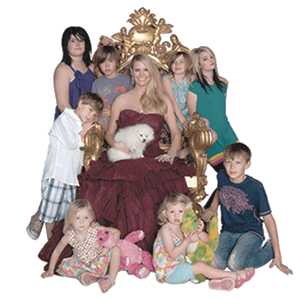
The Queen of Versailles is a 2012 American documentary film by Lauren Greenfield, depicting Jackie Siegel and her husband David, founder and CEO of Westgate Resorts (a timeshare company based out of Florida), and their family as they build the Versailles house, the largest and most expensive single-family house in the United States, and the crisis they face as the US economy declines.
‘Washington Post’ columnist Ezra Klein called it, ‘perhaps the single best film on the Great Recession,’ writing that one scene, in which Siegel recounts a series of transactions that allowed him to purchase at a fraction of its original value a loan on which he owes money, ‘might stand as the single most complete vignette on the mechanics of the financial crisis and the subsequent slow recovery.’
Posted in Humor, Money |
Leave a Comment »
November 29, 2013

Super AIDS is an informal name for multidrug resistant strains of HIV-1, first found in NYC in 2005. The strain is vulnerable to enfuvirtide (a drug from a novel class of antiretrovirals). In 2006, provisional data indicated that 15% of new infections were resistant to one antiretroviral drug, and 3.2% to two such drugs. As a result the Department of Health and Human Services changed its guidelines to recommend testing for drug resistance before beginning antiretroviral treatment in new patients.
Typically, the ‘wild’ type of HIV (the strain of HIV found in individuals not treated with antiretroviral drugs) is much more effective at attacking the human immune system than the types that evolve in the presence of antiretroviral drugs. Thus, by changing the selection pressure (from being infection driven to being drug-avoidance driven) retroviral drug treatment causes HIV to evolve to a more innocuous form, less efficient at infecting T-cells. Super AIDS strains, however, are not only resistant to anti-retroviral drugs, but more effective than ‘wild’ HIV at infecting T-cells.
Posted in Health |
Leave a Comment »
November 28, 2013
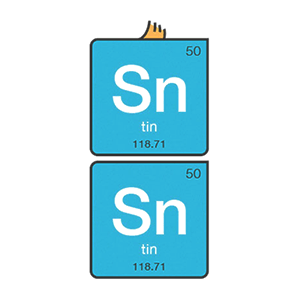
A visual pun is a pun involving an image or images (in addition to or instead of language). Visual puns in which the image is at odds with the inscription are common in cartoons such as ‘Lost Consonants’ or ‘The Far Side’ as well as in Dutch gable stones (decorative building markings).
For instance the ‘Batenburg’ stone from Amsterdam depicts silver coins entering a castle and gold golds exiting, which puns on the words ‘baten’ (‘to profit’) and ‘burg’ (‘castle’), the name of a village near Nijmegen. European heraldry contains the technique of canting arms, which can be considered punning.
Posted in Humor, Language |
Leave a Comment »
November 27, 2013

So-called ‘reverse product placement‘ is the creation of products in real life to match those seen in a fictional setting. In 2007, 7-Eleven rebranded 11 of its American stores and one Canadian store as ‘Kwik-E-Marts,’ selling some real-life versions of products seen in episodes of the ‘The Simpsons,’ such as Buzz Cola and Krusty-O’s cereal. In 1997, Acme Communications was created as a chain of real television stations; the firm is named for the fictional Acme Corporation of Warner Brothers fame.
The fictional Willy Wonka from ‘Willy Wonka & the Chocolate Factory’ (1971) was licensed to name a real candy company soon after the film’s release; the brand is now controlled by Nestlé. In the 1984 cult film ‘Repo Man,’ a reverse form of product placement is used, with an exaggerated form of 1980s era generic packaging used on products prominently shown on-screen (these include ‘Beer,’ ‘Drink,’ ‘Dry Gin,’ and ‘Food – Meat Flavored’).
Posted in Art, Humor, Money |
1 Comment »
November 27, 2013

Fictional brands are used in artistic works to imitate or satirize corporate brands, and/or to avoid trademark or copyright infringement.
Such a device may be required where real corporations are unwilling to license their brand names for use in the fictional work, particularly where the work holds the product in a negative light.
read more »
Posted in Art, Money, Politics |
Leave a Comment »



