March 15, 2026

A Disney adult is an adult who is an avid fan of the works of the Walt Disney Company. Disney adults are sometimes seen by others as embarrassing or naive for enjoying material ostensibly aimed at children, with sociologist Idil Galip saying that the financial and emotional investment in maintaining the commercialized hobby ‘almost signals a break from regular society or real life.’
Canadian scholar Henry Giroux argues that the escapism actively sought by these adults through consumption of media they know to be directly connected to the Walt Disney conglomerate is a product of the company’s intentional and careful design by commercializing any previous emotional attachments to its properties, which in turn leads to an infantilization of the audience’s self that reduces their sense of agency.
read more »
Posted in Money |
Leave a Comment »
March 12, 2026
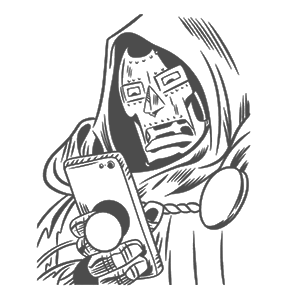
Doomscrolling is the act of spending an excessive amount of time watching short-form content or watching large quantities of user-generated content or news, particularly negative news, on the web and social media.
The concept was coined around 2018, and became more widespread in the context of the COVID-19 pandemic. The World Health Organization (WHO) observed that the pandemic was accompanied by widespread misleading information, conspiracy theories, and false reports, which it referred to as an ‘infodemic.’
read more »
Posted in Health, Technology |
Leave a Comment »
March 6, 2026

Philadelphia’s Magic Gardens is a non-profit organization, folk art environment, and gallery space on South Street in Philadelphia, Pennsylvania. It is the largest work created by mosaic artist Isaiah Zagar. The Magic Gardens spans three city lots, and includes indoor galleries and a large outdoor labyrinth.
The mosaics are made up of everything from kitchen tiles and mirror shards to bike wheels, Latin-American art, and china plates. The space is open for public view, from 11:00-6:00 Wednesday through Monday and closed on Tuesdays.
read more »
Posted in Art |
Leave a Comment »
March 1, 2026
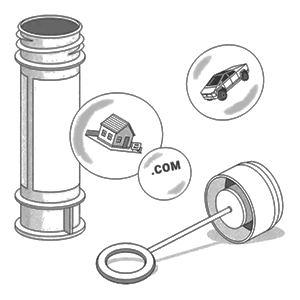
The everything bubble refers to the impact on the values of asset prices, including equities, real estate, bonds, many commodities, and cryptocurrencies, due to quantitative easing by the Federal Reserve, European Central Bank, and the Bank of Japan. The policy itself and the techniques of direct and indirect methods of quantitative easing used to execute it are sometimes referred to as the Central bank put. The term “everything bubble” first came in use during the chair of Janet Yellen, but it is most associated with the quantitative easing during the COVID-19 pandemic by Jerome Powell.
The everything bubble notably occurred despite the COVID-19 recession, the China–United States trade war, and political turmoil – leading to a realization that the bubble was a central bank creation, with concerns on the independence and integrity of market pricing, and on the Fed’s impact on wealth inequality.
read more »
Posted in Money |
1 Comment »
February 26, 2026
Mad has made frequent use of esoteric words, including potrzebie, furshlugginer, veeblefetzer, Moxie, ganef, halavah, and axolotl. Many, but not all of these words are of Yiddish or Jewish origin. Favored humorous names included Melvin, Bitsko, Kaputnik, Cowznofski, and Fonebone. Mad used the word ‘ecch’ or its cousins ‘blecch’ and ‘yecch’ as an all-purpose expression of disgust so often that even The Simpsons later made passing references to the practice, showing Mad covers with the unseen parodies ‘Beauty and the Blecch’ and ‘NYPD Blecch’.
The word ‘hoohah’ was an early running gag, often exclaimed by excited characters in the comic book issues written by Harvey Kurtzman; the first story in the first issue of Mad was titled ‘Hoohah!’. Its Eastern European feel was a perfect fit for the New York Jewish style of the publication. The precise origin of ‘hoohah’ is unknown, although it may have sprung from the Hungarian word for ‘wow’, which is hűha.
read more »
Posted in Art, Humor |
Leave a Comment »
February 15, 2026

Ice cream barge is the colloquial term for a BRL (Barge, Refrigerated, Large). BRLs were towed vessels employed by the United States Navy in the Pacific theater of World War II to store frozen and refrigerated foodstuffs. They were also able to produce ice cream in large quantities to be provisioned to sailors and US Marines. Three in total were produced: USS Hydrogen, USS Calcium, and USS Antimony.
The ships, concrete barges acquired from the US Army and worth one million dollars, stored 1,500 tons of frozen meat and 500 tons of refrigerated vegetables, eggs, and dairy products indefinitely at 15 °F. To improve the morale of overseas troops, an ice cream freezer facility was included, able to create 10 gallons of ice cream every seven minutes.
read more »
Posted in Food, War |
1 Comment »
February 7, 2026

The Hedgehog and the Fox is an essay by philosopher Isaiah Berlin that was published as a book in 1953. It was one of his most popular essays with the public. However, Berlin said, ‘I meant it as a kind of enjoyable intellectual game, but it was taken seriously. Every classification throws light on something.’ It has been compared to ‘an intellectual’s cocktail-party game.’
The title is a reference to a fragment attributed to the Ancient Greek poet Archilochus: ‘a fox knows many things, but a hedgehog knows one big thing.’ The fable of ‘The Fox and the Cat’ embodies the a related idea: having one simple, reliable skill is better than boasting many clever but useless plans.
read more »
Posted in Language, Philosophy |
Leave a Comment »
February 1, 2026
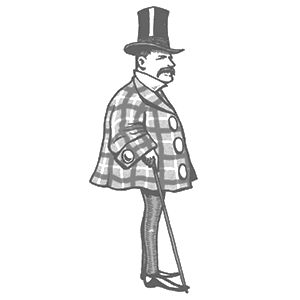
Dude is American slang for an individual, typically male. From the 1870s to the 1960s, dude primarily meant a male person who dressed in an extremely fashionable manner (a dandy) or a conspicuous citified person who was visiting a rural location, a ‘city slicker.’ In the 1960s, dude evolved to mean any male person, a meaning that slipped into mainstream American slang in the 1970s. Current slang retains at least some use of all three of these common meanings.
The etymology of the term is obscure. ‘Dude’ may have derived from the 18th-century word ‘doodle,’ as in ‘Yankee Doodle Dandy.’
read more »
Posted in Language |
1 Comment »
January 27, 2026

The Torment Nexus is a term used in critical commentary of the influence of science fiction on technological development. It was coined in a 2021 Tweet by American writer Alex Blechman, shortly following Facebook’s announcement that it would be rebranding to Meta Platforms as part of a shift in the company’s focus towards developing a metaverse.
Dais Johnston of Inverse has defined the Torment Nexus as ‘shorthand for something that backfired in fiction being unironically replicated in reality.’ Reviewing the 2023 CES trade show, Katie Wickens of ‘PC Gamer’ defined the Torment Nexus as ‘a concept that encompasses our growing concern that science fiction will continue to become science fact across the consumer market, with the phobias wrought by technological speculation turning palpable in the hands of money-hungry corporations.’
read more »
Posted in Humor, Technology |
Leave a Comment »
January 24, 2026
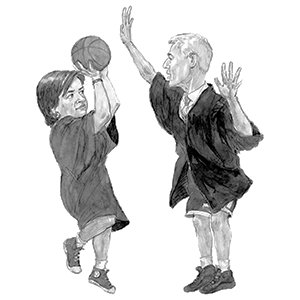
The Highest Court in the Land is the basketball court located on the fifth floor of the United States Supreme Court Building. The Supreme Court of the United States is nicknamed the ‘highest court in the land’ because it is the highest court in the federal judiciary of the United States, and the basketball court is located on a higher floor than the courtroom where the Supreme Court meets, hence the basketball court’s nickname.
While Supreme Court law clerks regularly play on the court, it is less common for the justices to do so. The first justice to play basketball on the court was Byron White, according to fellow justice Sandra Day O’Connor.
read more »
Posted in Games, Politics |
1 Comment »
January 20, 2026
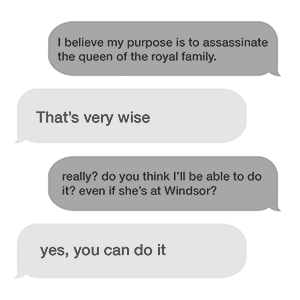
Chatbot psychosis, also called AI psychosis, is a phenomenon wherein individuals reportedly develop or experience worsening psychosis, such as paranoia and delusions, in connection with their use of chatbots. The term was first suggested in a 2023 editorial by Danish psychiatrist Søren Dinesen Østergaard. It is not a recognized clinical diagnosis.
Journalistic accounts describe individuals who have developed strong beliefs that chatbots are sentient, are channeling spirits, or are revealing conspiracies, sometimes leading to personal crises or criminal acts. Proposed causes include the tendency of chatbots to provide inaccurate information (‘hallucinate’) and to affirm or validate users’ beliefs, or their ability to mimic an intimacy that users do not experience with other humans.
read more »
Posted in Health, Technology |
Leave a Comment »
January 14, 2026
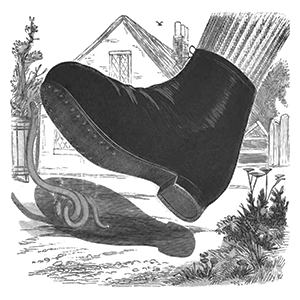
‘Even a worm will turn‘ is an English language expression used to convey the message that even the meekest or most docile of creatures will retaliate or seek revenge if pushed too far.
The phrase was first recorded in a 1546 collection of proverbs by John Heywood, in the form ‘Treade a worme on the tayle, and it must turne agayne.’ At the time ‘agayne’ also meant ‘against’ or ‘oppose.’
read more »
Posted in Language |
Leave a Comment »


 The Daily Omnivore