July 30, 2018

Lügenpresse (lit: ‘lying press’) is a pejorative political term used largely by German political movements for the printed press and the mass media at large, when it is believed not to have the quest for truth at the heart of its coverage.
The Nazis adopted the term for their propaganda against the Jewish, communist, and later the foreign press.
read more »
Posted in Language, Politics, World |
1 Comment »
July 13, 2018

A henge is neolithic earthwork featuring a ring bank and ditch, with the ditch inside the bank. Earthworks are artificial changes in land level, typically made from piles of artificially placed or sculpted rocks and soil. Earthworks can themselves be archaeological features, or they can show features beneath the surface
Due to the poor defensive utility of an enclosure with an external bank and an internal ditch, henges are not considered to have served a defensive purpose. England’s famed Stonehenge is an atypical henge in that the ditch is outside the main earthwork bank.
read more »
Posted in Philosophy, Technology, World |
Leave a Comment »
July 6, 2018
A slippery slope argument (SSA), in logic, critical thinking, political rhetoric, and caselaw, is a consequentialist logical device in which a party asserts that a relatively small first step leads to a chain of related events culminating in some significant (usually negative) outcome.
The core of the slippery slope argument is that a specific decision under debate is likely to result in unintended consequences. The strength of such an argument depends on the warrant, i.e. whether or not one can demonstrate a process that leads to the significant effect. This type of argument is sometimes used as a form of fear mongering, in which the probable consequences of a given action are exaggerated in an attempt to scare the audience.
read more »
Posted in Language, Philosophy, Politics |
Leave a Comment »
July 4, 2018

Marc Maron (b. 1963) is an American stand-up comedian, podcaster, writer and actor.
In 2009, Maron began hosting the twice-weekly podcast ‘WTF with Marc Maron’ where he interviews comedians, authors, musicians, and celebrities in his garage in Highland Park, Los Angeles. From 2013 to 2016, he starred and executive produced in his own IFC television comedy series, ‘Maron,’ a loosely autobiographical show, revolving around his life as a twice-divorced, sober comedian running a comedy podcast out of his garage. Since 2017, he has co-starred in the Netflix comedy series ‘GLOW.’
read more »
Posted in Art, Humor |
Leave a Comment »
July 1, 2018
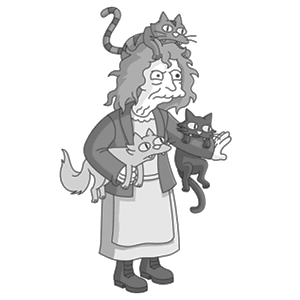
A cat lady is a cultural archetype or a stock character, often depicted as a woman, a middle-aged or elderly spinster, who owns many pet cats. The term can be considered pejorative, though it is sometimes embraced.
A cat lady may also be an animal hoarder who keeps large numbers of cats without having the ability to properly house or care for them. They may be ignorant about their situation, or generally unaware of their situation. People who are aware of it are not normally considered cat ladies.
read more »
Posted in Health, Humor |
Leave a Comment »
June 27, 2018
Boom bap is a style of production in hip-hop music. The term is an onomatopoeia for the drum sounds prominent in the 90’s East Coast hip hop. The style is famous for its hard bass drum and snare drum.
In a typical ‘boom bap’ beat, the snare drum comes in on beats two and four of a four-beat measure, while the bass drum appears on the first and third beat. Prominent hip-hop artists that incorporated ‘boom bap’ in their music include Nas, Eminem, the Wu-Tang Clan, and 2Pac.
Posted in Art |
Leave a Comment »
June 7, 2018
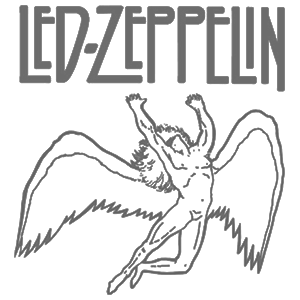
The swan song is a metaphorical phrase for a final gesture, effort, or performance given just before death or retirement. The phrase refers to an ancient belief that swans sing a beautiful song just before their death, having been silent (or alternatively, not so musical) during most of their lifetime. This belief, whose basis in actuality is long-debated, had become proverbial in ancient Greece by the 3rd century BCE, and was reiterated many times in later Western poetry and art.
In Greek mythology, the swan was a bird consecrated to Apollo and was therefore considered a symbol of harmony and beauty.
read more »
Posted in Art, Death, Language |
Leave a Comment »
May 29, 2018

Trust, but verify is a Russian proverb that became well known in English when used by President Ronald Reagan on multiple occasions in the context of nuclear disarmament.
Suzanne Massie, an American author living in Russia, met with President Ronald Reagan many times between 1984 and 1987. She taught him the proverb, advising him that ‘The Russians like to talk in proverbs. It would be nice of you to know a few. You are an actor – you can learn them very quickly.’ The proverb was adopted as a signature phrase by Reagan, who subsequently used it frequently when discussing U.S. relations with the Soviet Union. Using proverbs that the Russians could relate to may have helped relations between the two leaders.
read more »
Posted in Language, War, World |
1 Comment »
May 22, 2018

Mezcal (lit. ‘oven-cooked agave’) is a distilled alcoholic beverage made from any type of agave plant native to Mexico. Agave, which is often misidentified as a variety of cactus, grows in many parts of Mexico, though most mezcal is made in Oaxaca, a southern state. A Oaxacan expression regarding the drink is: ‘Para todo mal, mezcal, y para todo bien, también.’ (‘For everything bad, mezcal, and for everything good as well.’)
It is unclear whether distilled drinks were produced in Mexico before the Spanish Conquest. The Spaniards were introduced to native fermented drinks such as pulque, a milky-looking, alcoholic beverage made from the fermented sap of the maguey plant (also known as agave americana). Soon, the conquistadors began experimenting with the agave plant to find a way to make a distillable fermented mash. The result was mezcal.
read more »
Posted in Food, World |
Leave a Comment »
May 15, 2018

Wearing socks and sandals together is a controversial fashion combination and social phenomenon that is discussed in various countries and cultures. In some places it is considered a fashion faux pas.
The earliest evidence of wearing socks and sandals is documented at an archaeological site in England. The discovery suggests that old Romans wore socks with sandals at least 2,000 years ago. The earliest known surviving pair of socks were designed for use with sandals. Dating from 300–500, they were excavated from Oxyrhynchus on the Nile in Egypt.
read more »
Posted in Art |
Leave a Comment »
May 8, 2018
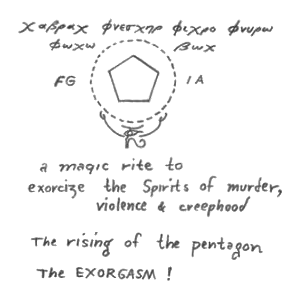
Flower power was a slogan used during the late 1960s and early 1970s as a symbol of passive resistance and non-violence ideology. It is rooted in the opposition movement to the Vietnam War. The expression was coined by the American beat poet Allen Ginsberg in 1965 as a means to transform war protests into peaceful affirmative spectacles.
Hippies embraced the symbolism by dressing in clothing with embroidered flowers and vibrant colors, wearing flowers in their hair, and distributing flowers to the public, becoming known as ‘flower children.’ The term later became generalized as a modern reference to the hippie movement and the so-called counterculture of drugs, psychedelic music, psychedelic art, and social permissiveness.
read more »
Posted in Philosophy, Politics, War |
1 Comment »
April 30, 2018
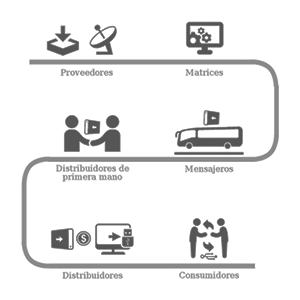
Sneakernet is an informal term for the transfer of electronic information by physically moving media such as magnetic tape, floppy disks, compact discs, USB flash drives or external hard drives from one computer to another; rather than transmitting the information over a computer network. The term, a tongue-in-cheek play on net(work) as in Internet or Ethernet, refers to walking in sneakers as the transport mechanism for the data.
Also known as trainnets or pigeonets, these types of physically mediated networks are in use throughout the world. Sneakernets are used when data transfer is impractical due to bandwidth limitations or other reasons such as data security. This form of data transfer is also used for peer-to-peer (or friend-to-friend) file sharing and has grown in popularity in metropolitan areas and college communities. The ease of this system has been facilitated by the availability of USB external hard drives, USB flash drives and portable music players.
read more »
Posted in Technology, World |
Leave a Comment »



