August 18, 2014


A visiting card, also known as a calling card, is a small paper card with one’s name printed on it, and often bearing an artistic design. In 18th century Europe the footmen of aristocrats and royalty would deliver these first European visiting cards to the servants of their prospective hosts solemnly introducing the arrival of their owners.
Visiting cards became an indispensable tool of etiquette, with sophisticated rules governing their use. The essential convention was that one person would not expect to see another person in her own home (unless invited or introduced) without first leaving his visiting card for the person at her home. Upon leaving the card, he would not expect to be admitted at first, but might receive a card at his own home in response. This would serve as a signal that a personal visit and meeting at home would be welcome. On the other hand, if no card were forthcoming, or if a card were sent in an envelope, a personal visit was thereby discouraged.
read more »
Posted in Language, Money, World |
Leave a Comment »
August 13, 2014

Hendiatris [hen-die-uh-tris] (from the Greek: ‘one through three’) is a figure of speech used for emphasis, in which three words are used to express one idea (e.g. ‘sex, drugs and rock and roll’ to capture the life of a rock star). It is an isocolon, a sentence composed of two or more parts (cola) perfectly equivalent in structure, length and rhythm (called a bicolon, tricolon, or tetracolon depending on whether they are two, three, or four parts).
A well-known example of tricolon is Julius Caesar’s ‘Veni, vidi, vici’ (‘I came; I saw; I conquered’), which is also a hendiatris and known in English as a ‘tripartite motto.’ If the units involved are not single words, and if they are not in any way synonyms but rather circumnavigate the one idea expressed, the figure may be described more correctly, precisely, and succinctly as a ‘triad.’
read more »
Posted in Language, Politics, World |
1 Comment »
August 11, 2014
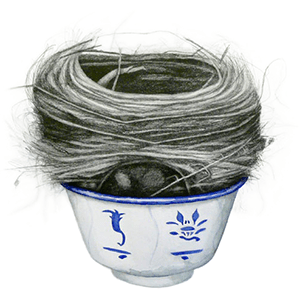
Edible bird’s nests are among the most expensive animal products consumed by humans, with an average nest selling for $2,500 per kilo for end-consumers in Asia. The nests have been used in Chinese cooking for over 400 years, most often as bird’s nest soup. Legend has it that shipwrecked sailors scavenging for food cleaned and cooked the nests and found the resulting stew so invigorating they were able to sail home to inform the emperor of their new discovery.
The Chinese name for edible bird’s nest, ‘yàn wō,’ translates literally as ‘swiftlet nest’ (swiftlets, common to asia, are superficially similar to swallows and known for building nests of solidified saliva). The most famous use for the nests is bird’s nest soup, a delicacy in Chinese cuisine. When dissolved in water, the swiftlet nests have a gelatinous texture used for soup or sweet tong sui (a Cantonese custard).
read more »
Posted in Food, Money, World |
1 Comment »
August 7, 2014


The right to be forgotten is a nascent legal concept arising from the need to ‘determine the development of [one’s] life in an autonomous way, without being perpetually or periodically stigmatized as a consequence of a specific action performed in the past.’ France law began recognizing this new right in 2010. Critics claim the laws are vague, unenforceable, and potentially a threat to open access to information, which is an existing legal right in many countries. There are also concerns about its interaction with the right to privacy and whether it would decrease the quality of the Internet through censorship and a rewriting of history.
Many nations have very strong domestic freedom of speech laws, which would be challenging to reconcile with the right to be forgotten. Some academics see that only a limited form of the right to be forgotten would be reconcilable with US constitutional law; the right of an individual to delete data that he or she has personally submitted. In this limited form, individuals could not have material removed that has been uploaded by others, as demanding the removal of information could constitute censorship and a reduction in the freedom of expression.
read more »
Posted in Politics, Technology, World |
1 Comment »
August 6, 2014

Imelda Marcos (b. 1929) is the widow of former Philippine President Ferdinand Marcos. In popular culture, she is remembered for her collection of more than a thousand pairs of shoes. She began her career as a local singer and model in Manila before meeting her husband. After the declaration of martial law in 1972, Imelda began holding positions in the national government that allowed her to travel the world and accumulate artwork and real estate. The couple consolidated their power allowing them to transport funds from the Philippine treasury into offshore accounts, such as banks in Switzerland.
President Marcos was accused of the assassination of Benigno Aquino, Jr., leading to the People Power Revolution which forced the Marcoses out of office and into exile in Hawaii. After the death of Ferdinand, Imelda and her family were given amnesty by then President Corazon Aquino, Benigno Jr’s widow. Her return to the Philippines has since allowed her to restore her political dynasty. Despite numerous cases involving alleged corruption, she has not been imprisoned and continues to wield influence. Her ability to survive upheavals in her life has led her to be called the ‘Steel Butterfly.’
read more »
Posted in Money, Politics, World |
Leave a Comment »
August 5, 2014
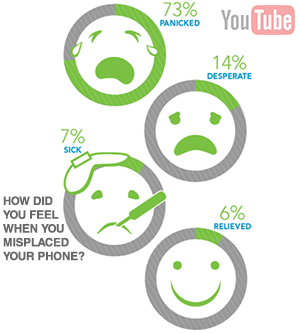
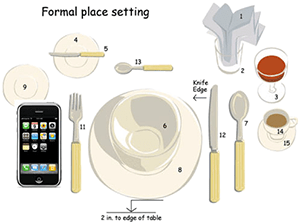
Nomophobia (‘no-mobile-phone phobia’) is the fear of being out of mobile phone contact. The term was coined during a 2010 study by the UK Post Office who commissioned YouGov, a UK-based research organization to look at anxieties suffered by mobile phone users. The study found that nearly 53% of mobile phone users in Britain tend to be anxious when they ‘lose their mobile phone, run out of battery or credit, or have no network coverage.’ The study found that about 58% of men and 47% of women suffer from the phobia, and an additional 9% feel stressed when their mobile phones are off.
The study indicated that stress levels induced by the average case of nomophobia are similar in severity to ‘wedding day jitters’ and trips to the dentists. Ten percent of those questioned said they needed to be contactable at all times because of work. It is, however, arguable that the word ‘phobia’ is misused and that in the majority of cases it is only a normal anxiety. More than one in two nomophobes never switch off their mobile phones. The study prompted two editorial columns authored by those who minimize their mobile phone use or choose not to own one at all, treating the condition with levity or outright disbelief.
Posted in Health, Humor, Technology |
Leave a Comment »
August 4, 2014

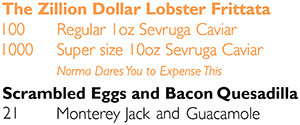
Anchoring or focalism is a cognitive bias that describes the common human tendency to rely too heavily on the first piece of information offered (the ‘anchor’) when making decisions. Once an anchor is set, other judgments are made by adjusting away from that anchor, and there is a bias toward interpreting other information around the anchor. For example, the initial price offered for a used car sets the standard for the rest of the negotiations, so that prices lower than the initial price seem more reasonable even if they are still higher than what the car is really worth.
Anchoring is also called the focusing effect (or focusing illusion) because it occurs when people place too much importance on one aspect of an event, causing an error in accurately predicting the utility of a future outcome. Individuals tend to focus on notable differences, excluding those that are less conspicuous, when making predictions about happiness or convenience.
read more »
Posted in Health, Money, Science |
Leave a Comment »
July 30, 2014
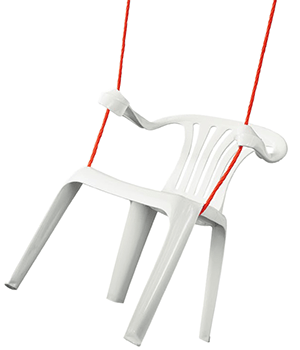
The Monobloc [mon-uh-blok] chair is a lightweight stackable polypropylene chair, often described as the world’s most common plastic chair. Based on original designs by the Italian designer Vico Magistretti in 1967, variants of the one-piece plastic chair went into production with Allibert Group and Grossfillex Group in the 1970s. Since then, millions have been manufactured globally. Many design variants of the basic idea exist.
The Monobloc chair is so named because it is injection molded from thermoplastic polypropylene, the granules being heated to about 220 degrees Celsius, and the melt injected into a mold. The gate of the mold is usually located in the seat to ensure smooth flow to all parts of the tool. The chairs cost approximately $3 to produce, making them affordable across the world. Social theorist Ethan Zuckerman describes them as having achieved a global ubiquity: ‘The Monobloc is one of the few objects I can think of that is free of any specific context. Seeing a white plastic chair in a photograph offers you no clues about where or when you are.’
Posted in Money, Technology, World |
Leave a Comment »
July 29, 2014

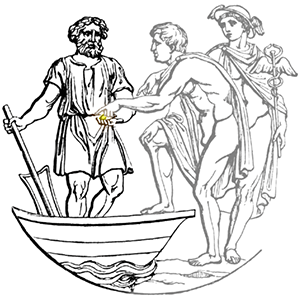
A psychopomp [sahy-koh-pomp] (from the Greek word ‘psuchopompos,’ literally meaning the ‘guide of souls’) are creatures, spirits, angels, or deities in many religions whose responsibility is to escort newly deceased souls to the afterlife. Their role is not to judge the deceased, but simply provide safe passage. Frequently depicted on funerary art, psychopomps have been associated at different times and in different cultures with horses, deer (harts) dogs, and several birds, such as whip-poor-wills, ravens, crows, owls, sparrows, cuckoos.
In Jungian psychology, which stresses the importance of the symbolic in human life, the psychopomp is a mediator between the unconscious and conscious realms. It is symbolically personified in dreams as a wise man or woman, or sometimes as a helpful animal. In many cultures, the shaman (medicine man) also fulfills the role of the psychopomp. This may include not only accompanying the soul of the dead, but also vice versa: to help at birth, to introduce the newborn child’s soul to the world. This also accounts for the contemporary title of ‘midwife to the dying,’ or ‘End of Life Doula’ which is another form of psychopomp work.
Posted in Death, Philosophy |
Leave a Comment »
July 28, 2014

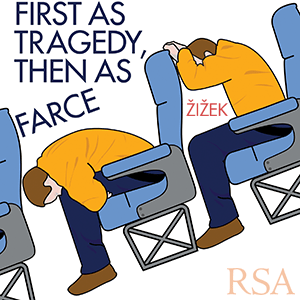
Historic recurrence is the repetition of similar events in history. The concept has been used to analyze the overall history of the world (e.g., the rise and fall of empires), repetitive patterns in the history of a given polity, and generally to any two specific events which bear a striking similarity. Professor of religious history Garry W. Trompf, in his book ‘The Idea of Historical Recurrence in Western Thought,’ traces historically recurring patterns of political thought and behavior in the west since antiquity. Historic recurrences can sometimes induce a sense of ‘convergence,’ ‘resonance,’ or déjà vu.
In the extreme, the concept assumes the form of the doctrine of Eternal Return (the belief that universe has been recurring, and will continue to recur, in a self-similar form an infinite number of times across infinite time or space), found in Indian philosophy and in ancient Egypt and was subsequently taken up by the Pythagoreans and Stoics (with the decline of antiquity and the spread of Christianity, the concept fell into disuse in the Western world, with the exception of existentialist philosopher Friedrich Nietzsche, who connected the thought to many of his other concepts, including ‘amor fati,’ love of one’s fate).
read more »
Posted in Philosophy, Politics, World |
Leave a Comment »
July 24, 2014
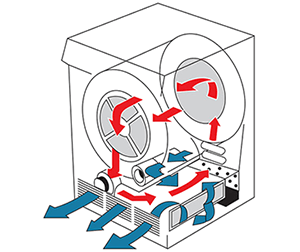
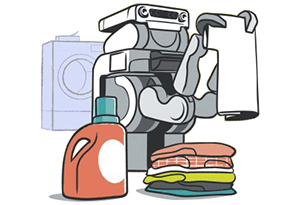
A combo washer dryer (also known more simply as a washer-dryer in the UK) is a combination in a single cabinet of a washing machine and a clothes dryer. It should not be confused with a ‘stackable’ combination of a separate washing machine and a separate clothes dryer.
While combo washer dryers are not as effective and efficient as full-sized, fully functional, separate washer and dryer machines, they are useful in smaller urban properties as they only need half the amount of space and most don’t require an external air vent (water vapor is condensed from moist air and flushed out the drain hose). Additionally, combination washer dryers allow clothes to be washed and dried ‘in one go,’ saving time and effort from the user. Many units are also designed to be portable so they can be attached to a sink instead of requiring a separate water line.
read more »
Posted in Technology |
Leave a Comment »
July 23, 2014

The picaresque [pik-uh-resk] novel (Spanish:’picaresca,’ from ‘pícaro,’ for ‘rogue’ or ‘rascal’) is a popular subgenre of prose fiction which might sometimes be satirical and depicts, in realistic and often humorous detail, the adventures of a roguish hero of low social class who lives by his wits in a corrupt society. This style of novel originated in 16th-century Spain and flourished throughout Europe in the 17th and 18th centuries. The word ‘picaro’ does not appear in ‘Lazarillo de Tormes’ (1554), the novella credited with founding the genre. The expression ‘picaresque novel’ was coined in 1810. The genre continues to influence modern literature.
Picaresque novels are usually written in first person as an autobiographical account. A Lazarillo or picaro character is an alienated outsider, whose ability to expose and ridicule individuals compromised with society gives him a revolutionary stance. Lazarillo states that the motivation for his writing is to communicate his experiences of overcoming deception, hypocrisy, and falsehood (desengaño).
read more »
Posted in Art, Humor |
1 Comment »




