July 7, 2014


What happens on tour stays on tour is a notorious phrase or saying agreed to by men who get together and travel either interstate or overseas for sporting tours. In essence, the phrase means that all exploits during the tour must be kept strictly confidential, never to be discussed with anyone outside the group. In more recent years, the phrase has also been applied to men attending music gigs, going on business trips, and fishing holidays. The expression is also used in the US military when speaking of temporary duty assignment (‘what happens TDY stays TDY’)
The phrase has been described by Samantha Brett, a writer for the ‘Age,’ as an ‘unspoken male pact that for centuries can never be broken.’ In essence, if you were there you may discuss the events, but if you were not there, you get nothing. In contrast, ‘Rugby for Dummies’ describes the phrase as, particularly funny, embarrassing or debauched moments are for consumption only by the tourists themselves and not casual listeners back home.
read more »
Posted in Games, Humor, Sex |
Leave a Comment »
July 3, 2014

Concert etiquette refers to a set of social norms observed by those attending musical performances. These norms vary depending upon the type of music performance and can be stringent or informal. Etiquette is especially valued at concerts featuring music from the classical tradition.
The cardinal principle at work is to let others listen to the music undisturbed. Instruments and voices are typically unamplified, the music is rich in detail, wide in dynamic range, and poetic in intent. Audiences want to hear everything.
read more »
Posted in Art |
1 Comment »
July 2, 2014
The illusion of control is the tendency for people to overestimate their ability to control events, for instance to feel that they control outcomes that they demonstrably have no influence over. The effect was named by psychologist Ellen Langer and has been replicated in many different contexts.
It is thought to influence gambling behavior and belief in the paranormal. Along with illusory superiority (overestimating positive abilities and underestimating negative qualities) and optimism bias (unrealistic or comparative optimism), the illusion of control is one of the positive illusions, unrealistically favorable attitudes that people have towards themselves or to people that are close to them. Positive illusions are a form of self-deception or self-enhancement that feel good, maintain self-esteem or stave off discomfort at least in the short term.
read more »
Posted in Health, Science |
1 Comment »
July 1, 2014

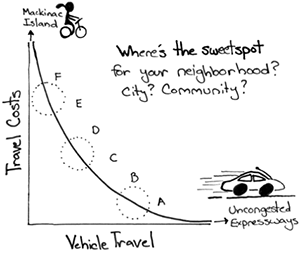
Induced demand, or latent demand, refers to the phenomenon that after supply increases, more of a good is consumed. This is entirely consistent with the economic theory of supply and demand; however, the idea has become important in the debate over the expansion of transportation systems, and is often used as an argument against widening roads, such as major commuter roads. It is considered by some to be a contributing factor to urban sprawl.
Latent demand has been recognized by road traffic professionals for many decades. J. J. Leeming, a British road-traffic engineer and county surveyor between 1924 and 1964, described the phenomenon is his 1969 book: ‘Motorways and bypasses generate traffic, that is, produce extra traffic, partly by inducing people to travel who would not otherwise have done so by making the new route more convenient than the old, partly by people who go out of their direct route to enjoy the greater convenience of the new road, and partly by people who use the towns bypassed because they are more convenient for shopping and visits when through traffic has been removed.’
read more »
Posted in Money, Politics, Technology |
Leave a Comment »
June 30, 2014
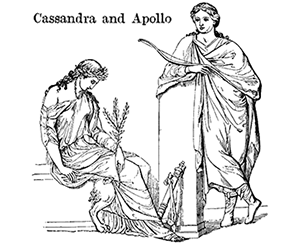
The Cassandra complex occurs when valid warnings or concerns are dismissed or disbelieved. The term originates in Greek mythology. Cassandra was a daughter of Priam, the King of Troy. Struck by her beauty, Apollo provided her with the gift of prophecy, but when Cassandra refused Apollo’s romantic advances, he placed a curse ensuring that nobody would believe her warnings. Cassandra was left with the knowledge of future events, but could neither alter these events nor convince others of the validity of her predictions.
The metaphor has been applied in a variety of contexts such as psychology, environmentalism, politics, science, cinema, the corporate world, and in philosophy, and has been in circulation since at least 1949 when French philosopher Gaston Bachelard coined the term to refer to a belief that things could be known in advance. The Cassandra metaphor is applied by some psychologists to individuals who experience physical and emotional suffering as a result of distressing personal perceptions, and who are disbelieved when they attempt to share the cause of their suffering with others, and they feel like they are being ignored.
read more »
Posted in Health |
Leave a Comment »
June 27, 2014
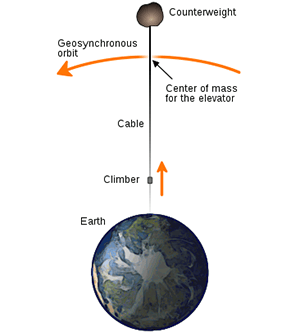

Megastructures are very large man made objects, ranging from ziggurats, to skyscrapers, to hypothetical, star-sized artificial constructs. One requirement of a megastructure is that it is self-supporting; other criteria such as rigidity or contiguousness are sometimes also applied (so large clusters of associated smaller structures may or may not qualify). Megastructures are the products of megascale engineering (building things larger than 1000 km, e.g. the Great Wall of China) or astroengineering (building in outer space, e.g. the International Space Station).
Most megastructure designs could not be constructed with today’s level of industrial technology. This makes their design examples of speculative (or exploratory) engineering. Those that could be constructed easily qualify as megaprojects (construction projects in the billion dollar range).
read more »
Posted in Technology, World |
Leave a Comment »
June 26, 2014
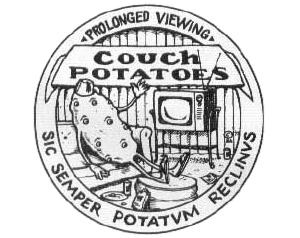

A sedentary lifestyle is characterized by a lack of physical activity. A person who lives a sedentary lifestyle may colloquially be known as a ‘couch potato.’ It is commonly found in both the developed and developing world. Sedentary activities include sitting, reading, watching television, playing video games, and computer use for much of the day with little or no vigorous physical exercise. A sedentary lifestyle can contribute to many preventable causes of death. ‘Screen time’ is the amount of time a person spends watching a screen such as a television, computer monitor, or mobile device. Excessive screen time is linked to negative health consequences, such as insufficient blinking and tear flow.
The term couch potato was coined by a friend of underground comics artist Robert Armstrong in the 1970s; Armstrong featured a group of couch potatoes in a series of comics featuring sedentary characters and with Jack Mingo and Allan Dodge created a satirical organization that purported to watch television as a form of meditation. With two books and endless promotion through the 1980s, the ‘Couch Potatoes’ appeared in hundreds of newspapers, magazines and broadcasts, spreading its ‘turn on, tune in, veg out’ message, garnering 7,000 members, and popularizing the term.
read more »
Posted in Death, Health |
1 Comment »
June 25, 2014
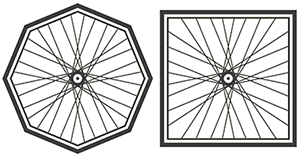

To reinvent the wheel is to duplicate a basic method that has already previously been created or optimized by others. The inspiration for this idiomatic metaphor lies in the fact that the wheel is the archetype of human ingenuity, both by virtue of the added power and flexibility it affords its users, and also in the ancient origins which allow it to underlie much, if not all, of modern technology. As it has already been invented, and is not considered to have any operational flaws, an attempt to reinvent it would be pointless and add no value to the object, diverting the investigator’s resources from possibly more worthy goals which his skills could advance more substantially.
‘Reinventing the wheel’ may itself be an ironic cliche—-it is not clear when the wheel itself was actually invented. The modern ‘invention’ of the wheel might actually be a ‘re-invention’ of an age-old invention. Additionally, many different wheels featuring enhancements on existing wheels (such as the many types of available tires) are regularly developed and marketed. The metaphor emphasizes understanding existing solutions, but not necessarily settling for them.
read more »
Posted in Education, Language, Technology |
1 Comment »
June 24, 2014


Antipatterns are common practices that initially appear to be beneficial, but ultimately result in bad consequences that outweigh hoped-for advantages. The term, coined in 1995 by programmer Andrew Koenig, was inspired by a book, ‘Design Patterns,’ in which the authors highlighted a number of practices in software development that they considered to be highly reliable and effective.
The term was popularized three years later by the book ‘AntiPatterns,’ which extended its use beyond the field of software design and into general social interaction and may be used informally to refer to any commonly reinvented but bad solution to a problem. Examples include analysis paralysis (over-analyzing a situation while indefinitely delaying making a decision), cargo cult programming (the ritual inclusion of code that serves no real purpose), death march (pressing ahead on a project members feel is destined to fail), groupthink (a desire for harmony in the group results in an irrational decision-making outcome), and vendor lock-in (preventing customers from seeking alternatives).
read more »
Posted in Money, Technology |
Leave a Comment »
June 23, 2014

The term wet bias refers to weather forecasters deliberately reporting a higher probability of rain than their predictive models show. The Weather Channel has been empirically shown, and has also admitted, to having a wet bias in the case of low probability of precipitation (for instance, a 5% probability may be reported as a 20% probability) but not at higher probabilities (a 60% probability will likely be reported accurately). Blogger Dan Allan noted that the channel is also biased at the upper end (a probability of 90% or higher will be rounded up to 100%). Local weather stations have been shown to have a significantly greater wet bias, with some reporting a probability as low as 70% as a certainty.
In 2002, computer scientist Eric Floehr started analyzing historical weather prediction data on a website called ForecastWatch. He found that the commercial forecasts were biased and the National Weather Service forecasts weren’t. His findings, though known within the meteorology community for some time, was first popularized in Nate Silver’s 2012 book ‘The Signal and the Noise.’ According to Silver, the phenomenon is due to skewed incentives: if the correct low probability of precipitation is given, viewers may interpret the forecast as if there were no probability of rain, and then be upset if it does rain. Forecasters are compensating for the fact that people have greater loss aversion than they think they do (and are especially prone to miscalculate their cost-loss ratio when it is low). Silver quotes Dr. Rose of The Weather Channel as saying, ‘If the forecast was objective, if it has zero bias in precipitation, we are in trouble.’
Posted in Money, Science |
1 Comment »
June 21, 2014
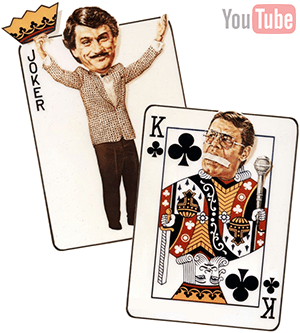
The King of Comedy is a 1983 American black comedy film starring Robert De Niro and Jerry Lewis, and directed by Martin Scorsese. The subject of the movie is celebrity worship and the American media culture.
DeNiro plays Rupert Pupkin, a stage-door autograph hound and aspiring stand-up comedian whose ambition far exceeds his talent. After meeting Jerry Langford (Lewis), a successful comedian and talk show host, Rupert believes his ‘big break’ has finally come. He attempts to get a place on the show but is continually rebuffed by Langford’s staff and, finally, by Langford himself.
read more »
Posted in Humor |
Leave a Comment »
June 18, 2014
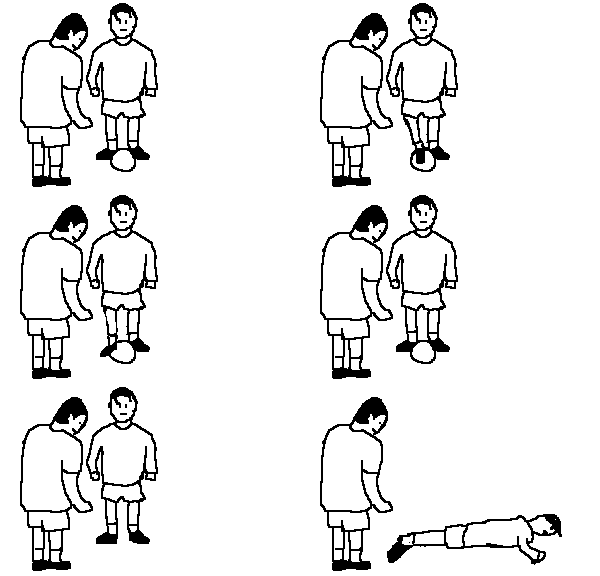

Gamesmanship is the use of dubious (although not technically illegal) methods to win or gain a serious advantage in a game or sport. It has been described as ‘Pushing the rules to the limit without getting caught, using whatever dubious methods possible to achieve the desired end.’ It may be inferred that the term derives from the idea of playing for the game (i.e., to win at any cost) as opposed to sportsmanship, which derives from the idea of playing for sport. The term originates from British author Stephen Potter’s humorous 1947 book, ‘The Theory and Practice of Gamesmanship (or the Art of Winning Games without Actually Cheating).’
Potter cites the origin of gamesmanship to be a tennis match in which he and the philosopher C. E. M. Joad competed against two younger and fitter men who were outplaying them fairly comfortably. On returning a serve, Joad hit the ball straight into the back-netting twelve feet behind the back-line. While the opponents were preparing for the next serve, Joad ‘called across the net, in an even tone: ‘Kindly state clearly, please, whether the ball was in or out.’ Being young, polite university students, their opponents offered to replay the point, but Joad declined. Because they were young and polite, the slight suggestion by Joad that their etiquette and sportsmanship were in question was extremely off-putting, and distracted them for the rest of contest. Potter and Joad went on to win the match.
read more »
Posted in Games, Politics |
Leave a Comment »



