May 16, 2011

Street poster art is a kind of graffiti, more specifically categorized as ‘street art.’ Posters are usually hand-made or printed graphics on thin paper.
Wallpaper glue or wheatpaste (an adhesive made from wheat flour or starch and water) are commonly used to adhere poster art to a surface. It can be understood as an art piece that is installed on the streets as opposed to in a gallery or museum, but by some it is not comprehended as a form of contemporary art.
Posted in Art, Politics |
Leave a Comment »
May 16, 2011

Flyposting is the act of placing advertising posters or flyers in illegal places. In the U.S., these posters are known as bandit signs, snipe signs, or street spam. In most areas, it is illegal to place such posters on private property without the consent of the property owner, or to post on public property without a sign permit from the local government. Some areas, however, have public bulletin boards where notices may be posted. It is an advertising tactic mostly used by small businesses promoting concerts and political activist groups, but there have been occasions where international companies subcontracted local advertising agencies for flyposting jobs as a form of guerrilla marketing.
Flyposting is commonly seen as a nuisance due to issues with property rights, visual appearance and littering and is a misdemeanor in many countries. A particularly noteworthy incident of this type occurred in Boston, Massachusetts. In the case of the 2007 Boston Mooninite Scare, advertisers had placed electronic signboards without notifying local authorities, prompting a costly reaction by the Boston Police Bomb Squad when the signs were mistaken for bombs.
Posted in Art, Money, Politics |
Leave a Comment »
May 16, 2011

Wheatpaste (also known as Marxist glue) is a liquid adhesive made from vegetable starch and water. It has been used since ancient times for various arts and crafts such as bookbinding and papier mache. It is also made for the purpose of adhering paper posters to walls and other surfaces (often in graffiti). Closely resembling wallpaper paste, it is often made by mixing roughly equal portions of flour and water and heating it until it thickens, or by smearing cooked rice into a paste.
The words paste, pasta, and pastry have a common heritage, deriving from the Late Latin pasta (dough or pastry cake), itself deriving from the ancient Greek pasta, meaning ‘barley porridge.’ In English, paste is used as would be ‘dough’ in the 12th century, or ‘glue’ in the 15th century.
read more »
Posted in Art, Language, Money |
Leave a Comment »
May 16, 2011
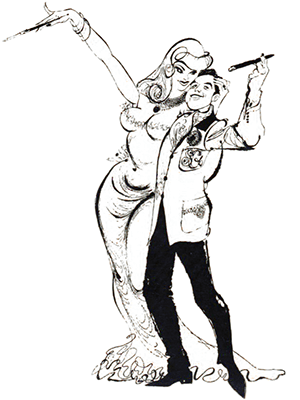
‘What Makes Sammy Run?‘ is a 1941 novel by Budd Schulberg. It is a rags to riches story chronicling the rise and fall of Sammy Glick, a Jewish boy born in New York’s Lower East Side who very early in his life makes up his mind to escape the ghetto and climb the ladder of success.
Reputedly, film mogul Samuel Goldwyn offered Schulberg money to not have the novel published, because Goldwyn felt that the author was perpetuating an anti-Semitic stereotype by making Glick so venal. It was later made into a long-running Broadway musical.
read more »
Posted in Art, Money |
Leave a Comment »
May 16, 2011
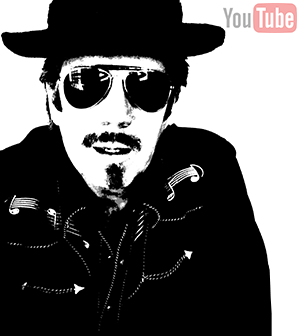
Dan Hicks (b. 1941) is an American singer-songwriter working at the intersection of cowboy folk, jazz, country, swing, bluegrass, pop, and gypsy music. His songs are frequently infused with humor, as evidenced by the title of his tune, ‘How Can I Miss You When You Won’t Go Away?’ Taking up the guitar in 1959, he became part of the San Francisco folk music scene, performing at local coffeehouses. Hicks joined the San Francisco band The Charlatans in 1965 as drummer.
In 1968, Hicks formed Dan Hicks and His Hot Licks, whose fourth album, 1973’s Last Train to Hicksville, gained the group critical and popular acclaim. Thus, it was a great surprise to many when he chose that moment to disband the Hot Licks. Asked why in 1974, he said, ‘I’m basically a loner… I like singing and stuff, but I didn’t necessarily want to be a bandleader. The thing had turned into a collective sort of thing — democracy, vote on this, do that. I conceived the thing. They wouldn’t be there if it wasn’t for me. My role as leader started diminishing, but it was my fault because I let it happen; I cared less as the thing went on.’
Posted in Art, Humor |
Leave a Comment »
May 12, 2011

‘Maggot Brain‘ is a song by the band Funkadelic. It appears as the lead track on their 1971 album of the same name. The original recording of the song, over ten minutes long, features little more than a spoken introduction and a much-praised extended guitar solo by Eddie Hazel. Reportedly, ‘Maggot Brain’ was Hazel’s nickname. Other sources say the title is a reference to band leader George Clinton finding his brother’s ‘decomposed dead body, skull cracked, in a Chicago apartment.
According to legend, George Clinton, under the influence of LSD, told Eddie Hazel during the recording session to imagine he had been told his mother was dead, but then learned that it was not true. The result was the 10-minute guitar solo for which Hazel is most fondly remembered by many music critics and fans. Though several other musicians began the track playing, Clinton soon realized the power of Hazel’s solo and faded them out so that the focus would be on Hazel’s guitar. The entire track was recorded in one take. The solo is mostly played in a pentatonic minor scale in the key of E over another guitar track of a simple arpeggio. Hazel’s solo was played through a fuzzbox (distortion pedal) and a Crybaby Wah wah pedal; some sections of the song utilize a delay effect.
Posted in Art, Drugs |
Leave a Comment »
May 12, 2011

Congo Square is an open space within Louis Armstrong Park, which is located in the Tremé neighborhood of New Orleans, just across Rampart Street north of the French Quarter. The Tremé neighborhood is famous for its history of African American music. In Louisiana’s French and Spanish colonial era of the 18th century, slaves were commonly allowed Sundays off from their work. They were allowed to gather in the ‘Place de Negres,’ or informally ‘Place Congo’ at the back of town (across Rampart Street from the French Quarter), where the slaves would set up a market, sing, dance, and play music.
The tradition continued after the city became part of the United States with the Louisiana Purchase. As African music had been suppressed in the Protestant colonies and states, the weekly gatherings at Congo Square became a famous site for visitors from elsewhere in the U.S. In addition, because of the immigration of refugees (some bringing slaves) from the Haitian Revolution, New Orleans received thousands of additional Africans and Creoles in the early years of 19th century. They reinforced African traditions in the city, in music as in other areas. Many visitors were amazed at the African-style dancing and music.
read more »
Posted in Art, World |
1 Comment »
May 11, 2011
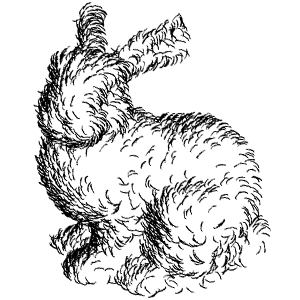
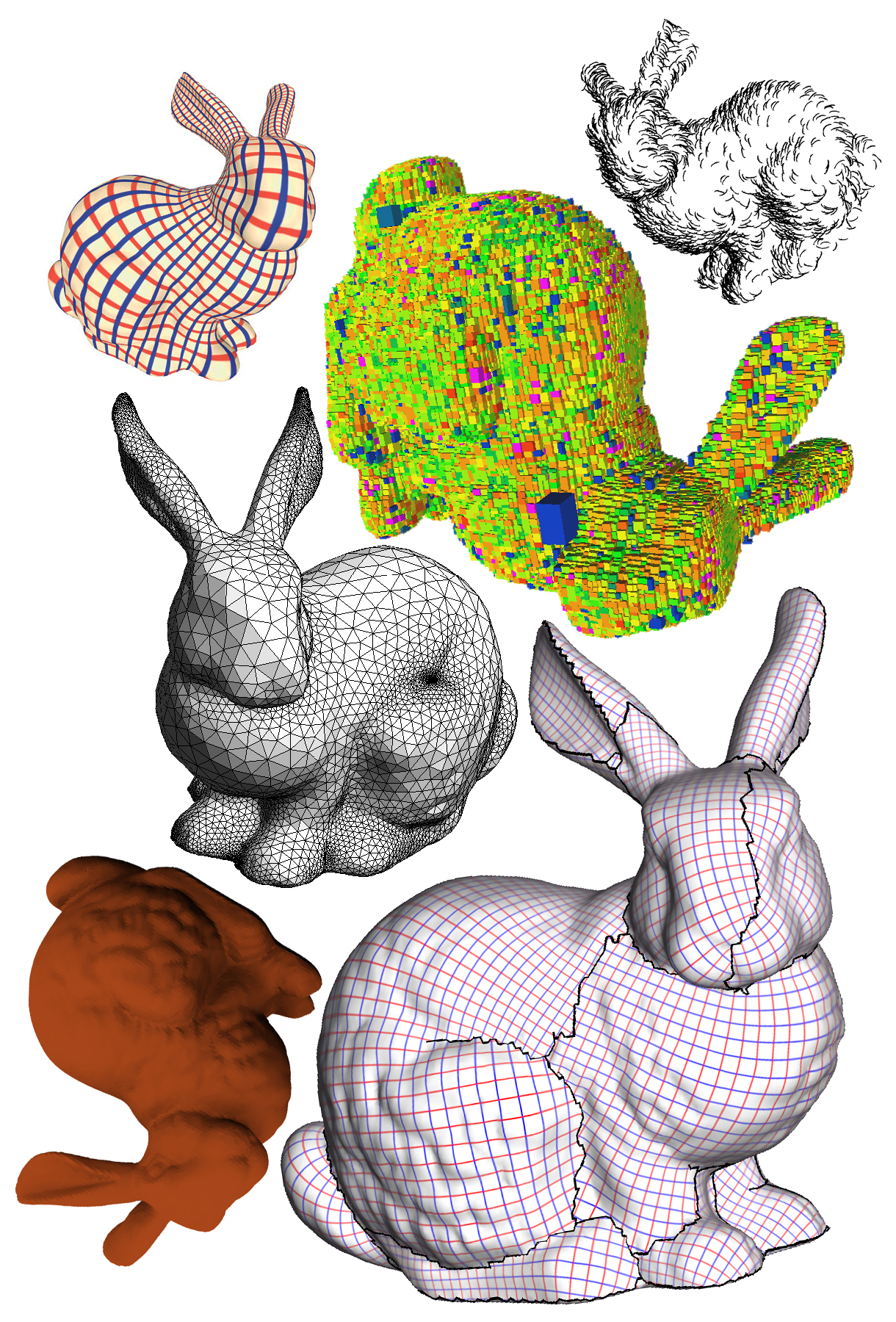
The Stanford Bunny is a computer graphics test model developed in 1994 at Stanford University. The Bunny consists of data describing 69,451 triangles determined by 3D scanning a ceramic figurine of a rabbit.
The data can be used to test various graphics algorithms; including polygonal simplification, compression, and surface smoothing. By today’s standards in terms of geometric complexity and triangle count, it is considered a simple model.
Posted in Art, Technology |
Leave a Comment »
May 11, 2011
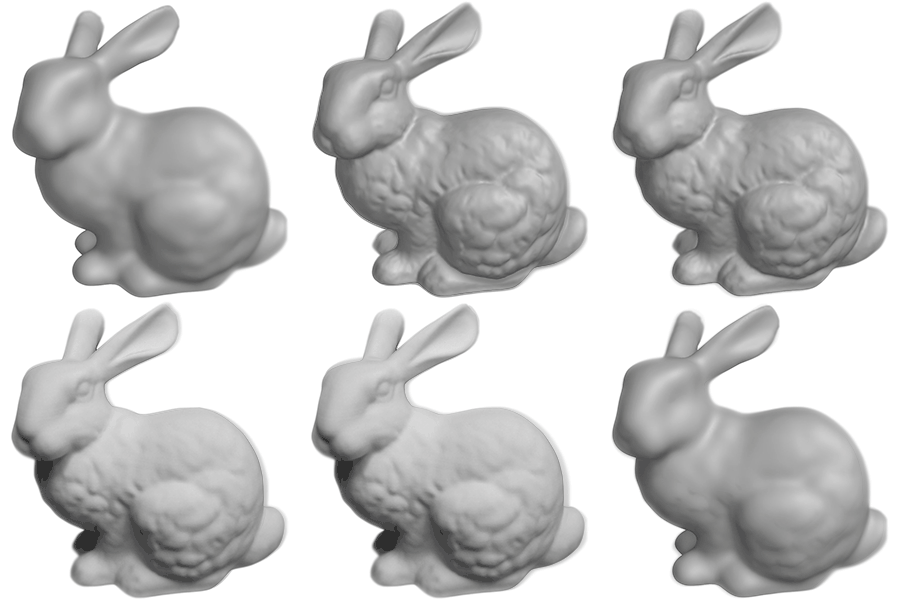
The Stanford 3D Scanning Repository is a collection of freely usable 3d models scanned from real objects. The models tend to have very high polygon counts (the largest has almost 30 million). According to the repository, ‘In recent years, the number of range scanners and surface reconstruction algorithms has been growing rapidly. Many researchers, however, do not have access to scanning facilities or dense polygonal models. The purpose of this repository is to make some range data and detailed reconstructions available to the public.
The models in this archive are commonly used in the graphics, visualization, and vision communities. Things people have done with these models include simplification, multi-resolution representation, curved surface fitting, compression, texture mapping, modeling, deformation, animation, physically-based simulation, texture synthesis, and rendering. The Stanford Bunny is particularly widely used.
Posted in Art, Technology |
Leave a Comment »
May 10, 2011
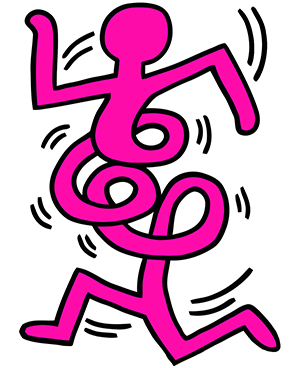
The Montreux Jazz Festival is the best-known music festival in Switzerland and one of the most prestigious in Europe; it is held annually in early July in Montreux on the shores of Lake Geneva. It is the second largest annual music festival in the world after Canada’s Montreal International Jazz Festival. The festival was founded in 1967 by Claude Nobs (who still organizes the event); the first one lasted for three days and featured almost exclusively jazz artists.
The highlights of this era were Keith Jarrett, Jack DeJohnette, Bill Evans, Soft Machine, Weather Report, Nina Simone, Jan Garbarek, and Ella Fitzgerald. Originally a pure jazz festival, it opened up in the 1970s and today presents artists of nearly every imaginable style, though jazz remains an important component. Today’s festival lasts about two weeks and attracts an audience of more than 200,000 people.
read more »
Posted in Art, World |
Leave a Comment »
May 10, 2011


The New Orleans Jazz & Heritage Festival, often known as Jazz Fest, is a celebration of the music and culture of New Orleans and Louisiana held yearly since 1970. Use of the term ‘Jazz Fest’ can also include the days surrounding the Festival and the many shows at unaffiliated New Orleans nightclubs scheduled during the Festival event weekends. The festival celebrates the indigenous music and culture of New Orleans and Louisiana, so the music encompasses every style associated with the city and the state: blues, R&B, gospel, Cajun music, zydeco, Afro-Caribbean, folk, Latin, rock, rap, country, bluegrass and everything in between. And of course there is lots of jazz, both contemporary and traditional.
Jazz Fest is currently held during the day, between the hours of 11am and 7pm at the Fair Grounds Race Course, a horse track, on the last weekend in April (from Friday through Sunday) and the first weekend in May (Thursday through Sunday). The Festival also features a wide variety of vendors with local foods and crafts. The official food policy of the Festival is ‘no carnival food.’ Indeed, there are more than seventy food booths, all with unique food items, including but not limited to: crawfish beignets, cochon de lait (suckling pig) sandwiches, alligator sausage po’ boys, boiled crawfish, softshell crabs, crawfish Monica and many other dishes. All food vendors are locally owned small businesses.
Posted in Art, Food |
1 Comment »
May 9, 2011

The Firesign Theatre is an American comedy troupe consisting of Phil Austin, Peter Bergman, David Ossman and Philip Proctor. Their brand of surrealistic humor is best known through their record albums, which acquired a cult following in the late 1960s and early ’70s. The troupe began as live radio performers in LA; the name stems in part from astrology, because the membership encompasses all three ‘fire signs’: Aries, Leo, and Sagittarius. The name also refers to Fireside Theatre, an early television series that ran on NBC from 1949 to 1955, followed by ‘Jane Wyman Presents the Fireside Theatre’ (1955–58); it may also refer to the Fireside Chats radio broadcasts made by President Franklin Delano Roosevelt, a parody of which can be heard in one of the Theatre’s ‘Nick Danger’ adventures.
The Firesign Theatre employs a stream of consciousness style that includes direct references to movies, radio, TV, political figures, and other cultural sources, intermingled with sound effects and bits of music. The resulting stories — including the theft of a high school, a fair of clowns and holograms and aliens who use hemp smoking to turn people into crows — border on psychedelia, an effect intensified by the frequent appearance of mock ‘advertisements’ satirizing real products. The Firesign approach to comedy was strongly influenced by ‘The Goon Show,’ a British radio comedy program. While their style has the feel of improvisational comedy, most of the material is tightly scripted and memorized. The group’s writing method demands the consent of all four members before a line can be included. Much of their work has been copyrighted under the name ‘4 or 5 Crazee Guys.’
Posted in Art, Humor |
Leave a Comment »




 The Daily Omnivore