March 26, 2011
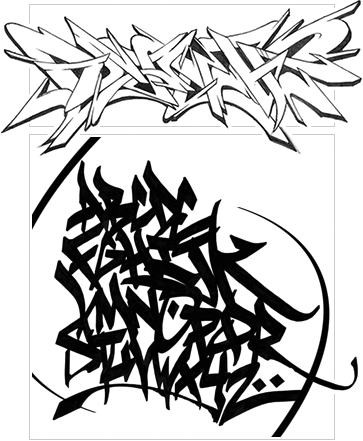
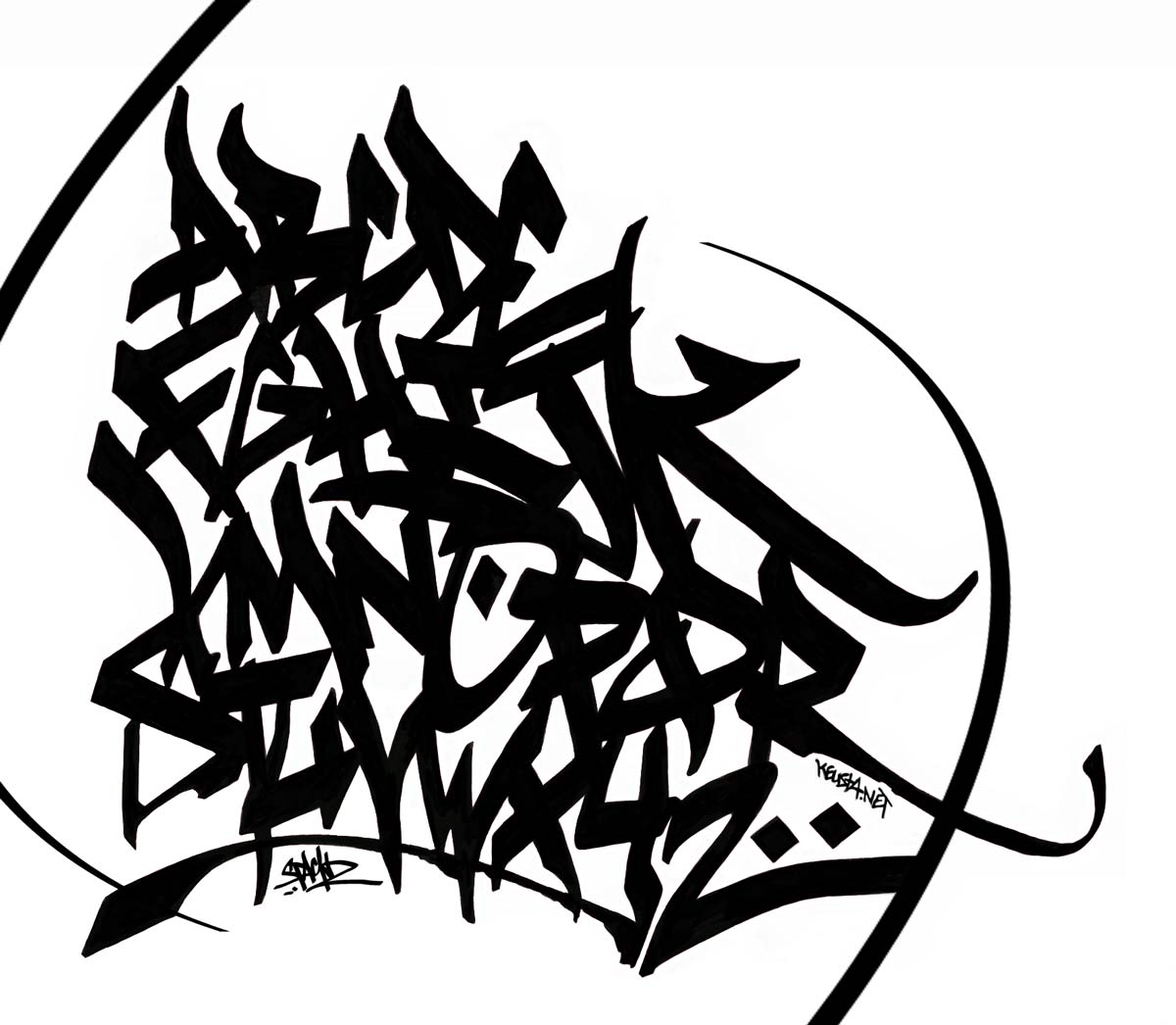
Wildstyle is a difficult and intricate form of graffiti. Due to its complexity, it is often very hard to read by people who are not familiar with it. It incorporates interwoven and overlapping letters and shapes, and may include arrows, spikes, and other decorative elements. It has also been common practice to incorporate 3D elements into the pieces, and even transform the whole letter structure into three dimensions, to add to the depth of visual perception of the work.
The numerous layers and shapes make this style extremely difficult to produce homogeneously, which is why developing an original style in this field is seen as one of the greatest artistic challenges to a graffiti writer. Wildstyle pieces are also known as ‘burners,’ meaning ‘hot’ as fire.
Posted in Art, Language |
Leave a Comment »
March 26, 2011


Graffiti refers to images or lettering scratched, scrawled, painted, or marked in any manner on property. Examples date back to Ancient Greece and the Roman Empire. The word ‘graffiti’ and the singular, ‘graffito,’ are from the Italian word ‘graffiato’ (‘scratched’).
The first known example of modern graffiti survives in the ancient Greek city of Ephesus (in modern-day Turkey). It is an advertisement for prostitution. Located near a mosaic and stone walkway, the graffiti shows a handprint that vaguely resembles a heart, along with a footprint and a number. This is believed to indicate that a brothel was nearby, with the handprint symbolizing payment and the number indicating the price.
read more »
Posted in Art, Language, Politics |
Leave a Comment »
March 25, 2011

Grisaille [gri-zahy] is a term for painting executed entirely in monochrome or near-monochrome, usually in shades of grey. It is particularly used in large decorative schemes in imitation of sculpture. Paintings executed in brown are sometimes referred to by the more specific term brunaille, and paintings executed in green are sometimes called verdaille.
A grisaille may be executed for its own sake, as underpainting for an oil painting (in preparation for glazing layers of color over it), or as a model for an engraver to work from. Full coloring of a subject makes many more demands of an artist, and working in grisaille was often chosen as being quicker and cheaper, although the effect was sometimes deliberately chosen for aesthetic reasons.
Posted in Art, Language |
Leave a Comment »
March 25, 2011

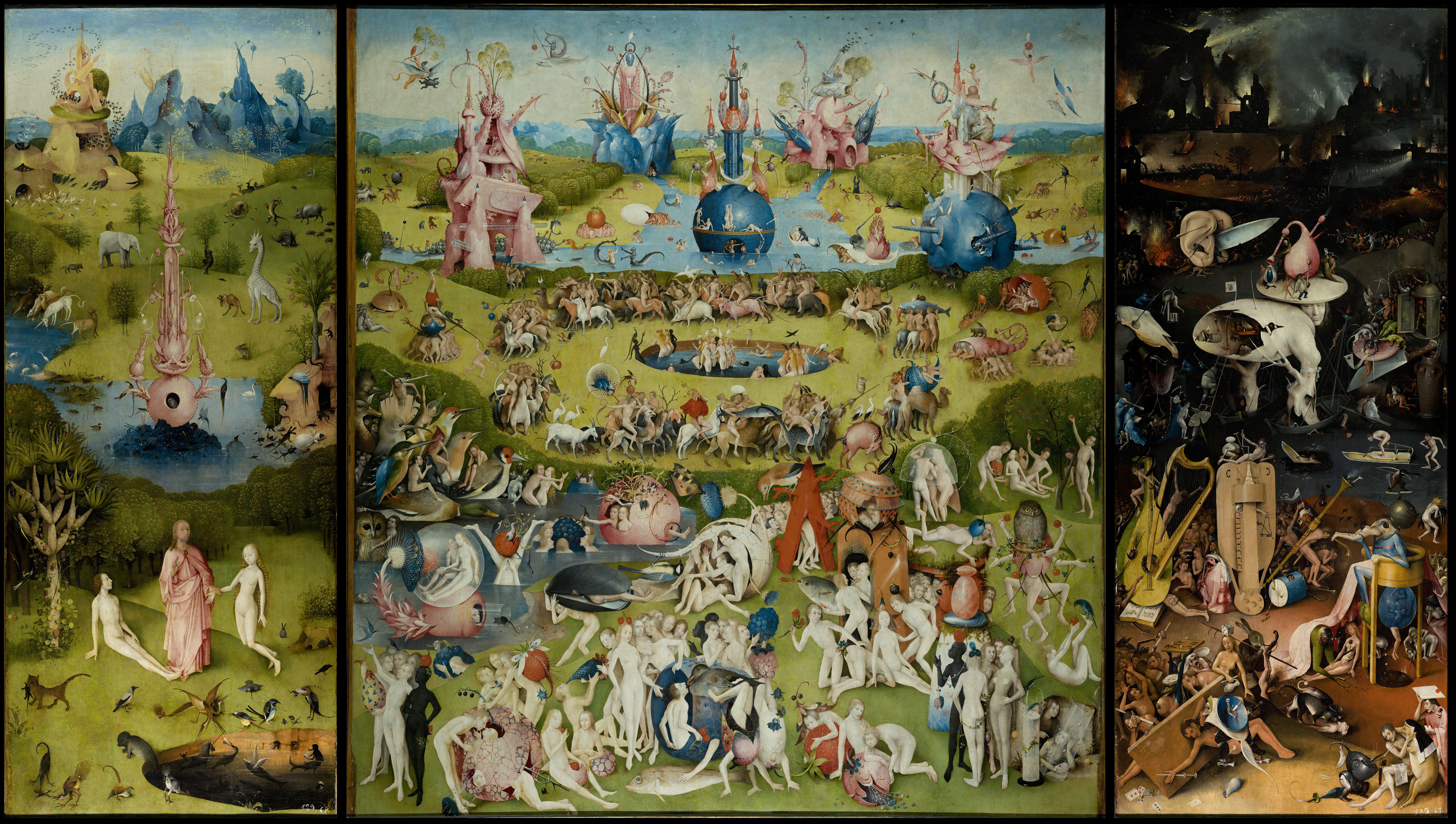
Hieronymus Bosch (c. 1450 – 1516) was an Early Netherlandish painter. His work is known for its use of fantastic imagery to illustrate moral and religious concepts and narratives. Little is known of his life or training. He left behind no letters or diaries, and nothing is known of his personality or his thoughts on the meaning of his art. Bosch produced several triptychs, panel paintings which are divided into three sections, which are hinged together and folded.
Among his most famous is ‘The Garden of Earthly Delights,’ which depicts paradise with Adam and Eve and many wondrous animals on the left panel, the earthly delights with numerous nude figures and tremendous fruit and birds on the middle panel, and hell with depictions of fantastic punishments of the various types of sinners on the right panel. When the exterior panels are closed the viewer can see, painted in grisaille (shades of grey), God creating the Earth.
Posted in Art, Philosophy |
Leave a Comment »
March 25, 2011
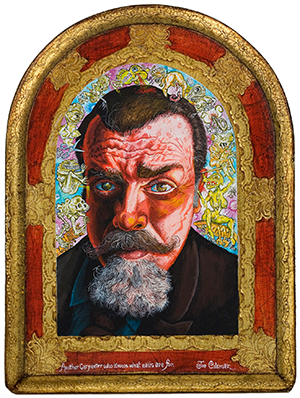
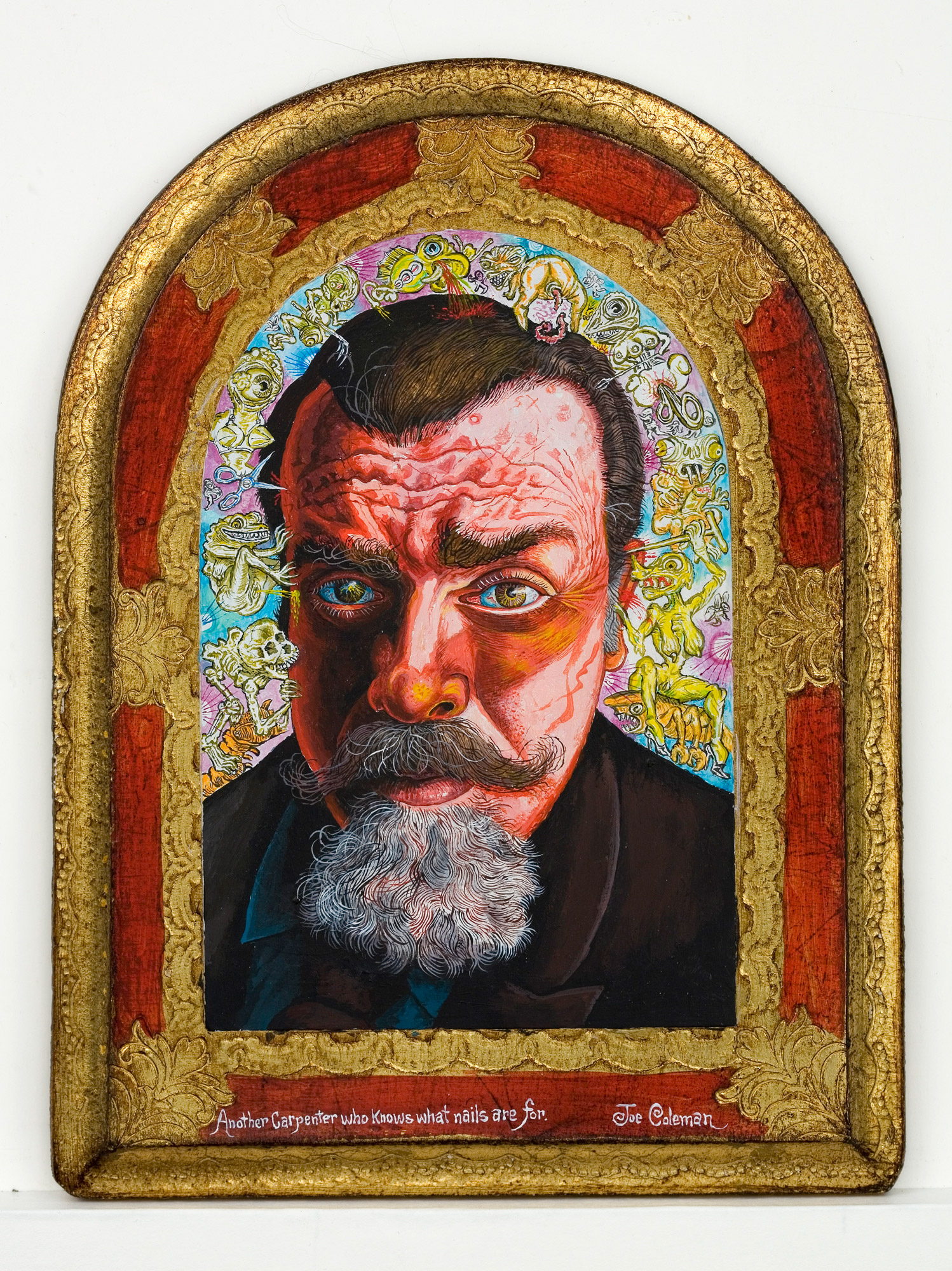
Joe Coleman (born November 22, 1955) is an American painter, illustrator and performance artist. He is best known for intricately detailed portraits of subjects both famous and infamous: artists, outlaws, serial killers, movies stars, friends, and family. He paints with a single-hair brush and uses a jewelers loupe; much of the detail is not visible to the naked eye.
The majority of his portraits portray the central subject in the center of the canvas, while biographical scenes and details from the subject’s life ring the central image. His work draws as much from Coleman’s beginnings as a comic book artist as from historical precedents. His paintings are most often compared to those of Hieronymus Bosch, and his work has been exhibited alongside canvases by the Dutch master.
Posted in Art |
Leave a Comment »
March 24, 2011
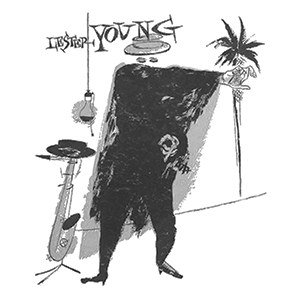
Lester Young (1909 – 1959), nicknamed ‘Prez,’ was an American jazz tenor saxophonist. He also played clarinet, trumpet, violin, and drums. Coming to prominence while a member of Count Basie’s orchestra, Young was one of the most influential players on his instrument, playing with a cool tone and using sophisticated harmonies. He invented or popularized much of the hipster ethos which came to be associated with the music. He is said to have popularized the term ‘cool’ as slang for something fashionable.
Another slang term he reputedly coined was the term ‘bread’ for money. He would ask ‘How does the bread smell?’ when asking how much a gig was going to pay. Young’s playing style influenced many other tenor saxophonists. Perhaps the most famous and successful of these were Stan Getz and Dexter Gordon, but he also influenced many in the cool movement such as Zoot Sims. Lester Young also had a direct influence on young Charlie Parker (‘Bird’), and thus the entire be-bop movement.
Posted in Art, Language, Money |
Leave a Comment »
March 24, 2011
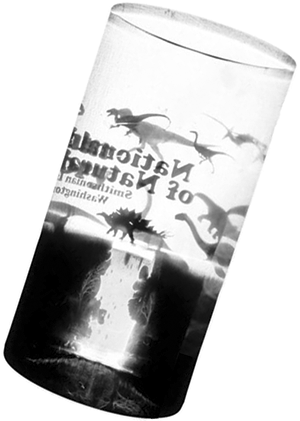
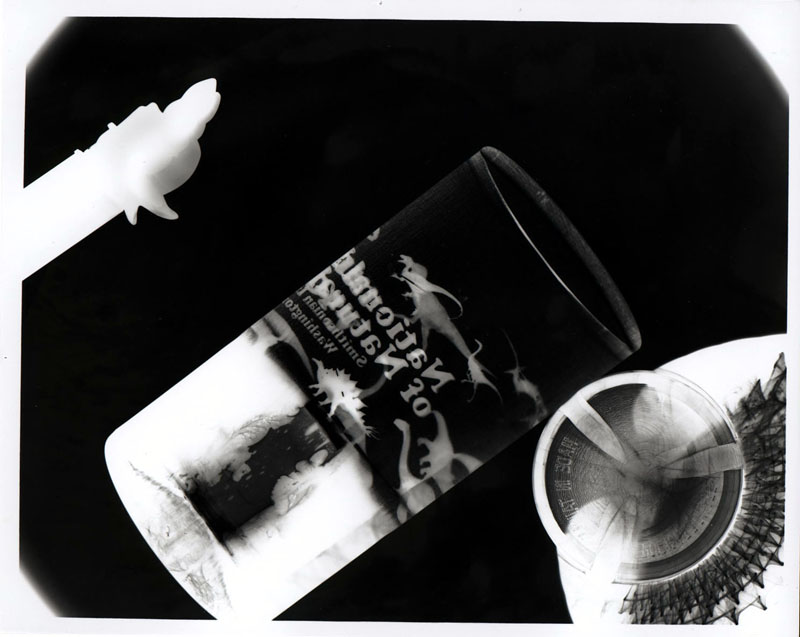
A photogram is a photographic image made without a camera by placing objects directly onto the surface of a photo-sensitive material such as photographic paper and then exposing it to light. The result is a negative shadow image varying in tone, depending on the transparency of the objects used. Areas of the paper that have received no light appear white; those exposed through transparent or semi-transparent objects appear grey.
Artistic cameraless photography, as the technique producing photograms is usually known, is perhaps most prominently associated with Man Ray and his exploration of ‘rayographs.’ Others who have experimented with the technique include László Moholy-Nagy, Christian Schad (who called them ‘Schadographs’), Imogen Cunningham and even Pablo Picasso.
Posted in Art, Technology |
Leave a Comment »
March 24, 2011
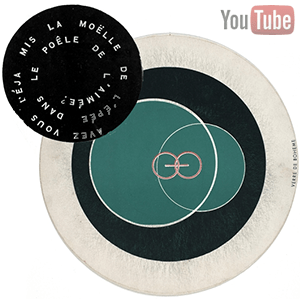
Kinetic art is art that contains moving parts or depends on motion for its effect. The moving parts are generally powered by wind, a motor or the observer. ‘Bicycle Wheel’ (1913) by Marcel Duchamp, is said to be the first kinetic sculpture. Besides being an example of kinetic art it is also an example of a readymade, a type of art of which Duchamp made a number of varieties throughout his life.
read more »
Posted in Art, Language, Money |
Leave a Comment »
March 24, 2011
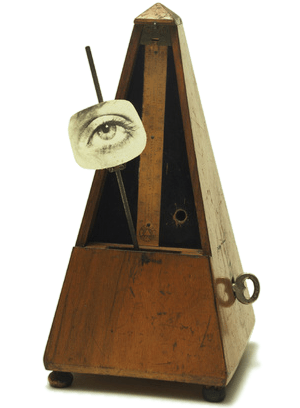
Man Ray (1890 – 1976), born Emmanuel Radnitzky, was an American artist who spent most of his career in Paris, France. Perhaps best described simply as a modernist, he was a significant contributor to both the Dada and Surrealist movements, although his ties to each were informal.
Best known in the art world for his avant-garde photography, Man Ray produced major works in a variety of media and considered himself a painter above all. He was also a renowned fashion and portrait photographer. He is noted for his photograms (images made without a camera by placing objects directly onto photographic paper, which he renamed ‘rayographs’ after himself.
read more »
Posted in Art, Money |
Leave a Comment »
March 24, 2011
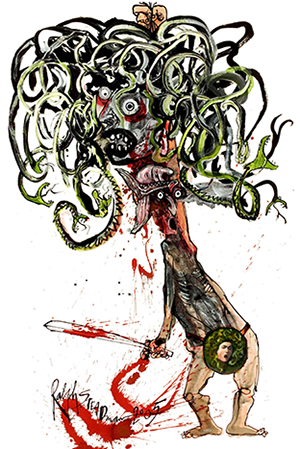
Ralph Steadman (b. 1936) is a British cartoonist and caricaturist who is perhaps best known for his work with American author Hunter S., drawing pictures for several of his articles and books. He accompanied Thompson to the Kentucky Derby for an article for ‘Scanlan’s,’ to the Honolulu Marathon for the ‘Running,’ and illustrated both ‘Fear and Loathing in Las Vegas’ and ‘Fear and Loathing on the Campaign Trail ’72.’
read more »
Posted in Art, Money |
1 Comment »
March 23, 2011

Antonin Carême [kah-rehm] (1784 – 1833), known as the ‘King of Chefs, and the Chef of Kings’ was an early practitioner and exponent of the elaborate style of cooking known as haute cuisine, the ‘high art’ of French cooking: a grandiose style of cookery favored by both international royalty and by the newly rich of Paris. Carême is often considered as one of the first, internationally renowned celebrity chefs.
He is remembered as the founder of the haute cuisine, and credited with creating the standard chef’s hat, the toque. He designed new sauces and dishes, and published a classification of all sauces into groups, based on four mother sauces. He is also frequently credited with replacing the practice of service à la française (serving all dishes at once) with service à la russe (serving each dish in the order printed on the menu).
read more »
Posted in Art, Food, Language |
Leave a Comment »
March 23, 2011
Nouvelle cuisine (‘new cuisine’) is an approach to cooking and food presentation used in French cuisine. By contrast with ‘cuisine classique,’ an older form of French ‘haute cuisine,’ nouvelle cuisine is characterized by lighter, more delicate dishes and an increased emphasis on presentation.
The modern usage can be attributed to author Henri Gault, who used it to describe the cooking of Paul Bocuse and Fernand Point. Bocuse claims that Gault first used the term to describe food prepared for the maiden flight of the Concorde airliner in 1969.
read more »
Posted in Art, Food, World |
Leave a Comment »