February 3, 2020

A soundwalk is a walk with a focus on listening to the environment. The term was first used by members of the World Soundscape Project under the leadership of composer R. Murray Schafer in Vancouver in the 1970s.
Hildegard Westerkamp, from the same group of artists, defines soundwalking as ‘… any excursion whose main purpose is listening to the environment. It is exposing our ears to every sound around us no matter where we are.’
read more »
Posted in Art, Health, Science |
1 Comment »
February 2, 2020

DJing is the act of playing existing recorded music for a live audience. The modern DJ’s role as a performer who creates a seamless and extended mix of music for a dance party or club atmosphere evolved from radio personalities who introduced and played individual selections of recorded music on broadcast radio stations.
In 1935, American radio commentator Walter Winchell coined the term ‘disc jockey’ (the combination of disc, referring to disc-shaped phonograph records, and jockey, which is an operator of a machine) to describe radio announcer Martin Block, the first radio announcer to gain widespread fame for playing popular recorded music over the air.
read more »
Posted in Art, Technology, World |
Leave a Comment »
January 8, 2020


Revolution 9 is a sound collage that appeared on the Beatles’ 1968 eponymous release (popularly known as the ‘White Album’). The composition, credited to Lennon–McCartney, was created primarily by John Lennon with assistance from George Harrison and Yoko Ono. Lennon said he was trying to paint a picture of a revolution using sound. The composition was influenced by the avant garde style of Ono as well as the musique concrète works of composers such as Edgard Varèse and Karlheinz Stockhausen.
British music critic Ian MacDonald remarked that ‘Revolution 9’ evoked the era’s revolutionary disruptions and their repercussions, and thus was culturally ‘one of the most significant acts the Beatles ever perpetrated,’ as well as ‘the world’s most widely distributed avant garde artifact.’
read more »
Posted in Art, Death |
Leave a Comment »
December 19, 2019

In discussion of science fiction, a Big Dumb Object (BDO) is any mysterious object, usually of extraterrestrial or unknown origin and immense power, in a story which generates an intense sense of wonder by its mere existence. To a certain extent, the term deliberately deflates this.
The term’s coinage is attributed to book reviewer Roz Kaveney, but it was popularized by its tongue-in-cheek inclusion in ‘The Encyclopedia of Science Fiction’ by Peter Nicholls in 1993.
read more »
Posted in Art, Technology |
Leave a Comment »
December 10, 2019

Hugh Nanton Romney (b. 1936), known as Wavy Gravy, is an American entertainer and peace activist best known for his role at Woodstock, as well as for his hippie persona and countercultural beliefs. He has reported that his moniker was given to him by B.B. King at the Texas International Pop Festival in 1969.
Romney has founded or co-founded several organizations, including the activist commune, the Hog Farm, and later, as Wavy Gravy, Camp Winnarainbow and the Seva Foundation. He founded the Phurst Church of Phun, a secret society of comics and clowns that aimed to support ending of the Vietnam War through political theater, and has adopted a clown persona in support of his political activism, and more generally as a form of entertainment work, including as the official clown of the Grateful Dead.
read more »
Posted in Art, Humor, Politics |
Leave a Comment »
November 27, 2019

Gongshi also known as ‘scholar’s rocks,’ are naturally occurring or shaped rocks which are traditionally appreciated by Chinese scholars. As rocks are broadly fractal (geology journals require a scale to be included in images of rocks), the small rocks can resemble the larger landscape.
Scholars’ rocks can be any color, and contrasting colors are not uncommon. The size of the stone can also be quite varied: scholars’ rocks can weigh either hundreds of pounds or less than one pound. The term also identifies stones which are placed in traditional Chinese gardens. Chinese scholar’s rocks influenced the development of Korean suseok (viewing stones) and Japanese suiseki.
read more »
Posted in Art, Philosophy, World |
Leave a Comment »
November 22, 2019
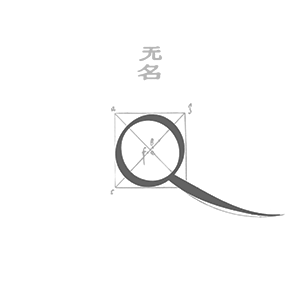
Luther Blissett is a multiple-use name, an ‘open pop star’ informally adopted and shared by hundreds of artists and activists all over Europe and the Americas since 1994. The pseudonym first appeared in Bologna, Italy, in mid-1994, when a number of cultural activists began using it for staging a series of urban and media pranks and to experiment with new forms of authorship and identity.
From Bologna the multiple-use name spread to other European cities, such as Rome and London, as well as countries such as Germany, Spain, and Slovenia. Sporadic appearances of Luther Blissett have been also noted in Canada, the United States, Finland and Brazil.
read more »
Posted in Art, Humor, Politics |
Leave a Comment »
October 8, 2019
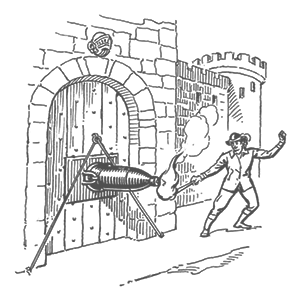
‘Hoist with his own petard’ is a phrase from a speech in William Shakespeare’s play ‘Hamlet’ that has become proverbial.
The phrase’s meaning is literally that the bomb-maker (a “petard” is a small explosive device) is blown up (‘hoisted’ off the ground) by his own bomb, and indicates an ironic reversal, or poetic justice.
read more »
Posted in Art, Language, War |
Leave a Comment »
September 23, 2019

A punchline concludes a joke; it is intended to make people laugh. It is the third and final part of the typical joke structure: set-up, premise, punch line. In a broader sense, ‘punchline’ can also refer to the unexpected and funny conclusion of any performance, situation or story.
The exact origin of the term is unknown, though the classic three-part joke format was well-established in Vaudeville by the beginning of the 20th century. Merriam-Webster dictionary pegs the first use in 1921. It has also been argued that the term’s origin is related to the British weekly magazine ‘Punch.’
read more »
Posted in Art, Language |
Leave a Comment »
September 9, 2019
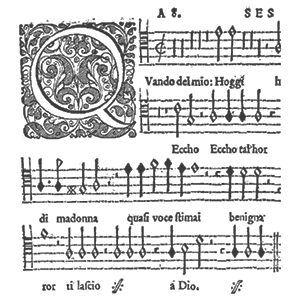
Word painting (also known as ‘tone painting’) is the musical technique of composing music that reflects the literal meaning of a song’s lyrics.
For example, ascending scales would accompany lyrics about going up; slow, dark music would accompany lyrics about death.
read more »
Posted in Art, Philosophy |
Leave a Comment »
July 28, 2019
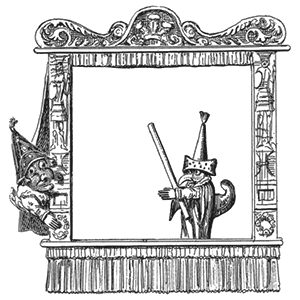
Slapstick is a style of humor involving exaggerated physical activity. The term arises from a device developed during the broad, physical comedy style known as commedia dell’arte in 16th-century Italy.
The ‘batacchio’ or ‘bataccio’ (lit. ‘slap stick’) consists of two thin slats of wood, which make a ‘slap’ when striking another actor, with little force needed to make a loud—and comical—sound. The physical slap stick remains a key component of the plot in the traditional and popular ‘Punch and Judy’ puppet show. Along with the inflatable bladder (of which the whoopee cushion is a modern variant), it was among the earliest special effects.
read more »
Posted in Art, Humor |
Leave a Comment »
July 21, 2019

Fearless Girl is a bronze sculpture by American sculptor Kristen Visbal, commissioned by State Street Global Advisors (SSGA), a large asset management company. The statue was installed on March 7, 2017, in anticipation of International Women’s Day the following day.
The statue was originally installed in Bowling Green, a park in lower Manhattan, facing down the ‘Charging Bull’ (also known as ‘Wall Street Bull,’ a large bronze statue illegally placed there in 1989 by Sicilian artist Arturo Di Modica), but following complaints from Di Modica, ‘Fearless Girl’ was removed in November 2018 and relocated to a nearby spot across from the New York Stock Exchange. A plaque with footprints was placed on the original site.
read more »
Posted in Art, Money, Politics |
1 Comment »


 The Daily Omnivore