January 14, 2012

Larry Levan (1954 – 1992) was a DJ best known for his decade-long residency at the New York City night club Paradise Garage, which has been described as the prototype of the modern dance club. He developed a cult following who referred to his sets as ‘Saturday Mass.’ Influential US DJ François Kevorkian credits Levan with introducing the dub aesthetic into dance music. Along with Kevorkian, Levan experimented with drum machines and synthesizers in his productions and live sets, ushering in an electronic, post-disco sound that presaged the ascendence of house music.
Born, Lawrence Philpot, Levan was openly gay and got his start alongside DJ Frankie Knuckles at the Continental Baths, as a replacement for the DJ from The Gallery, Nicky Siano. Levan’s DJing style was influenced by Siano’s eclectic style, and by The Loft’s David Mancuso, who briefly dated Levan in the early 1970s. As Knuckles was still trying to make his way in the New York club scene, Levan became a popular attraction perhaps due to his ‘diva persona,’ which he developed in the city’s notoriously competitive black drag ‘houses.’
read more »
Posted in Art |
Leave a Comment »
January 12, 2012

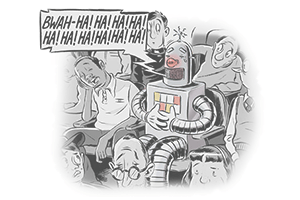
A claque [klak] (French for ‘clap’) is an organized body of professional applauders in French theatres and opera houses. Members of a claque are called ‘claqueurs.’
Hiring people to applaud dramatic performances was common in classical times. For example, when the emperor Nero acted, he had his performance greeted by an encomium (speech of praise) chanted by five thousand of his soldiers. This inspired the 16th-century French poet Jean Daurat to develop the modern claque. Buying a number of tickets for a performance of one of his plays, he gave them away in return for a promise of applause.
read more »
Posted in Art, Humor, Money |
1 Comment »
January 12, 2012

‘This Machine Kills Fascists‘ is a sticker on Woody Guthrie’s guitar, that has inspired many artists. It is based on inscriptions painted on the sides of airplanes used in the Spanish Civil War.
Guitar manufacturer Gibson has replicated Guthrie’s 1945 Southern Jumbo complete with sticker.
Posted in Art, Politics, War |
Leave a Comment »
January 12, 2012

Marco Brambilla (b. 1960) is an Italian-born Canadian video artist who works in the United States. He first worked in commercials and feature films, directing the successful 1993 science fiction film ‘Demolition Man.’ In 1998 he shifted focus to video and photography projects, and has since exhibited works in private and public collections including, ‘Cyclorama’ at the San Francisco Museum of Modern Art, ‘HalfLife’ at the Santa Monica Museum of Art in 2011. His commissions include ‘Superstar’ for the ’59th Minute’ series in Times Square in 1999, and ‘Arcadia’ for ‘Massless Medium: Explorations in Sensory Immersion’ at Brooklyn Bridge Anchorage in 2001, both for New York public arts organization Creative Time.
His installation, ‘Cathedral’ was showcased during the Toronto International Film Festival 2008, and his 3D work ‘Evolution’ was selected for the 2011 Venice Film Festival and the 2012 Sundance Film Festival. A second 3D work ‘Civilization’ is a permanent installation at the Standard Hotel in New York. ‘Transit,’ a collection of photographs Brambilla took in and around national and international airports, was published in 2000.
Posted in Art |
Leave a Comment »
January 10, 2012

The Museum of Bad Art (MOBA) is a privately owned museum whose stated aim is ‘to celebrate the labor of artists whose work would be displayed and appreciated in no other forum.’ It has branches in Dedham and Somerville, outside Boston. Its permanent collection includes 500 pieces of ‘art too bad to be ignored,’ 25 to 35 of which are on public display at any one time.
Explaining the reasoning behind the museum’s establishment, co-founder Jerry Reilly said in 1995: ‘While every city in the world has at least one museum dedicated to the best of art, MOBA is the only museum dedicated to collecting and exhibiting the worst.’ To be included in MOBA’s collection, works must be original and have serious intent, but they must also have significant flaws without being boring; curators are not interested in displaying deliberate kitsch.
read more »
Posted in Art, Humor |
1 Comment »
January 4, 2012

Fatima Al Qadiri (b. 1981) is music producer born in Senegal and raised in Kuwait during the Gulf War, who now resides in Brooklyn.
She previously released an EP under the name Ayshay, featuring spectral chanting of traditional Islamic songs in Arabic.
Posted in Art |
Leave a Comment »
January 4, 2012


The OP-1 is a synthesizer, sampler, and sequencer designed and manufactured by the Stockholm-based company Teenage Engineering. The OP-1 is Teenage Engineering’s first product; it was released in 2011. The OP-1 is well known for its unconventional design, OLED display, and eight synthesizer engines. It has received some criticism for its physical limitations; however, according to Teenage Engineering cofounder Jesper Kouthoofd, these limitations were programmed into the synthesizer in order to stimulate the design process and the creativity of the user.
The design of the OP-1 was influenced by the VL-Tone, a synthesizer and pocket calculator manufactured by Casio in 1980 that is known for its toy-like novelty sounds and cheap build quality, as well as its inorganic design. In an interview with Damian Kulash of OK Go, Kouthoofd explained that he worked in a music store when he was young, and he was inspired by Japanese synthesizers of the 1980s. He has also stated that ‘limitations are OP-1’s biggest feature.’ The synthesizer’s designers attempted to use the limitation of physical hardware to encourage the unit to stimulate creativity, which might become unfocused in a limitless environment, such as a digital audio workstation.
Posted in Art, Money, Technology |
Leave a Comment »
January 3, 2012
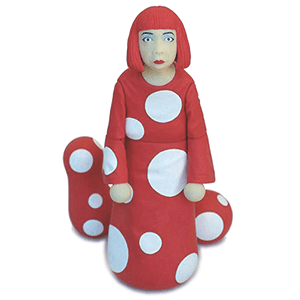
Yayoi [yah-yoy] Kusama [koo-sah-muh] (b. 1929) is a Japanese artist whose paintings, collages, soft sculptures, performance art and environmental installations all share an obsession with repetition, pattern, and accumulation (she has described herself as an ‘obsessive artist’). Kusama’s work is based in Conceptual art (in which the concepts or ideas involved in the work take precedence over traditional aesthetic and material concerns) and shows some attributes of feminism, minimalism, surrealism, Art Brut, pop art, and abstract expressionism, and is infused with autobiographical, psychological, and sexual content.
Kusama is also a published novelist and poet, and has created notable work in film and fashion design. She has long struggled with mental illness, and has experienced hallucinations and severe obsessive thoughts since childhood, often of a suicidal nature. She claims that as a small child she suffered physical abuse by her mother. In 2008, a work by her sold for $5.1 million, a record for a living female artist.
read more »
Posted in Art, Health, Money |
1 Comment »
January 2, 2012
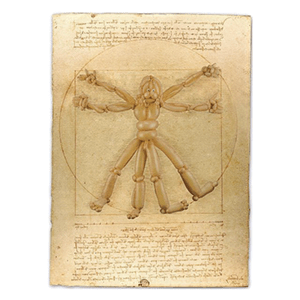
Balloon modelling is the shaping of special modelling balloons into almost any given shape, often a balloon animal. People who create balloon animals and other twisted balloon sculptures are called Twisters, Balloon Benders and Balloon Artists. Twisters often perform in restaurants, at birthday parties, fairs and at public and private events or functions. Two of the primary design styles are single balloon modelling, which restricts itself to the use of one balloon per model, and multiple balloon modelling, which uses more than one balloon.
Each style has its own set of challenges and skills, but few twisters who have reached an intermediate or advanced skill level limit themselves to one style or another. Depending on the needs of the moment, they might easily move between the one-balloon or multiple approaches, or they might even incorporate additional techniques such as ‘weaving’ and ‘stuffing.’ Modelling techniques have evolved to include a range of very complex moves, and a highly specialized vocabulary has emerged to describe the techniques involved and their resulting creations.
Posted in Art, Humor |
Leave a Comment »
January 2, 2012

‘I Can’t Go for That (No Can Do)‘ is a 1981 song recorded by Daryl Hall and John Oates. It was the fourth number-one hit single of their career and second hit single from their album ‘Private Eyes.’ It features Charles DeChant on saxello. Daryl Hall sketched out the basic song one evening at a music studio in New York City in 1981 after a recording session for the ‘Private Eyes’ album. Hall began to play a bass line on a Korg organ, and sound engineer Neil Kernon recorded the result. Hall then came up with a guitar riff, which he and Oates worked on together. The next day, Hall and Sara Allen worked on the lyrics.
Thanks to heavy airplay on urban contemporary radio stations, it topped the U.S. R&B chart, a rare feat for a non-African American act. According to the Hall and Oates biography, Hall, upon learning that it had gone to number one wrote in his diary, ‘I’m the head soul brother in the U.S. Where to now?’ Also according to Hall, during the recording of ‘We Are the World,’ Jackson approached him and admitted to lifting the bass line for ‘Billie Jean’ from ‘I Can’t Go For That (No Can Do).’ Hall says that he told Jackson that he had lifted the bass line from another song himself, and that it was ‘something we all do.’
Posted in Art |
Leave a Comment »
January 2, 2012

Jo-ha-kyū is a concept of modulation and movement applied in a wide variety of traditional Japanese arts. Roughly translated to ‘beginning, break, rapid,’ it essentially means that all actions or efforts should begin slowly, speed up, and then end swiftly. This concept is applied to elements of the Japanese tea ceremony, kendō and other martial arts, dramatic structure in Japanese theater and film, and traditional collaborative linked verse forms. The concept originated in court music, specifically in the ways in which elements of the music could be distinguished and described. Though eventually incorporated into a number of disciplines, it was most famously adapted, and thoroughly analyzed and discussed by the great playwright Zeami, who viewed it as a universal concept applying to the patterns of movement of all things.
Zeami described the first act as ‘Love’; the play opens auspiciously, using gentle themes and pleasant music to draw in the attention of the audience. The second act is described as ‘Warriors and Battles.’ Though it need not contain actual battle, it is generally typified by heightened tempo and intensity of plot. The third act, the climax of the entire play, is typified by pathos and tragedy. The plot achieves its dramatic climax. The fourth is a michiyuki (journey), which eases out of the intense drama of the climactic act, and often consists primarily of song and dance rather than dialogue and plot. The fifth act, then, is a rapid conclusion. All loose ends are tied up, and the play returns to an auspicious setting.
Posted in Art, Language, World |
Leave a Comment »
January 2, 2012
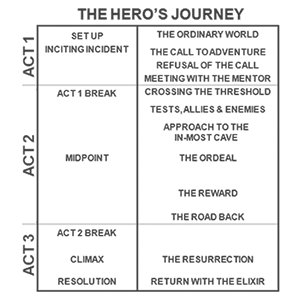
The Three-Act Structure is a model used in writing and evaluating modern storytelling which divides a screenplay into a three parts called the ‘Setup,’ ‘Confrontation,’ and ‘Resolution.’ The first act is used to establish the main characters, their relationships and the normal world they live in.
Early in the first act, a dynamic, on-screen incident occurs to the main character (the protagonist), whose response leads to a second and more dramatic situation, known as the first ‘turning point,’ which (a) signals the end of the first act, (b) ensures life will never be the same again for the protagonist, and (c) raises a dramatic question that will be answered in the climax of the film.
read more »
Posted in Art, Language |
Leave a Comment »




