December 23, 2011
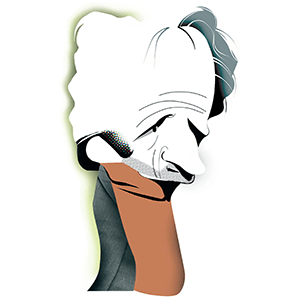
In film criticism, auteur theory holds that a director’s film reflects the director’s personal creative vision, as if they were the primary ‘auteur’ (the French word for ‘author’). In spite of—and sometimes even because of—the production of the film as part of an industrial process, the auteur’s creative voice is distinct enough to shine through all kinds of studio interference and through the collective process.
In law, the film is treated as a work of art, and the auteur, as the creator of the film, is the original copyright holder. Under European Union law, the film director is considered the author or one of the authors of a film, largely as a result of the influence of auteur theory.
read more »
Posted in Art, Language, Money |
2 Comments »
December 23, 2011
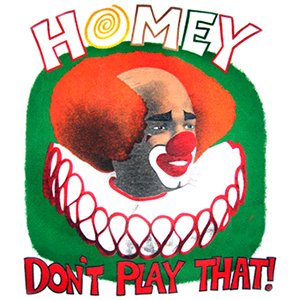
In Living Color was an American sketch comedy television series, which ran on the Fox Network from 1990 to 1994. Brothers Keenen and Damon Wayans created, wrote, and starred in the program. The show was produced by Ivory Way Productions. The show was taped before a live studio audience in Hollywood.
The title of the series was inspired by the NBC announcement of broadcasts being presented ‘in living color’ during the 1950s and 1960s, prior to popularization of color television. It also refers to the fact that most of the show’s cast was African-American, unlike other sketches comedy shows like ‘Saturday Night Live’ whose casts are usually mostly white.
read more »
Posted in Art, Humor |
Leave a Comment »
December 23, 2011
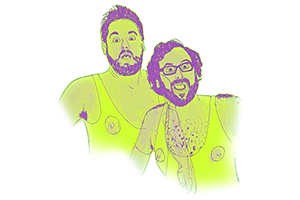
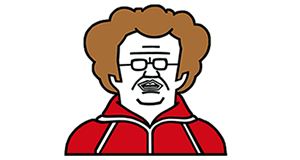
Tim and Eric Awesome Show, Great Job! is an American sketch comedy television series, created by and starring Tim Heidecker and Eric Wareheim, which premiered in 2007 on Cartoon Network’s ‘Adult Swim’ and ran until 2010. The program features surrealistic and often satirical humor (at points anti-humor), public-access television-style musical acts, bizarre faux-commercials, and editing and special effects chosen to make the show appear camp. The program has featured a wide range of actors such as Will Ferrell, John C. Reilly and Zach Galifianakis, as well as alternative comedians like Neil Hamburger, and television actors like Alan Thicke, celebrity look-alikes and impressionists.
The creators of the show have described it as ‘the nightmare version of television.’ The show expands the genre of the live-action material featured in Heidecker and Wareheim’s previous show ‘Tom Goes to the Mayor,’ such as Gibbons, the ‘Channel 5 Married News Team,’ and the Cinco Corporation with its variety of inefficient and tasteless products. New recurring characters and sketches include ‘Uncle Muscles Hour,’ a Public-access television variety program hosted by a gravelly-voiced ‘Weird Al’ Yankovic and Channel 5 News Correspondent Dr. Steve Brule, played by John C. Reilly.
Posted in Art, Humor |
1 Comment »
December 21, 2011
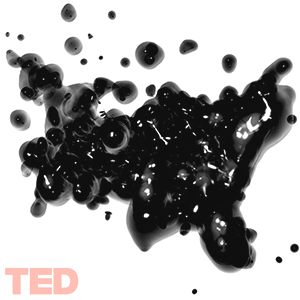
Aaron Koblin is an American digital media artist best known for his innovative uses of data visualization and crowdsourcing. He is currently Creative Director of the Data Arts Team at Google Creative Lab in San Francisco.
Koblin’s projects have been shown at international festivals including Ars Electronica, TED, and are part of the permanent collections at the Museum of Modern Art (MoMA) in New York and the Centre Georges Pompidou in Paris.
Posted in Art, Technology |
1 Comment »
December 21, 2011

net.art refers to a group of artists who have worked in the medium of Internet art from 1994 on. The main members of this movement are Vuk Ćosić, Jodi.org, Alexei Shulgin, Olia Lialina, and Heath Bunting. Although this group was formed as a parody of avant garde movements by writers such as Tilman Baumgärtel, Josephine Bosma, Hans Dieter Huber and Pit Schultz, their individual works have little in common.
The term ‘net.art’ is also used as a synonym for net art or Internet art and covers a much wider range of artistic practices. In this wider definition, net.art means art that uses the Internet as its medium and that cannot be experienced in any other way. Often net.art has the Internet as (part of) its subject matter but it is not a requirement.
read more »
Posted in Art, Politics, Technology |
Leave a Comment »
December 20, 2011
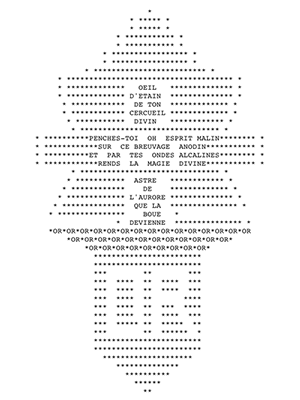
Internet art (often referred to as net art) is a form of digital artwork distributed via the Internet. Artists working in this manner are sometimes referred to as net artists. Internet art can happen outside the technical structure of the Internet, such as when artists use specific social or cultural Internet traditions in a project outside of it. Internet art is often—but not always—interactive, participatory, and multimedia-based. Internet art can be used to spread a message, either political or social, using human interactions.
The term Internet art typically does not refer to art that has been simply digitized and uploaded to be viewable over the Internet. Rather, this genre relies intrinsically on the Internet to exist, taking advantage of such aspects as an interactive interface and connectivity to multiple social and economic cultures and micro-cultures. Theoriest and curator Jon Ippolito defines it as distinct from commercial web design, and touching on issues of permanence, archivability, and collecting in a fluid medium.
read more »
Posted in Art, Technology |
Leave a Comment »
December 20, 2011

Tradigital art most commonly refers to art (including animation) that combines both traditional and computer-based techniques to implicate an image.
Artist and teacher Judith Moncrieff first coined the term in the early 1990s, while an instructor at the Pacific Northwest College of Art. The school held a competition of Moncrieff’s students, who used the medium to electronically combine everything from photographs of costumes to stills from videotapes of performing dancers.
read more »
Posted in Art, Language, Technology |
Leave a Comment »
December 20, 2011
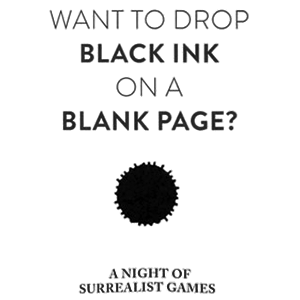
Bulletism is an artistic process that involves shooting ink at a blank piece of paper. The result is a type of ink blot. The artist can then develop images based on what is seen.
Salvador Dalí claimed to have invented this technique. Leonardo da Vinci, however, suggested that ‘just as one can hear any desired syllable in the sound of a bell, so one can see any desired figure in the shape formed by throwing a sponge with ink against the wall.’
Posted in Art, Language |
1 Comment »
December 20, 2011
‘Monkey Tennis‘ is a British pop culture phrase, first used in the late 1990s and popular throughout the 2000s. Originating as a joke in a television sitcom, it has come to be commonly used as an example of the hypothetical lowest common denominator television program that it is possible to make.
The term originates from the opening episode of the sitcom ‘I’m Alan Partridge,’ originally broadcast on BBC Two in 1997. In one scene the eponymous character of Partridge, a failed chat show host, desperately attempts to pitch program ideas to uninterested BBC executive who cancelled his first series. After failing to interest him in ideas plucked from thin air such as ‘Arm Wrestling With Chas & Dave,’ ‘Youth Hostelling with Chris Eubank,’ ‘Inner-City Sumo’ and ‘Cooking in Prison,’ Partridge comes up with a final spur-of-the-moment suggestion, ‘Monkey Tennis?,’ which is met with similar disdain.
Posted in Art, Humor, Money |
Leave a Comment »
December 20, 2011

Space opera is a subgenre of science fiction that emphasizes romantic, often melodramatic adventure, set mainly or entirely in outer space, generally involving conflict between opponents possessing advanced technologies and abilities. The term has no relation to music and it is analogous to ‘soap opera.’ Perhaps the most significant trait of space opera is that settings, characters, battles, powers, and themes tend to be very large-scale.
Sometimes the term is used pejoratively to denote bad quality science fiction, but its meaning can differ, often describing a particular science fiction genre without any value judgement. The genre’s varying definitions were affected by literary politics, ‘what used to be science fantasy is now space opera, and what used to be space opera is entirely forgotten.’
read more »
Posted in Art, Language, Technology |
Leave a Comment »
December 20, 2011

A horse opera, or hoss opera, is a western movie or television series that is extremely clichéd or formulaic (in the manner of a soap opera). The term, which was originally coined by silent film-era Western star William S. Hart, is used variously to convey either disparagement or affection.
The name “horse opera” was also derived in part from the musical sequences frequently featured in these films and TV series which depicted a cowboy singing to his horse on-screen. The term “horse opera” is quite loosely defined; it does not specify a distinct sub-genre of the western (as “space opera” does with regard to the science fiction genre).
Posted in Art, Money |
Leave a Comment »
December 20, 2011
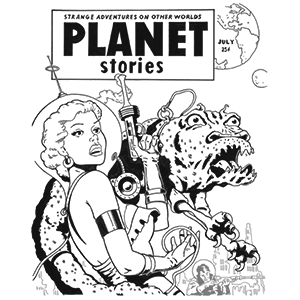
Planetary romance is a type of science fiction or science fantasy story in which the bulk of the action consists of adventures on one or more exotic alien planets, characterized by distinctive physical and cultural backgrounds. Some planetary romances take place against the background of a future culture where travel between worlds by spaceship is commonplace; others, particularly the earliest examples of the genre, do not, and invoke flying carpets, astral projection, or other methods of getting between planets. In either case, it is the planetside adventures which are the focus of the story, not the mode of travel.
As the name of the genre suggests, the planetary romance is an extension of late 19th and early 20th century adventure novels and pulp romances to a planetary setting. The pulp romance (of writers like H. Rider Haggard and Talbot Mundy) featured bold characters in exotic settings and ‘lost worlds’ such as South America, Africa, the Middle or Far East; a variant type took place in real or fictional countries of ancient and medieval times, and eventually contributed to the modern fantasy genre.
read more »
Posted in Art, Language, Love |
Leave a Comment »


 The Daily Omnivore