December 30, 2011

Papa Grows Funk is a funk band from New Orleans.
The band was started by frontman John ‘Papa’ Gros in early 2000, developing from a series of Monday night jam sessions helmed by Gros at New Orleans’ Maple Leaf Bar. Gros would invite some friends down to play, and the impromptu jams became a common bond for a handful of musicians, including guitarist June Yamagishi, sax player Jason Mingledorf, bassist Marc Pero and drummer Jeffery ‘Jellybean’ Alexander.
Posted in Art |
Leave a Comment »
December 30, 2011
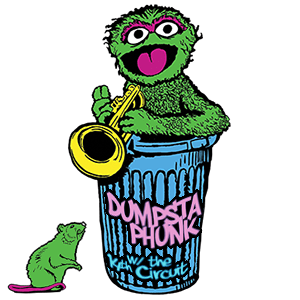
Ivan Neville (b. 1959) is a multi-instrumentalist musician, singer, and songwriter. He is the son of Aaron Neville and nephew to members of The Neville Brothers. While it was never a huge charting song, Neville’s ‘Why Cant I Fall In Love’ become a sleeper fan-favorite, gaining fame from the 1990 Soundtrack to the Christian Slater film, ‘Pump Up the Volume.’ Neville has played with and appeared on several Neville Brother records, as well as his father’s solo records.
He performed in Bonnie Raitt’s band from 1985 to 1987. He also contributed keyboards to two Rolling Stones albums, 1986’s ‘Dirty Work’ and 1994’s ‘Voodoo Lounge’ as well as being a member of Keith Richards’ solo band the X-Pensive Winos. In 1988, he toured with Richards. In 2003, he formed his own band Dumpstaphunk. When the levees failed in New Orleans in 2005, Neville joined The New Orleans Social Club and recorded the benefit album ‘Sing Me Back Home’ with producers Leo Sacks and Ray Bardani at Wire Studios in Austin, Texas.
Posted in Art |
Leave a Comment »
December 30, 2011
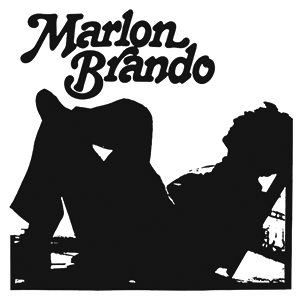
Last Tango in Paris (Italian: ‘Ultimo Tango a Parigi’) is a 1972 Italian romantic drama film directed by Bernardo Bertolucci which portrays a recent American widower who takes up an anonymous sexual relationship with a young, soon-to-be-married Parisian woman. It stars Marlon Brando, Maria Schneider, and Jean-Pierre Léaud. The film’s raw portrayal of sexual violence and emotional turmoil led to international controversy and drew various levels of government censorship. The MPAA gave the film an X rating upon release in the United States. After revisions were made to the MPAA ratings code, it was classified as an NC-17 in 1997.
The idea grew from Bernardo Bertolucci’s sexual fantasies, stating ‘he once dreamed of seeing a beautiful nameless woman on the street and having sex with her without ever knowing who she was.’
read more »
Posted in Art, Politics, Sex |
Leave a Comment »
December 23, 2011


The Schreiber theory is a writer-centered approach to film criticism which holds that the principal author of a film is generally the screenwriter rather than the director. The term was coined by David Kipen, Director of Literature at the US National Endowment for the Arts. In his 2006 book ‘The Schreiber Theory: A Radical Rewrite of American Film History,’ Kipen argues that the influential 1950s-era Auteur theory has wrongly skewed analysis towards a director-centered view of film. In contrast, Kipen believes that the screenwriter has a greater influence on the quality of a finished work and that knowing who wrote a film is ‘the surest predictor’ of how good it will be.
Kipen acknowledges that his writer-centered approach is not new, and pays tribute to earlier critics of Auteur theory such as Pauline Kael and Richard Corliss. He believes that the Auteurist approach remains dominant, however, and that films have suffered as a result of the screenwriter’s role being undervalued. Kipen refers to his book as a ‘manifesto’ and in an interview with the magazine ‘SF360’ stated that he wished to use Schreiber theory as ‘a lever to change the way people think about screenwriting, and movies in general.’ In seeking a name for his theory, Kipen chose the Yiddish word for writer – ‘schreiber’ – in honor of the many early American screenwriters who had Yiddish as their mother tongue.
Posted in Art, Language, Money |
1 Comment »
December 23, 2011
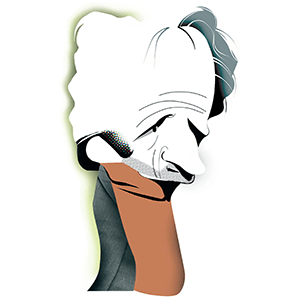
In film criticism, auteur theory holds that a director’s film reflects the director’s personal creative vision, as if they were the primary ‘auteur’ (the French word for ‘author’). In spite of—and sometimes even because of—the production of the film as part of an industrial process, the auteur’s creative voice is distinct enough to shine through all kinds of studio interference and through the collective process.
In law, the film is treated as a work of art, and the auteur, as the creator of the film, is the original copyright holder. Under European Union law, the film director is considered the author or one of the authors of a film, largely as a result of the influence of auteur theory.
read more »
Posted in Art, Language, Money |
2 Comments »
December 23, 2011
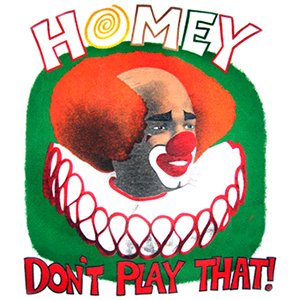
In Living Color was an American sketch comedy television series, which ran on the Fox Network from 1990 to 1994. Brothers Keenen and Damon Wayans created, wrote, and starred in the program. The show was produced by Ivory Way Productions. The show was taped before a live studio audience in Hollywood.
The title of the series was inspired by the NBC announcement of broadcasts being presented ‘in living color’ during the 1950s and 1960s, prior to popularization of color television. It also refers to the fact that most of the show’s cast was African-American, unlike other sketches comedy shows like ‘Saturday Night Live’ whose casts are usually mostly white.
read more »
Posted in Art, Humor |
Leave a Comment »
December 23, 2011
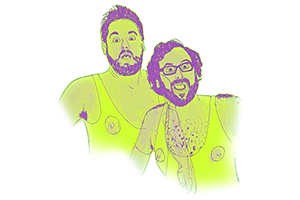
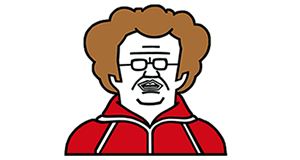
Tim and Eric Awesome Show, Great Job! is an American sketch comedy television series, created by and starring Tim Heidecker and Eric Wareheim, which premiered in 2007 on Cartoon Network’s ‘Adult Swim’ and ran until 2010. The program features surrealistic and often satirical humor (at points anti-humor), public-access television-style musical acts, bizarre faux-commercials, and editing and special effects chosen to make the show appear camp. The program has featured a wide range of actors such as Will Ferrell, John C. Reilly and Zach Galifianakis, as well as alternative comedians like Neil Hamburger, and television actors like Alan Thicke, celebrity look-alikes and impressionists.
The creators of the show have described it as ‘the nightmare version of television.’ The show expands the genre of the live-action material featured in Heidecker and Wareheim’s previous show ‘Tom Goes to the Mayor,’ such as Gibbons, the ‘Channel 5 Married News Team,’ and the Cinco Corporation with its variety of inefficient and tasteless products. New recurring characters and sketches include ‘Uncle Muscles Hour,’ a Public-access television variety program hosted by a gravelly-voiced ‘Weird Al’ Yankovic and Channel 5 News Correspondent Dr. Steve Brule, played by John C. Reilly.
Posted in Art, Humor |
1 Comment »
December 21, 2011
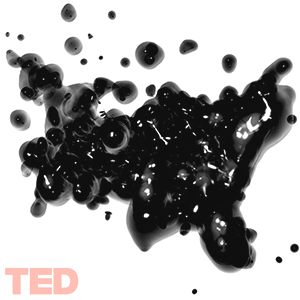
Aaron Koblin is an American digital media artist best known for his innovative uses of data visualization and crowdsourcing. He is currently Creative Director of the Data Arts Team at Google Creative Lab in San Francisco.
Koblin’s projects have been shown at international festivals including Ars Electronica, TED, and are part of the permanent collections at the Museum of Modern Art (MoMA) in New York and the Centre Georges Pompidou in Paris.
Posted in Art, Technology |
1 Comment »
December 21, 2011

net.art refers to a group of artists who have worked in the medium of Internet art from 1994 on. The main members of this movement are Vuk Ćosić, Jodi.org, Alexei Shulgin, Olia Lialina, and Heath Bunting. Although this group was formed as a parody of avant garde movements by writers such as Tilman Baumgärtel, Josephine Bosma, Hans Dieter Huber and Pit Schultz, their individual works have little in common.
The term ‘net.art’ is also used as a synonym for net art or Internet art and covers a much wider range of artistic practices. In this wider definition, net.art means art that uses the Internet as its medium and that cannot be experienced in any other way. Often net.art has the Internet as (part of) its subject matter but it is not a requirement.
read more »
Posted in Art, Politics, Technology |
Leave a Comment »
December 20, 2011
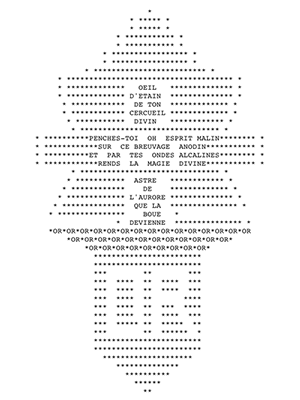
Internet art (often referred to as net art) is a form of digital artwork distributed via the Internet. Artists working in this manner are sometimes referred to as net artists. Internet art can happen outside the technical structure of the Internet, such as when artists use specific social or cultural Internet traditions in a project outside of it. Internet art is often—but not always—interactive, participatory, and multimedia-based. Internet art can be used to spread a message, either political or social, using human interactions.
The term Internet art typically does not refer to art that has been simply digitized and uploaded to be viewable over the Internet. Rather, this genre relies intrinsically on the Internet to exist, taking advantage of such aspects as an interactive interface and connectivity to multiple social and economic cultures and micro-cultures. Theoriest and curator Jon Ippolito defines it as distinct from commercial web design, and touching on issues of permanence, archivability, and collecting in a fluid medium.
read more »
Posted in Art, Technology |
Leave a Comment »
December 20, 2011
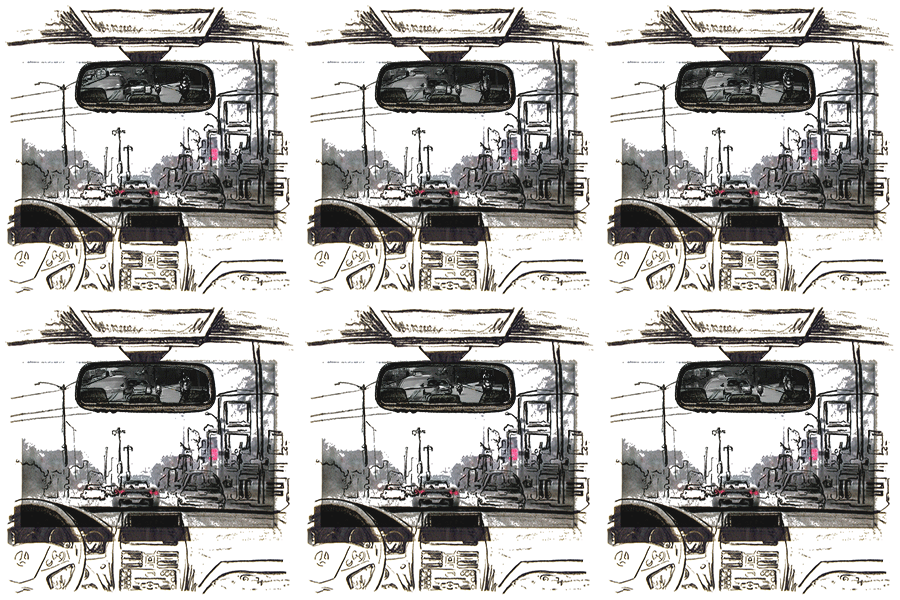
Tradigital art most commonly refers to art (including animation) that combines both traditional and computer-based techniques to implicate an image.
Artist and teacher Judith Moncrieff first coined the term in the early 1990s, while an instructor at the Pacific Northwest College of Art. The school held a competition of Moncrieff’s students, who used the medium to electronically combine everything from photographs of costumes to stills from videotapes of performing dancers.
read more »
Posted in Art, Language, Technology |
Leave a Comment »
December 20, 2011
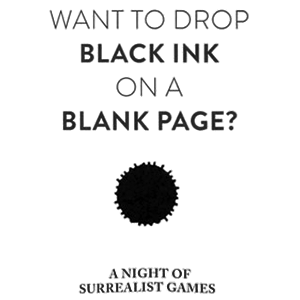
Bulletism is an artistic process that involves shooting ink at a blank piece of paper. The result is a type of ink blot. The artist can then develop images based on what is seen.
Salvador Dalí claimed to have invented this technique. Leonardo da Vinci, however, suggested that ‘just as one can hear any desired syllable in the sound of a bell, so one can see any desired figure in the shape formed by throwing a sponge with ink against the wall.’
Posted in Art, Language |
1 Comment »



