December 15, 2011
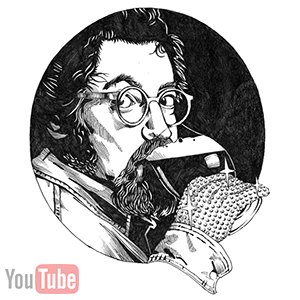
Michael Jackson (1942 – 2007) was an English writer and journalist. He was the author of several influential books about beer and whiskey. He became famous in beer circles in 1977 when his book ‘The World Guide To Beer’ was published; it is still considered to be one of the most fundamental books on the subject.
The modern theory of beer style is largely based the book, in which Jackson categorized a variety of beers from around the world in local style groups suggested by local customs and names. His work had a special influence on the popularization of the brewing culture in North America, and he would later host a popular show entitled ‘The Beer Hunter,’ which was shown on Channel 4 and the Discovery Channel. During his 30 year career as a critic, he wrote columns for a large number of newspapers and magazines. Jackson considered beer as a component of culture and described beers in their cultural context. Although he traveled around the world and discovered different beer cultures, he was especially fond of the Belgian beers.
Posted in Art, Food, Language |
1 Comment »
December 14, 2011

Spy vs. Spy is a black and white comic strip that debuted in ‘Mad Magazine’ #60, in 1961, and was originally published by EC Comics. The strip always features two spies, who are completely identical save for the fact that one is dressed in white and the other black.
The pair are constantly warring with each other, using a variety of booby-traps to inflict harm on the other. The spies usually alternate between victory and defeat with each new strip. They were created by Antonio Prohías, a prolific cartoonist in Cuba known for political satire.
read more »
Posted in Art, Humor, Language |
Leave a Comment »
December 13, 2011

Kinetic sculpture races are organized contests of human-powered amphibious all-terrain works of art. The original event, the Kinetic Grand Championship in Humboldt County, California, is also called the ‘Triathlon of the Art World’ because art and engineering are combined with physical endurance during a three day cross country race that includes sand, mud, pavement, a bay crossing, a river crossing and major hills.
The concept of kinetic sculpture racing originated in Ferndale, California in 1969 when local sculptor Hobart Brown ‘improved’ the appearance of his son’s tricycle by welding on two additional wheels and other embellishments. Seeing this ‘Pentacycle,’ fellow artist Jack Mays challenged him to a race.
read more »
Posted in Art, Games, Humor |
Leave a Comment »
December 13, 2011

‘Carts of Darkness‘ is a 2008 National Film Board of Canada documentary film by Murray Siple about a group of homeless men in North Vancouver, who use shopping carts to collect bottles and cans to return for money and also race down the city’s steep slope for thrills. The subjects in the film control the carts using only their weight and one foot, during descents that cross intersections, with top speeds claimed to be as high as 70 km/h.
Siple, a former director of extreme sports videos and avid skateboarder and snowboarder, became a quadriplegic after a car accident in 1996. His first film after his accident, ‘Carts of Darkness’ allowed the filmmaker to regain the excitement he had experienced with extreme sports as well as relate to a fellow group of outsiders.
Posted in Art, Games, Money |
1 Comment »
December 11, 2011

Modesty Blaise is a British comic strip featuring a fictional character of the same name, created by Peter O’Donnell (writer) and Jim Holdaway (art) in 1963.
The strip follows the adventures of Modesty Blaise, an exceptional young woman with many talents and a criminal past, and her trusty sidekick Willie Garvin. It was adapted into films made in 1966, 1982, and 2003 and a series of 13 novels and short story collections, beginning in 1965.
read more »
Posted in Art, Language |
Leave a Comment »
December 11, 2011

Stieg Larsson (1954 – 2004) was a Swedish journalist and writer, best known for his ‘Millennium series’ of crime novels, which were published posthumously.
Larsson lived and worked much of his life in Stockholm, in the field of journalism and as an independent researcher of right-wing extremism.
read more »
Posted in Art, Language, Politics |
Leave a Comment »
December 11, 2011

The Millennium series (1954 – 2004) is a series of bestselling novels originally written in Swedish by the late Stieg Larsson. The primary characters in the series are Lisbeth Salander, an intelligent, eccentric woman in her twenties with a photographic memory and poor social skills, and Mikael Blomkvist, an investigative journalist and editor of a magazine called ‘Millennium.’ Blomkvist, the character, has a history similar to Larsson, the author.
There are three books in the series: ‘The Girl with the Dragon Tattoo,’ ‘The Girl Who Played with Fire,’ and ‘The Girl Who Kicked the Hornets’ Nest.’ When he died suddenly of a heart attack in 2004, Larsson left behind manuscripts of the completed but unpublished novels written as a series. He had written them for his own pleasure after returning home from his job in the evening, and had made no attempt to get them published until shortly before his death.
read more »
Posted in Art, Language |
Leave a Comment »
December 8, 2011


A spit curl is a spiral curl of hair pressed flat against the cheek, temple, or forehead, a style popular in the 1920s and made famous by actress Clara Bow and cartoon character Betty Boop.
The unglamorous name for spit curls suggests how they stayed locked on the head. Normally women would set small tendrils in the front of their hair with bobby pins, and then would position them by licking or wetting their fingers to produce the spit curls look.
Posted in Art |
Leave a Comment »
December 8, 2011
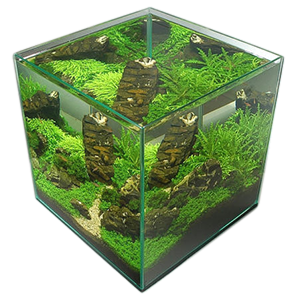
Aquascaping is the craft of arranging aquatic plants, as well as rocks, stones, cavework, or driftwood, in an aesthetically pleasing manner within an aquarium—in effect, gardening under water. Aquascape designs include a number of distinct styles, including the garden-like Dutch style and the Japanese-inspired nature style. Although the primary aim of aquascaping is to create an artful underwater landscape, the technical aspects of aquarium maintenance must also be taken into consideration.
Many factors must be balanced in the closed system to ensure the success of an aquascape, including filtration, maintaining carbon dioxide at levels sufficient to support photosynthesis underwater, substrate and fertilization, lighting, and algae control. Aquascape hobbyists trade plants, conduct contests, and share photographs and information via the internet.
read more »
Posted in Art, Games, Science |
2 Comments »
December 7, 2011

Gerd Arntz (1900 – 1988) was a German Modernist artist – famous for his black and white woodcuts. A core member of the Cologne Progressives he was also a council communist. The Cologne Progressives participated in the revolutionary unions AAUD and its offshoot the AAUE in the 1920s, and in 1928 Arntz was contributing anti-parliamentary prints to its paper ‘Die Proletarische Revolution’ which called for workers to form and participate in worker’s councils. These political prints depicted the life of worker’s and the class struggle in abstracted figures in woodcuts.
In 1926 Otto Neurath sought his collaboration in designing pictograms for the ‘Vienna Method of Pictorial Statistics’ (‘Wiener Methode der Bildstatistik’; later renamed ‘Isotype’). From the beginning of 1929 Arntz worked at the Gesellschafts- und Wirtschaftsmuseum (Social and economic museum) directed by Neurath in Vienna. Eventually, Arntz designed around 4000 pictograms. After the brief civil war in Austria in 1934 he emigrated to the Netherlands, joining Neurath and Reidemeister in The Hague, where they continued their collaboration at the International Foundation for Visual Education.
Posted in Art, Language, Politics |
Leave a Comment »
December 7, 2011

Isotype (International System of TYpographic Picture Education) is a method of showing social, technological, biological and historical connections in pictorial form.
It was first known as the Vienna Method of Pictorial Statistics, due to its having been developed at the Social and Economic Museum of Vienna (Gesellschafts- und Wirtschaftsmuseum in Wien) between 1925 and 1934. The founding director of the museum, Otto Neurath, was the initiator and chief theorist of the Vienna Method. The term Isotype was applied to the method around 1935, after its key practitioners were forced to leave Vienna by the rise of Austrian fascism.
read more »
Posted in Art, Language, Politics |
Leave a Comment »
December 3, 2011

Op art is a style of visual art that makes use of optical illusions. ‘Optical art is a method of painting concerning the interaction between illusion and picture plane, between understanding and seeing.’ Op art works are abstract, with many of the better known pieces made in only black and white. When the viewer looks at them, the impression is given of movement, hidden images, flashing and vibration, patterns, or alternatively, of swelling or warping.
Op art is derived from the constructivist practices of the Bauhaus, a German design school, founded by Walter Gropius, which stressed the relationship of form and function within a framework of analysis and rationality. Students were taught to focus on the overall design, or entire composition, in order to present unified works. When the Bauhaus was forced to close in 1933, many of its instructors fled to the US where the movement took root in Chicago and eventually at the Black Mountain College in Asheville, North Carolina, where Anni and Josef Albers would come to teach.
read more »
Posted in Art |
Leave a Comment »