October 13, 2011

A life review is a phenomenon widely reported as occurring during near-death experiences, in which a person rapidly sees much or the totality of his or her life history in chronological sequence and in extreme detail. It is often referred to by people having experienced this phenomenon as having their life ‘flash before their eyes.’
A reformatory purpose seems commonly implicit in accounts, though not necessarily for earthly purpose, since return from a near-death experience may reportedly entail individual choice. While individuals sometimes report reviews took place in the company of otherworldly beings who shared the observation, they also say they felt unjudged during the process, leaving themselves their own strongest critics.
read more »
Posted in Death, Health, Philosophy |
Leave a Comment »
October 13, 2011

An out-of-body experience (OBE) is an experience that typically involves a sensation of floating outside of one’s body and, in some cases, perceiving one’s physical body from a place outside one’s body (autoscopy). The term was introduced in 1943 by G.N.M Tyrrell in his book ‘Apparitions,’ and adopted as a bias-free alternative to belief-centric labels such as ‘astral projection,’ ‘soul travel,’ or ‘spirit walking.’
Though the term usefully distances researchers from scientifically problematic concepts such as the soul, scientists still know little about the phenomenon. Some researchers believe they have managed to recreate OBE in a laboratory setup by stimulating a part in the human brain. One in ten people has an out-of-body experience once, or more commonly, several times in their life. OBEs are often part of the near-death experience. Those who have experienced OBEs sometimes claim to have observed details which were unknown to them beforehand.
read more »
Posted in Death, Health, Philosophy |
Leave a Comment »
October 10, 2011

The Scorpion and the Frog is a fable about a scorpion asking a frog to carry him across a river. The frog is afraid of being stung during the trip, but the scorpion argues that if it stung the frog, the frog would sink and the scorpion would drown. The frog agrees and begins carrying the scorpion, but midway across the river the scorpion does indeed sting the frog, dooming them both. When asked why, the scorpion points out that this is its nature. The fable is used to illustrate the position that the behaviour of some creatures is irrepressible, no matter how they are treated and no matter what the consequences.
Variations commonly include a farmer, youth, turtle, or fox in place of the frog, and a snake in place of the scorpion. The Farmer and the Viper is a specific variant that can be attributed to Aesop. There is also a variation in which the final words of the scorpion are ‘It is better we should both perish than that my enemy should live.’ The origin and author are unknown. Variations of the fable appear in West African and European folktales. A study published in a German journal in 2011 points out a connection between the genesis of the fable and the tradition of the Panchatantra, a collection of animal fables dating back to India in the 3rd century BCE.
Posted in Death, Language, Philosophy |
Leave a Comment »
October 7, 2011

Eric Harris and Dylan Klebold were American high school seniors who committed the Columbine High School massacre. They killed 13 people and injured 24 others, before committing suicide. According to early accounts of the shooting, Harris and Klebold were very unpopular students and frequent targets of bullying at their high school. They eventually began to bully other students; writing journal entries about how they themselves had bullied younger students and ‘fags.’ Initially, the shooters were believed to be members of a clique that called themselves the Trenchcoat Mafia, a small group of Columbine’s self-styled outcasts who wore heavy black trench coats.
The Trenchcoat Mafia was originally a group of gamers who hung out together and started wearing trenchcoats after one of the members received a cowboy duster as a Christmas Gift. They adopted the name Trenchcoat Mafia after jocks began to call them that. Investigation revealed that Harris and Klebold were only friends with one member of the group, and that most of the primary members of the Trenchcoat Mafia had left the school by the time that Harris and Klebold committed the massacre. Most did not know the shooters and none were considered suspects in the shootings or were charged with any involvement in the incident.
Posted in Death, Education, Politics |
Leave a Comment »
September 22, 2011

The Jolly Roger is any of various flags flown to identify a ship’s crew as pirates. The flag most usually identified as the Jolly Roger today is the skull and crossbones, a flag consisting of a human skull above two long bones set in an x-mark arrangement on a black field. This design was used by several pirates, including Captains Edward England and John Taylor. Some Jolly Roger flags also include an hourglass, another common symbol representing death in 17th- and 18th-century Europe. Despite its prominence in popular culture, plain black flags were often employed by most pirates of that era. Historically, the flag was flown to frighten pirates’ victims into surrendering without a fight, since it conveyed the message that the attackers were outlaws who would not consider themselves bound by the usual rules of engagement—and might, therefore, slaughter those they defeated (since captured pirates were usually hanged, they did not have much to gain by asking quarter if defeated). The same message was sometimes conveyed by a red flag.
It is assumed by most that the name Jolly Roger comes from the French words jolie rouge, meaning ‘pretty red’ and referring to a plain red flag which was flown to indicate that the ship would fight to the death, with no quarter given or expected. During the Elizabethan era ‘Roger’ was a slang term for beggars and vagrants who ‘pretended scholarship.’ ‘Sea Beggars’ had been a popular name for Dutch privateers since the 16th century. Another theory states that Jolly Roger is an English corruption of Ali Raja, supposedly a 17th century Tamil pirate. Yet another theory is that it was taken from a nickname for the devil, ‘Old Roger.’ The ‘jolly’ appellation may be derived from the apparent grin of a skull.
Posted in Death, Politics, War |
1 Comment »
September 11, 2011

In armed conflicts, the civilian casualty ratio is the ratio of civilian casualties to combatant casualties, or total casualties. The measurement can apply either to casualties inflicted by a particular belligerent, or to casualties in the conflict as a whole.
According to a 2001 Red Cross study, the civilian-to-soldier death ratio in wars fought since the mid-20th century has been 10:1, meaning ten civilian deaths for every soldier death. In 2007, Israel achieved a ratio of 1:30, or one civilian casualty for every thirty combatant casualties, in its targeted killings campaign on militants in the Gaza Strip. According to Alan Dershowitz of Harvard Law School, ‘No army in history has ever had a better ratio of combatants to civilians killed in a comparable setting.’ Richard Kemp, former Commander of British Forces in Afghanistan, made a similar assessment of Israeli operations during the Gaza War, saying this civilian causalty ratio ‘was by far the lowest in any asymmetric conflict in the history of warfare.’
read more »
Posted in Death, Politics, War |
Leave a Comment »
August 26, 2011

Père Lachaise Cemetery [peyr /luh-shez] is the largest cemetery in the city of Paris, France, and is reputed to be the world’s most-visited cemetery, attracting hundreds of thousands of visitors annually to the graves of those who have enhanced French life over the past 200 years. It is also the site of three World War I memorials. Notable residents include Georges Bizet, Maria Callas, Frédéric Chopin, Marcel Marceau, Jim Morrison, Marcel Proust, and Oscar Wilde.
The cemetery is on Boulevard de Ménilmontant. The Paris Métro station Philippe Auguste is next to the main entrance, while the station called Père Lachaise, on line 3, is 500 meters away near a side entrance. Many tourists prefer the Gambetta station as it allows them to enter near the tomb of Oscar Wilde and then walk downhill to visit the rest of the cemetery.
read more »
Posted in Death, World |
Leave a Comment »
July 24, 2011

Promession is an ecologically-conscious method for disposing of human remains by freeze drying. It was invented and patented in 1999 by Swedish biologist Susanne Wiigh-Mäsak. The method begins by reducing the body of the deceased to a fine powder, thereby allowing subsequent decomposition to be aerobic. This is achieved by submerging the body in liquid nitrogen, making the remains so brittle that they shatter into a powder as the result of slight vibrations. The powder is then dried, reducing the deceased remains to around 30% of their original body weight. Next, an electromagnet pulls out metals within the powdered remains (including mercury, which is only magnetic at cryogenic temperature, which are recycled. Finally, the powder is buried shallowly in a biodegradable cornstarch box. Seeds planted in the soil draw nutrients from the remains. Below two feet, at the depth which coffins are traditionally buried, there is no oxygen, which is one of the prerequisites for composting or aerobic decomposition to take place. But despite this, the dead are buried at a depth where the oxygen is missing; therefore the deceased are exposed to a negative putrefaction process or anaerobic decomposition.
It is the lack of oxygen combined with the amount of remains that causes the body to not decompose, but effectively putrify in an ordinary burial, With such large bodies, humans always start to rot if not first broken down into smaller parts so that oxygen can reach all body parts. In the past this would have been done by wild animals. It is important to remember that even the powder produced by Promession would not compost at 2 meters below ground, due to the lack of oxygen. The same applies to a body that is above ground or in the upper soil layers with high availability of oxygen. Despite the high oxygen content, the body still putrefies because the body is intact and whole and anaerobic conditions are already present in the gut . It is not enough for one or the other. Proper composting or aerobic decomposition of a corpse requires a combination of fragmentation of the body, oxygen-rich soil and micro-and macro-organisms. Therefore Promession is a modern and ethical manner to transform the body into smaller parts to get it to compost correctly and return to soil without the negative side effects associated with putrefaction.
Posted in Death, Technology |
Leave a Comment »
July 23, 2011
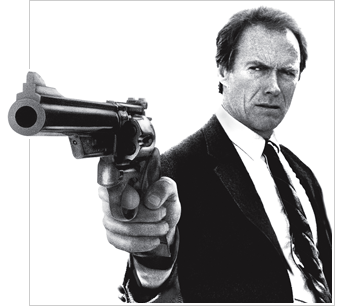
A death pool (or dead pool) is a game of prediction which involves guessing when someone will die. A typical pool might have players pick out celebrities who they think will die within the year. There are also several scoring variants. For example, a player might be rewarded few, if any, points for predicting the death of someone who is over 80 years old or is known to be suffering from a terminal disease. Another common method to calculate score is subtracting the celebrity’s age from 100. Other pools require participants to form a list ranked on how sure they are that a person on the list will die, with points given based on how high a person on their list is ranked, and others award points based on how many other contestants selected the deceased celebrity. Another variant on the game has a single point awarded for each correct prediction, regardless of the celebrity’s age or medical condition. The advantage of this scoring method is that there is more scoring, and it rewards research (learning which celebrities are experiencing failing health) rather than luck.
Definitions of celebrity vary from contest to contest. Smaller pools may rely on consensus of the players as to who is famous. Others require an obituary to appear in a recognized newswire such as the Associated Press or Reuters. The Lee Atwater Invitational Dead Pool employs a Fame Committee consisting of non-contestants who assess ahead of time the name-recognition of each celebrity. The Rotten.com Dead Pool, the largest in the world, uses the Notable Names Database (NNDB) as its source of qualified celebrities, and as arbiter of their life status.
Posted in Death, Games, Money |
Leave a Comment »
July 15, 2011


Near-death studies is a school of psychology and psychiatry that studies the phenomenology and after-effects of a Near-death experience (NDE). The NDEs are reported by people who have come close to dying in a medical or non-medical setting.
Some researchers try to study the postulated role of physiological, psychological and transcendental factors associated with the NDE. These factors come together to form an overall pattern when numerous NDE reports are considered together. It is this pattern that is one of the main objects of interest for Near-Death studies.
read more »
Posted in Death, Health, Science |
1 Comment »
June 30, 2011

The last meal is a customary part of a condemned prisoner’s last day. The day before the appointed time of execution, the prisoner receives the meal, as well as religious rites, if they desire. As a general rule, inmates may not ask for an alcoholic drink. In many countries the prisoner may select what the last meal will be (within reason), and the authorities do their best to satisfy the request. Although the history of this tradition is difficult to trace, most modern governments that execute prisoners subscribe to it.
Serial killer, John Wayne Gacy, requested a dozen deep-fried shrimp, a bucket of original recipe chicken from KFC, French fries, and a pound of strawberries. Domestic terrorist, Timothy ate two pints of mint chocolate-chip ice cream as his last meal.
read more »
Posted in Death, Food, Politics |
Leave a Comment »
June 29, 2011

A ghost bike or ghostcycle is a bicycle set up as a roadside memorial in a place where a cyclist has been killed or severely injured (usually by a motor vehicle). Apart from being a memorial, it is usually intended as a reminder to passing motorists to share the road.
Ghost bikes are usually junk bicycles painted white, sometimes with a placard attached, and locked to a suitable object close to the scene of the accident. The original idea of painting bikes white reportedly goes back to Amsterdam in the 1960s as an anarchist project to liberate two-wheel transport—white bikes were free, help yourself and then leave it for someone else.
Posted in Death, Politics |
Leave a Comment »


 The Daily Omnivore