January 18, 2011


Richard Parker is the name of a person and a fictional character who were shipwrecked and subsequently cannibalised by their fellow seamen. In Edgar Allan Poe’s only novel The Narrative of Arthur Gordon Pym of Nantucket, published in 1838, Richard Parker is a mutinous sailor on the whaling ship Grampus. After the ship capsizes in a storm, he and three other survivors draw lots upon Parker’s suggestion to kill one of them to sustain the others. Parker then gets cannibalized.
In 1884, an actual yacht named Mignonette sank. Four people survived, drifted in a life boat, and finally killed one of them, the cabin boy Richard Parker, for food. the survivors were criminally tried in the case of ‘R v Dudley and Stephens (which established a precedent, throughout the common law world, that necessity is no defence against a charge of murder).
Posted in Death, Food, Politics |
Leave a Comment »
January 18, 2011

Sokushinbutsu were Buddhist monks or priests who caused their own deaths in a way that resulted in their mummification. This practice took place almost exclusively in northern Japan around the Yamagata Prefecture. It is believed that many hundreds of monks tried, but only between 16 and 24 such mummifications have been discovered to date. The practice is not advocated or practiced today by any Buddhist sect.
read more »
Posted in Death, Philosophy, World |
Leave a Comment »
January 17, 2011

Schrödinger’s [shroh-ding-ers] cat is a thought experiment in quantum physics, usually described as a paradox, devised by Austrian physicist Erwin Schrödinger in 1935. In the experiment, a cat is placed in a room that is separated from the outside world; a small amount of a radioactive element is in the room.
Within some time, say one hour, one of the atoms of the radioactive material may decay (because the material unstable), or it may not. If the material breaks down, it will release poisonous gas, which will kill the cat. The question now is: at the end of the hour, is the cat alive or dead?
read more »
Posted in Death, Philosophy, Science |
Leave a Comment »
January 10, 2011
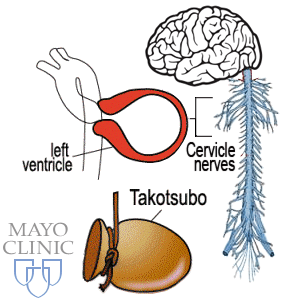
Takotsubo cardiomyopathy, is a sudden temporary weakening of the myocardium (the muscle of the heart). Because this weakening can be triggered by emotional stress, such as the death of a loved one, the condition is also known as broken heart syndrome. A tako tsubo is a jar-shaped, Japanese octopus trap that bears a resemblance to a heart experiencing Takotsubo cardiomyopathy: a bulging left ventricular apex and a preserved base of the left ventricle. The cause of the syndrome is not entirely understood, and is currently thought to involve high circulating levels of catecholamines (fight-or-flight hormones like adrenaline).
Evaluation of individuals with takotsubo cardiomyopathy typically includes a coronary angiogram, which will not reveal any significant blockages that would cause the left ventricular dysfunction. Provided that the individual survives their initial presentation, the left ventricular function improves within two months. Takotsubo cardiomyopathy is more commonly seen in post-menopausal women, and those with a history of a recent severe emotional or physical stress. A 2008 study by life insurance companies indicated that in the year following a loved one’s death, women were more than twice as likely to die than normal, and men more than six times as likely.
Posted in Death, Health |
Leave a Comment »
January 6, 2011


A telomere [tel-uh-meer] is a protective region of repetitive DNA at the end of a chromosome, The telomere regions deter the degradation of genes near the ends of chromosomes by allowing for the shortening of chromosome ends, which necessarily occurs during chromosome replication. The telomeres are disposable buffers blocking the ends of the chromosomes and are consumed during cell division and replenished by an enzyme, the telomerase reverse transcriptase.
The telomere shortening mechanism normally limits cells to a fixed number of divisions, and animal studies suggest that this is responsible for aging on the cellular level and sets a limit on lifespans. Telomeres also protect a cell’s chromosomes from fusing with each other or rearranging — abnormalities that can lead to cancer — and so cells are destroyed when their telomeres are consumed. Most cancers are the result of ‘immortal’ cells that have ways of evading this programmed destruction.
Posted in Death, Health, Science |
Leave a Comment »
December 19, 2010


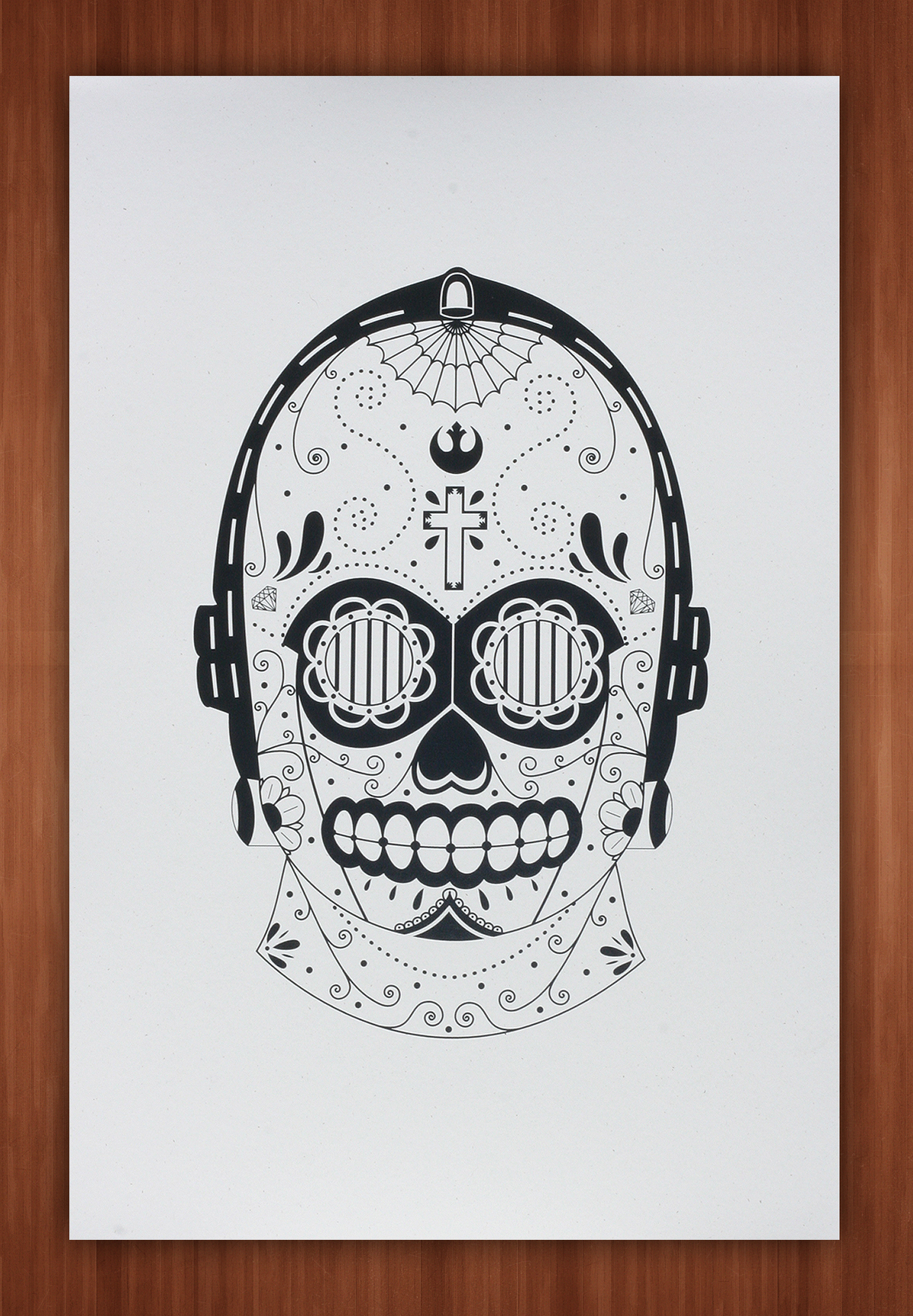
The word calavera, Spanish for ‘skull,’ can refer to a number of cultural phenomena associated with the Mexican celebration of the Day of the Dead and the Roman Catholic holiday All Souls Day. Calaveras de azúcar (‘sugar skulls’) are used to adorn altars and can be eaten. Calaveras are poems, written for the Day of the Dead but intended to humorously criticize the living. Calavera can refer to any artistic representations of skulls, such as the lithographs of José Guadalupe Posada.
Posted in Art, Death, Philosophy |
Leave a Comment »
December 14, 2010
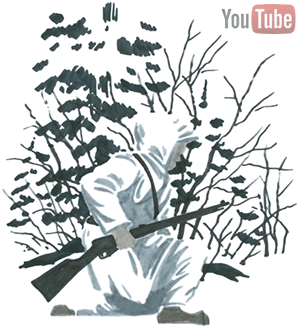
Simo Häyhä (1905 – 2002), nicknamed ‘White Death‘ by the Soviet Red Army, was a Finnish sniper. Using a modified Mosin-Nagant rifle in the Winter War of 1939 he tallied 505 confirmed kills, the most in any major war. Häyhä, born near the present-day border of Finland and Russia, was a farmer before entering combat. He joined the Finnish militia at 17, and his farmhouse was reportedly full of trophies for marksmanship.
read more »
Posted in Death, War, World |
Leave a Comment »
December 7, 2010

Green Boots is the name given to the corpse of Indian climber Tsewang Paljor (1968 – 1996) on the North face route of Mount Everest. There is little doubt that the body is that of Paljor, who was wearing green Koflach boots on the day he and two others apparently summited. On the way down, he fell victim to exposure in the storm of 10 May 1996 that killed seven others. Since the cave his corpse lies in is on the popular northern route, his body is encountered frequently and came to be known as ‘Green Boots.’
An area along the northeast route to the summit has earned the unassuming nickname of ‘Rainbow Valley,’ simply because of the multicolored down jackets of the numerous corpses littering the hillside. In the harsh conditions of lethal altitudes, corpses can remain for decades, some appearing frozen in time with climbing gear intact. Despite the snow and ice, Everest is as dry as a desert and the sun and wind quickly mummify human remains. In the 56 years since the first men in history reached the top, 216 people have died and 150 bodies have never been, and likely can never be, recovered. They are all still there, and located, almost without exception, in the Death Zone, where oxygen is only one third of the sea level value.
Posted in Death, Games |
Leave a Comment »
December 3, 2010

Operation Mincemeat was a successful British deception plan during World War II. As part of Operation Barclay, a plan to cover the intended invasion of Italy from North Africa, Mincemeat helped to convince the German high command that the Allies planned to invade Greece and Sardinia in 1943 instead of Sicily, the actual objective.
This was accomplished by persuading the Germans that they had, by accident, intercepted ‘top secret’ documents giving details of Allied war plans. The documents were attached to a corpse deliberately left to wash up on a beach in Punta Umbría in Spain.
read more »
Posted in Death, War |
Leave a Comment »
November 16, 2010
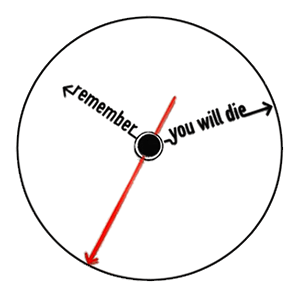
Memento mori is a Latin phrase translated as ‘Remember your mortality’ or “remember you will die’ – (literally: ‘[in the future] remember to die’). It names a genre of artistic creations that vary widely from one another, but which all share the same purpose: to remind people of their own mortality. The phrase has a tradition in art that dates back to antiquity. In ancient Rome, the words are believed to have been used on the occasions when a Roman general was parading through the streets during a victory triumph. Standing behind the victorious general was his slave, who was tasked to remind the general that, though his highness was at his peak today, tomorrow he could fall.
The thought came into its own with Christianity, whose strong emphasis on Divine Judgment, Heaven, Hell, and the salvation of the soul brought death to the forefront of consciousness. Most memento mori works are products of Christian art, although there are equivalents in Buddhist art.
Posted in Art, Death, Philosophy |
Leave a Comment »
November 2, 2010

In software development, a software project’s bus factor is an irreverent measurement of concentration of information in a single person, or very few people. The bus factor is the total number of key developers who would need to be incapacitated, (as by getting hit by a bus) to send the project into such disarray that it would not be able to proceed. Commentators have noted that the vanilla Linux kernel tree’s bus factor may be as low as one: the project’s founder and chief architect, Linus Torvalds.
Posted in Death, Money, Technology |
Leave a Comment »
October 28, 2010
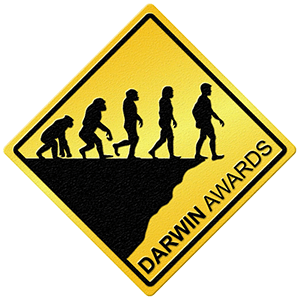
The Darwin Award are a tongue-in-cheek honor, originating in Usenet newsgroup discussions circa 1985. They recognize individuals who have contributed to human evolution by self-selecting themselves out of the gene pool via death or sterilization due to their own (unnecessarily foolish) actions. The project became more formalized with the creation of a website in 1993, and followed up by a series of books starting in 2000, authored by Wendy Northcutt. The criterion for the awards states, ‘In the spirit of Charles Darwin, the Darwin Awards commemorate individuals who protect our gene pool by making the ultimate sacrifice of their own lives. Darwin Award winners eliminate themselves in an extraordinarily idiotic manner, thereby improving our species’ chances of long-term survival.’
Accidental self-sterilization also qualifies; however, the site notes: ‘Of necessity, the award is usually bestowed posthumously.’ But the candidate is disqualified if ‘innocent bystanders,’ who might have contributed positively to the gene pool, are killed in the process. The Darwin Awards books state that an attempt is made to disallow known urban legends from the awards, but some older ‘winners” have been ‘grandfathered’ to keep their awards. The Darwin Awards site does try to verify all submitted stories, but many similar sites, and the vast number of circulating ‘Darwin awards’ emails, are largely fictional.
read more »
Posted in Death, Humor |
Leave a Comment »






 The Daily Omnivore