November 19, 2011
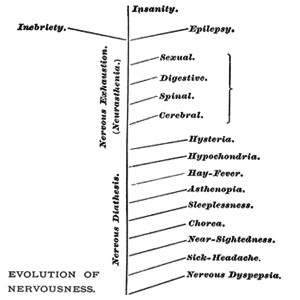
Neurasthenia [noor-uhs-thee-nee-uh] is a psycho-pathological term first used by American neurologist George Miller Beard in 1869 to denote a condition with symptoms of fatigue, anxiety, headache, neuralgia (pain of the nerves) and depressed mood. It is currently a diagnosis in the World Health Organization’s International Classification of Diseases (and in the Chinese Classification of Mental Disorders).
However, it is no longer included as a diagnosis in the American Psychiatric Association’s Diagnostic and Statistical Manual of Mental Disorders. Americans were supposed to be particularly prone to neurasthenia, which resulted in the nickname ‘Americanitis’ (popularized by American psychologist William James). Today, the condition is still commonly diagnosed in Asia.
read more »
Posted in Drugs, Health, World |
Leave a Comment »
November 19, 2011

Drunk dialing is a pop-culture term denoting an instance in which an intoxicated individual places phone calls that he or she would not likely place if sober. The term often refers to a lonely individual calling former or current love interests. Kurt Vonnegut once said, ‘I have this disease late at night sometimes, involving alcohol and the telephone. I get drunk, and I drive my wife away with breath like mustard gas and roses.
And then, speaking gravely and elegantly into the telephone, I ask the telephone operators to connect me with this friend or that one, from whom I have not heard in years.’ ‘Drunk texting’ is a related phenomenon, and potentially yet more embarrassing for the sender as, once the message is sent, it cannot be retrieved; the message will most likely be misspelled (due to being drunk), and it might be reviewed and shared among many.
read more »
Posted in Drugs, Humor, Technology |
Leave a Comment »
November 16, 2011

The sweat lodge is a ceremonial sauna and is an important event in some Native American cultures. There are several styles of sweat lodges that include a domed or oblong hut similar to a wigwam, or even a simple hole dug into the ground and covered with planks or tree trunks. Stones are typically heated in an exterior fire and then placed in a central pit in the ground. Early occurrences can be found in the fifth century BCE, when Scythians constructed pole and woolen cloth sweat baths.
Vapor baths were in use among the Celtic tribes, and the sweat-house was in general use in Ireland down to the 18th, and even survived into the 19th century. It was of beehive shape and was covered with clay. It was especially resorted to as a cure for rheumatism. Rituals and traditions vary from region to region and from tribe to tribe. They often include prayers, drumming, and offerings to the spirit world. In some cultures a sweat-lodge ceremony may be a part of another, longer ceremony such as a Sun Dance.
read more »
Posted in Drugs, Health, Philosophy |
Leave a Comment »
November 10, 2011
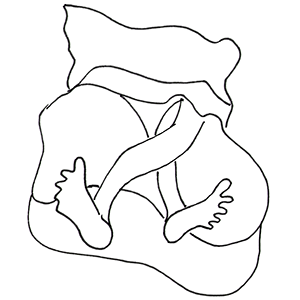
Restless legs syndrome (RLS) or Willis-Ekbom disease is a neurological disorder characterized by an irresistible urge to move one’s body to stop uncomfortable or odd sensations. It most commonly affects the legs, but can affect the arms, torso, and even phantom limbs. Moving the affected body part modulates the sensations, providing temporary relief. RLS sensations can most closely be compared to an itching or tickling in the muscles, like ‘an itch you can’t scratch’ or an unpleasant ‘tickle that won’t stop.’ The sensations typically begin or intensify during quiet wakefulness, such as when relaxing, reading, studying, or trying to sleep.
As with many diseases with diffuse symptoms, there is controversy among physicians as to whether RLS is a distinct syndrome. The U.S. National Institute of Neurological Disorders and Stroke publishes an information sheet characterizing the syndrome but acknowledging it as a difficult diagnosis. Physicians generally consider it a real entity that has specific diagnostic criteria., but many doctors express the view that the incidence of restless leg syndrome is exaggerated by manufacturers of drugs used to treat it. Others believe it is an underrecognized and undertreated disorder.
Posted in Drugs, Health, Money |
Leave a Comment »
November 3, 2011

Norepinephrine [nawr-ep-uh-nef-rin] is a hormone and a neurotransmitter. Areas of the body that produce or are affected by norepinephrine are described as noradrenergic. The terms noradrenaline (from the Latin) and norepinephrine (derived from Greek) are interchangeable, with noradrenaline the common name in most parts of the world. However, to avoid confusion and achieve consistency medical authorities have promoted norepinephrine as the favored nomenclature.
One of the most important functions of norepinephrine is its role as the neurotransmitter released from the sympathetic neurons (part of the subconscious, autonomic nervous system) affecting the heart. An increase in norepinephrine from the sympathetic nervous system increases the rate of contractions. As a stress hormone, norepinephrine affects parts of the brain, such as the amygdala, where attention and responses are controlled.
read more »
Posted in Drugs, Health, Science |
Leave a Comment »
November 3, 2011
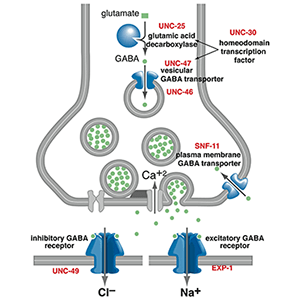
GABA (Gamma-Aminobutyric acid) is a neurotransmitter in the central nervous system of mammals. Its role changes from excitatory to inhibitory as the brain develops into adulthood. Normally, when a neuron receives an impulse, it will make the signal stronger, an inhibiting neurotransmitter prevents the cell from receiving the impulse, and the signal as a whole is weakened. In mammals, GABA regulates the extent to which neurons in the central nervous system will be stimulated.
It plays a role in regulating neuronal excitability throughout the nervous system. In humans, GABA is also directly responsible for the regulation of muscle tone. Even though chemically it is an amino acid, GABA is rarely referred to as such in the scientific or medical communities. The term ‘amino acid,’ used without a qualifier, refers to the alpha amino acids, which GABA is not. GABA is also not incorporated into proteins.
read more »
Posted in Drugs, Health, Science |
Leave a Comment »
October 31, 2011

Straight edge is a subculture of hardcore punk whose adherents refrain from using alcohol, tobacco, and other recreational drugs. It was a direct reaction to the sexual revolution, hedonism, and excess associated with punk rock. For some, this extends to not engaging in promiscuous sex, following a vegetarian or vegan diet, and not using caffeine or prescription drugs.
The term was coined by the 1980s hardcore punk band Minor Threat in their song ‘Straight Edge.’ Since then, a wide variety of beliefs and ideas have been incorporated into straight edge including vegetarianism, animal rights, communism, and Hare Krishna beliefs. In many parts of the United States, straight edge is treated as a gang by law enforcement officials.
read more »
Posted in Drugs, Language, Sex |
Leave a Comment »
October 13, 2011

Nootropics [no-eh-tro-pik], also referred to as smart drugs or memory enhancers, are drugs that improve mental functions such as cognition, memory, intelligence, motivation, attention, and concentration. The word nootropic was coined in 1972 by Dr. Corneliu E. Giurgea of Romania, derived from the Greek words nous, or ‘mind,’ and trepein meaning ‘to bend/turn.’
Nootropics are thought to work by altering the availability of the brain’s supply of neurochemicals (neurotransmitters, enzymes, and hormones), by improving the brain’s oxygen supply, or by stimulating nerve growth. However the efficacy of nootropic substances, in most cases, has not been conclusively determined. This is complicated by the difficulty of defining and quantifying cognition and intelligence.
read more »
Posted in Drugs, Health |
1 Comment »
October 13, 2011
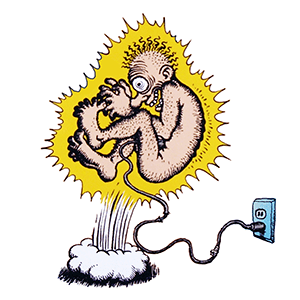
Symptoms described as ‘brain zaps,’ ‘brain shocks,’ ‘brain shivers,’ or ‘cranial zings’ are a withdrawal symptom experienced during discontinuation (or reduction of dose) of antidepressant drugs. The symptoms are widely variable in description and of unknown etiology; common descriptions include dizziness, electric shock-like sensations, sweating, nausea, insomnia, tremor, confusion, nightmares, and vertigo.
The ‘preferred term’ for coding these types of symptoms in adverse drug reaction reports is ‘paraesthesia’ (more generally known as the feeling of ‘pins and needles’).
Posted in Drugs, Health, Language |
Leave a Comment »
October 13, 2011

The Zihuatanejo Project was an intentional community created during the summers of 1962 and 1963 by Timothy Leary and Richard Alpert under the umbrella of their nonprofit group, the International Federation for Internal Freedom (IFIF). The community was located in Zihuatanejo, Mexico, and took up residence at the Catalina Hotel. The idea for the community was based on the fictional story from Aldous Huxley’s 1962 novel, ‘Island.’ Immigration officials were tipped off to the project when the Mexican media began reporting stories about an ‘LSD Paradise.’ In the summer of 1963, after only six weeks the Mexican authorities shut the community down.
More than 5,000 people applied to the IFIF in the hopes of joining the project in Zihuatanejo. Out of this pool of applicants, a small, select group of people were chosen. Amenities cost $200 a month per person, including food and lodging in bungalows near a secluded beach. Fishermen supplied a bounty of fresh fish from the bay. Leary and 35 guests rented the Catalina Hotel for a month using the ‘Tibetan Book of the Dead’ as a guide book for LSD sessions, while Ralph Metzner and Richard Alpert helped manage the group. Group LSD sessions began in the morning with the consumption of liquid LSD, with a dosage of 100 to 500 micrograms ingested by participating individuals; the experience would usually last until late afternoon.
Posted in Drugs, Philosophy, Politics |
1 Comment »
October 13, 2011

The term ‘psychedelic experience‘ is vague – characterized by polyvalence or ambiguity due to its nature – however in modern psychopharmacological science as well as philosophical, psychological, neurological, spiritual-religious and most other ideological discourses it is understood as an altered state of awareness often distinct to, and induced by the consumption of certain psychotropics.
In particular hallucinogens, many entheogens and specifically psychedelic compounds are known to cause this change in mental state.
read more »
Posted in Drugs, Health, Philosophy |
Leave a Comment »
October 13, 2011
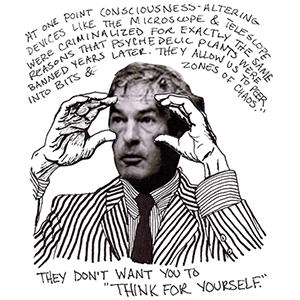
Psychonautics [sahy-kuh-naw-tiks] (Greek: psyche ‘soul/spirit/mind’ and naut ‘sailor/navigator’) refers both to a methodology for describing and explaining the subjective effects of altered states of consciousness, including those induced by mind altering substances, and to a research framework for voluntarily immersing oneself into an altered state by means of such techniques, to explore human experience and existence.
The term has been applied diversely, to cover all activities by which altered states are induced and utilized for spiritual purposes or the exploration of the human condition, including shamanism, lamas of the Tibetan Buddhist tradition, sensory deprivation, and archaic/modern drug users who use entheogenic substances in order to gain deeper insights and spiritual experiences.
read more »
Posted in Drugs, Philosophy, Science |
Leave a Comment »


 The Daily Omnivore