July 12, 2011

Purple drank is a slang term for a recreational drug popular in the hip hop community in the southern United States, originating in Houston, Texas. Its main ingredient is prescription-strength cough syrup containing codeine and promethazine. Cough syrup is typically mixed with ingredients such as Sprite soft drink or Mountain Dew and pieces of Jolly Rancher candy. The purplish hue of purple drank comes from dyes in the cough syrup. Producer DJ Screw popularized the concoction in the 1990s, which is widely attributed as a source of inspiration for the ‘chopped and screwed’ style of hip hop music. However, musician Big Hawk claims it was consumed as early as the 1960s and 1970s.
DJ Screw died of a codeine-promethazine-alcohol overdose in 2000. Purple drank is confirmed or suspected to have caused the deaths of several prominent users. Respiratory depression is a potentially serious or fatal adverse drug reaction associated with the use of codeine, but mainly the danger lies in the much more potent and CNS-depressing phenothiazine-related antihistamine promethazine.
Posted in Drugs, Health, Language |
Leave a Comment »
July 12, 2011
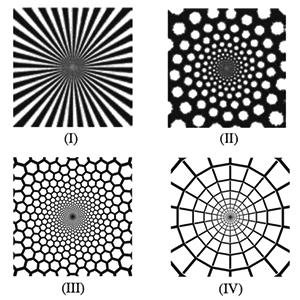
A phosphene [fos-feen] is an entoptic (visual) phenomenon characterized by the experience of seeing light without light actually entering the eye. The word phosphene comes from the Greek words ‘phos’ (‘light’) and ‘phainein’ (‘to show’). Phosphenes are flashes of light, often associated with optic neuritis, induced by movement or sound.
They can be directly induced by mechanical, electrical, or magnetic stimulation of the retina or visual cortex as well as by random firing of cells in the visual system. Phosphenes have also been reported by meditators (commonly called nimitta); people who go for long periods without visual stimulation (also known as the prisoner’s cinema); or those who are using psychedelic drugs.
read more »
Posted in Drugs, Health, Language |
1 Comment »
July 11, 2011


Addiction medicine is a medical specialty that deals with the treatment of addiction. The specialty often crosses over into other areas, since various aspects of addiction fall within the fields of public health, psychology, social work, psychiatry, and internal medicine, among others. Incorporated within the specialty are the processes of detoxification, rehabilitation, harm reduction, abstinence-based treatment, individual and group therapies, oversight of halfway houses, treatment of withdrawal-related symptoms, acute intervention, and long term therapies designed to reduce likelihood of relapse. Some specialists, primarily those who also have expertise in family medicine or internal medicine, also provide treatment for disease states commonly associated with substance use, such as hepatitis and HIV infection.
Physicians specializing in the field are in general agreement concerning applicability of treatment to those with addiction to drugs, such as alcohol and heroin, and often also to gambling, which has similar characteristics and has been well described in the scientific literature. There is less agreement concerning definition or treatment of other so-called addictive behavior such as sexual addiction and internet addiction, such behaviors not being marked generally by physiologic tolerance or withdrawal.
Posted in Drugs, Health, Politics |
Leave a Comment »
July 11, 2011
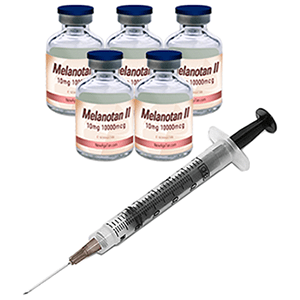
Melanotan II, developed at the University of Arizona, is a synthetic analog of the naturally occurring melanocortin peptide hormone alpha-melanocyte stimulating hormone (α-MSH) that in usage has been shown to have melanogenesis (tanning) and aphrodisiac effects in preliminary studies and clinical trials.
No compound incorporating the melanotan II peptide has ever been approved for use by any governmental drug regulatory bodies outside of clinical trials. Unlicensed and untested powders sold as ‘melanotan II’ are found on the Internet and are reported to be used by thousands of members of the general public.
read more »
Posted in Drugs, Health, Sex |
2 Comments »
July 11, 2011
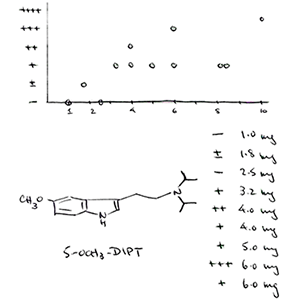
The Shulgin Rating Scale is a simple scale for reporting the subjective effect of psychoactive substances at a given dosage, and at a given time.
The system was developed for research purposes by the American biochemist Alexander Shulgin and detailed in his book ‘PiHKAL’ (‘Phenethylamines I Have Known And Loved: A Chemical Love Story’).
read more »
Posted in Drugs, Health, Science |
Leave a Comment »
July 11, 2011

Alexander Shulgin (b. 1925), known as Sasha, is an American pharmacologist. Shulgin is credited with the popularization of MDMA, commonly known as ecstasy, in the late 1970s and early 1980s, especially for psychopharmaceutical use and the treatment of depression and post-traumatic stress disorder. In subsequent years, Shulgin discovered, synthesized, and bioassayed over 230 psychoactive compounds.
In 1991 and 1997, he and his wife Ann Shulgin authored the books ‘PiHKAL’ and ‘TiHKAL’ on the topic of psychoactive drugs. Shulgin discovered many noteworthy phenethylamines including the 2C family. Additionally, Shulgin performed seminal work into the descriptive synthesis of compounds based on the organic compound tryptamine.
read more »
Posted in Drugs, Health, Politics |
1 Comment »
July 11, 2011
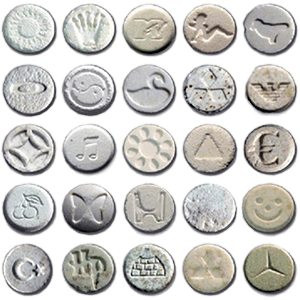
Designer drug is a term used to describe drugs which are created (or marketed, if they had already existed) to get around existing drug laws, usually by modifying the molecular structures of existing drugs to varying degrees, or less commonly by finding drugs with entirely different chemical structures that produce similar subjective effects to illegal recreational drugs.
The term ‘designer drug’ was first coined by law enforcement in the 1980s, and has gained widespread use. However the first appearance of what would now be termed designer drugs occurred well before this, in the 1920s. Following the passage of the second International Opium Convention in 1925 which specifically banned morphine and the diacetyl ester of morphine, heroin, a number of alternative esters of morphine quickly started to be manufactured and sold.
read more »
Posted in Drugs, Health, Politics |
Leave a Comment »
July 11, 2011

Synthetic cannabis is a psychoactive herbal and chemical product which, when consumed mimics the effects of cannabis. It is best known by the brand names K2 and Spice, both of which have largely become genericized trademarks used to refer to any synthetic cannabis product. A type of synthetic cannabis sold in Australasia is known as Kronic.
Professor John W. Huffman who first synthesized many of the cannabinoids used in synthetic cannabis is quoted as saying, ‘People who use it are idiots. You don’t know what it’s going to do to you.’ Heavy Spice users who cut back are known to experience withdrawal symptoms, similar to those associated with withdrawing from the use of narcotics. The lack of an antipsychotic chemical, similar to cannabidiol found in natural cannabis, may make synthetic cannabis more likely to induce psychosis than natural cannabis.
read more »
Posted in Drugs, Health, Politics |
Leave a Comment »
July 8, 2011
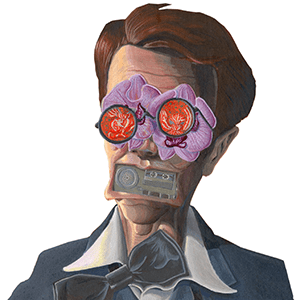
The Doors of Perception is a 1954 book by Aldous Huxley detailing his experiences when taking mescaline, a hallucinogen found naturally in the peyote cactus.
The book takes the form of Huxley’s recollection of a drug trip which took place over the course of an afternoon, and takes its title from William Blake’s poem ‘The Marriage of Heaven and Hell.’ Huxley recalls the insights he experienced, which range from the ‘purely aesthetic’ to ‘sacramental vision.’ He also incorporates later reflections on the experience and its meaning for art and religion.
read more »
Posted in Drugs, Language, Philosophy |
1 Comment »
July 4, 2011

Enter the Void is a 2009 French film written and directed by Gaspar Noé, labeled by Noé as a ‘psychedelic melodrama. The story is set in Tokyo and focuses on Oscar, a young American drug dealer who gets shot by the police, but continues to watch over his sister Linda and the events which follow during an out-of-body experience, floating above Tokyo’s streets. The film is shot from a first-person view, and occasionally features Oscar staring over his own shoulder as he recalls moments from his past.
Having been Noé’s dream project for many years, the production of ‘Enter the Void’ was made possible due to the commercial success of ‘Irréversible,’ the director’s previous feature film. The film makes heavy use of imagery inspired by experimental cinema and psychedelic drug experiences. Principal photography took place on location in Tokyo and involved many complicated crane shots.
read more »
Posted in Art, Drugs, World |
1 Comment »
July 3, 2011

‘Eminence Front‘ is a song written and sung by Pete Townshend of The Who. It appears as the sixth track on the group’s 1982 studio album, ‘It’s Hard.’ It is the only song from the album that the band has opted to play live after the initial post-release tours. Lead singer Roger Daltrey, vocally critical of the album, described ‘Eminence Front’ as the only song on it that he felt was worthy of being released.
In the song, Townshend sings about the delusions and drug use of the wealthy and hedonistic. The lyrics describe a party in which people hide from their problems behind a facade. Townshend has introduced the song in live performances with: ‘This song is about what happens when you take too much white powder; it’s called Eminence Front.’
Posted in Art, Drugs, Money |
1 Comment »
June 30, 2011

Mati Klarwein (1932 – 2002) was a painter best known for his works used on the covers of music albums. Klarwein was born in Hamburg, Germany. His family was of Jewish origin and fled to the British Mandate of Palestine when he was two years old, after the rise of Nazi Germany.
In 1948 when the territory became Israel, his family traveled to Paris. There Mati studied with French painter, Fernand Léger. Later, he traveled south to Saint-Tropez and met Austrian artist, Ernst Fuchs, who would have a profound influence on him. Leaving France in the 1950s, Klarwein traveled widely and lived in many different countries, including Tibet, India, Bali, North Africa, Turkey, Europe and the Americas. He settled in New York City in the early 1960s.
read more »
Posted in Art, Drugs |
Leave a Comment »




 The Daily Omnivore