June 28, 2011
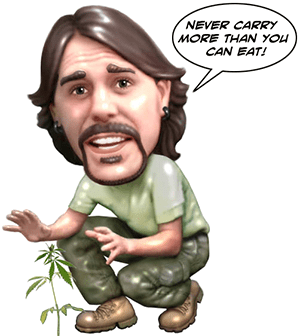
Barry Cooper (b. 1969) is an anti-drug-war lecturer known for his DVD series, ‘Never Get Busted’ and his reality show, KopBusters. Cooper formerly served as a law enforcement officer. Before his career in law enforcement, he trained dogs in obedience, hunting, and working with livestock. He was later hired by the Big Sandy Police Department as an interdiction officer in East Texas and trained his own narcotic detection dog.
As a law enforcement officer, Cooper confiscated large amounts of illegal narcotics and drug money. Cooper cited that he began to notice that people who were arrested for possession of marijuana were nonviolent and cooperative in contrast to the people that were arrested for violations while intoxicated on alcohol who ‘[…] would fight and scream and act crazy.’ He also noted being deeply affected by the emotional trauma he witnessed while participating in home narcotic raids with other officers attired in raid gear and ‘more guns than we would ever need.’ Cooper also stated, ‘We’re sending the kids to the department of human services, we’re sending the parents to jail over marijuana. Well, I knew some of these people and I knew they weren’t gangsters. I knew they were nonviolent people.’ He quit law enforcement soon after.
Posted in Drugs, Politics |
1 Comment »
June 22, 2011

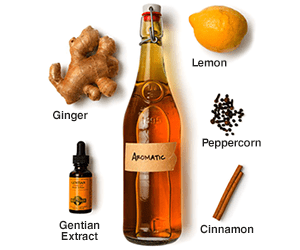
A bitters is an alcoholic beverage that is flavored with herbal essences and has a bitter or bittersweet flavor. There are numerous brands of bitters that were formerly marketed as patent medicines (tonics and elixirs) but are now considered to be digestifs (an after dinner drink intended to aid in digestion), rather than medicines. Bitters are 45% alcohol by volume.
Common ingredients in bitters include cascarilla, cassia, gentian, orange peel, and quinine from Cinchona bark (grown in Peru and Indonesia). The flavor of Angostura bitters, Suze and Peychaud’s Bitters derives primarily from gentian, a bitter herb. Bitters are prepared by infusion or distillation, using aromatic herbs, bark, roots, and/or fruit for their flavor and medicinal properties.
read more »
Posted in Drugs, Food, Health |
Leave a Comment »
June 21, 2011
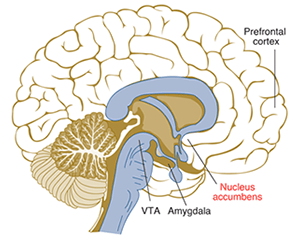
The nucleus [noo-klee-uhs] accumbens [uh-cum-benz] is a collection of neurons within the striatum, a component of the forebrain (prosencephalon). It is thought to play an important role in reward, pleasure, laughter, addiction, aggression, fear, and the placebo effect.
Each half of the brain has one nucleus accumbens, which, along with the olfactory tubercle collectively form the ventral striatum, which is part of the basal ganglia, part of the cerebrum vital to movement. The nucleus accumbens plays a role in rhythmic timing and is considered to be of central importance to the limbic-motor interface.
read more »
Posted in Drugs, Health, Sex |
Leave a Comment »
June 15, 2011

Kief [keef] (from Arabic, meaning ‘well-being’ or ‘pleasure’) refers to the resin glands (or trichomes) of cannabis which may accumulate in containers or be sifted from loose dry cannabis buds with a mesh kiefing screen or sieve.
Kief contains a much higher concentration of desired psychoactive cannabinoids, such as THC, than other preparations of cannabis buds from which it is derived. Traditionally kief has been pressed and baked into cakes as hashish for convenience in storage and shipping, but can be vaporized or smoked in its powder form.
Posted in Drugs, Language |
Leave a Comment »
June 15, 2011

BC Bud is a generic term for several varieties of potent cannabis grown in the Canadian province of British Columbia. The term has almost become a brand name, especially in California, Oregon, Alaska, Idaho and Washington, to where most of the province’s cannabis is exported.
The United States Drug Enforcement Administration considers BC production to be a major problem, given the porous United States-Canada border, and has launched several major initiatives to cut down on its flow, including collaborative operations targeting marijuana activists such as Marc Emery.
read more »
Posted in Drugs, Money, Politics |
Leave a Comment »
June 7, 2011
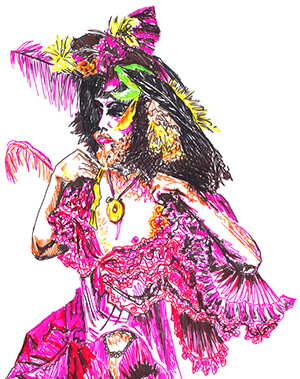
Hibiscus (real name, George Harris, Jr.) (1949–1982) was one of the leaders of the psychedelic gay liberation theater collective group known as ‘The Cockettes’ in early 1970s San Francisco; in today’s theatrical parlance he would be considered to be a ‘Creative Director.’ George Harris was the young man in the turtleneck sweater in the famous picture of the anti-war protester putting flowers into the gun barrels of the MPs during the October 21, 1967 march on the Pentagon in order to ‘levitate’ it. Later as Hibiscus (whose full beard, vintage dresses, make-up and costume jewelry created a defiant look, even by today’s standards) embraced drag and drugs as paths to spiritual liberation, and attracted a group of like-minded hippies who loved show-tunes, dressing up, showing off and dropping acid, and became The Cockettes.
The Cockettes decked themselves out in drag outfits and glitter for a series of legendary midnight musicals at the Palace Theater in San Francisco’s California North Beach neighborhood. They quickly became a ‘must-see’ for San Francisco’s gay community, with their outlandishly decadent productions like ‘Journey to the Center of Uranus,’ ‘Tinsel Tarts in a Hot Coma,’ and ‘Gone with the Showboat to Oklahoma.’ Two notable Cockettes were the disco diva darling Sylvester and the ‘queen of B-movie filth’ Divine, who sang ‘If there’s a crab on Uranus you know you’ve been loved’ while dressed as a psychedelic crab queen. When the Cockettes wanted to start charging for their shows, Hibiscus left, believing all shows should be free, and formed the ‘Angels of Light.’ Hibiscus died of AIDS in 1982.
Posted in Art, Drugs, War |
1 Comment »
June 1, 2011

‘54-46 (That’s My Number)‘ is a song by Fred ‘Toots’ Hibbert, recorded by Toots & the Maytals and originally released on the Beverly’s label in Jamaica and the Pyramid label in the UK. It was one of the first ska songs to receive widespread popularity outside Jamaica and is seen as being one of the defining songs of the reggae genre. It has been anthologized repeatedly and the titles of several reggae anthologies include ’54-46′ in their title.
The lyrics describe Toots’ time in prison for an arrest for possession of marijuana. The song features the same riddim (instrumental accompaniment) to a song as ‘Train to Skaville’ by Toots & the Maytals’ contemporaries The Ethiopians. Hibbert later admitted that 54-46 was not his actual jail number, and that he was not arrested for a crime related to marijuana.
Posted in Art, Drugs, Politics |
Leave a Comment »
May 12, 2011

‘Maggot Brain‘ is a song by the band Funkadelic. It appears as the lead track on their 1971 album of the same name. The original recording of the song, over ten minutes long, features little more than a spoken introduction and a much-praised extended guitar solo by Eddie Hazel. Reportedly, ‘Maggot Brain’ was Hazel’s nickname. Other sources say the title is a reference to band leader George Clinton finding his brother’s ‘decomposed dead body, skull cracked, in a Chicago apartment.
According to legend, George Clinton, under the influence of LSD, told Eddie Hazel during the recording session to imagine he had been told his mother was dead, but then learned that it was not true. The result was the 10-minute guitar solo for which Hazel is most fondly remembered by many music critics and fans. Though several other musicians began the track playing, Clinton soon realized the power of Hazel’s solo and faded them out so that the focus would be on Hazel’s guitar. The entire track was recorded in one take. The solo is mostly played in a pentatonic minor scale in the key of E over another guitar track of a simple arpeggio. Hazel’s solo was played through a fuzzbox (distortion pedal) and a Crybaby Wah wah pedal; some sections of the song utilize a delay effect.
Posted in Art, Drugs |
Leave a Comment »
May 4, 2011

The Elite Squad (Portuguese: Tropa de Elite) is a 2007 Brazilian film directed by José Padilha. The film is a semi-fictional account of the BOPE (Portuguese: Batalhão de Operações Policiais Especiais), the Special Police Operations Battalion of the Rio de Janeiro Military Police.
The script was written by Bráulio Mantovani, based on the book ‘Elite da Tropa’ by sociologist Luiz Eduardo Soares and two former BOPE captains, André Batista and Rodrigo Pimentel. When the first version of the film leaked, it caused a major controversy for its portrayal of Captain Nascimento’s unpunished police brutality in slums; some saw it as glamourizing police violence.
Posted in Art, Drugs, War |
Leave a Comment »
April 29, 2011

A Brompton cocktail is an elixir meant for use as a pain suppressant. Made from morphine (or heroin), cocaine, highly-pure ethyl alcohol (some recipes specify gin), and sometimes with chlorpromazine (Thorazine) to counteract nausea, it was given to terminally-ill individuals (especially cancer patients) to relieve pain and promote sociability near death.
A common formulation included ‘a variable amount of morphine, 10 mg of cocaine, 2.5 mL of 98% ethyl alcohol, 5 mL of syrup BP and a variable amount of chloroform water.’
read more »
Posted in Death, Drugs, Health |
Leave a Comment »
April 25, 2011
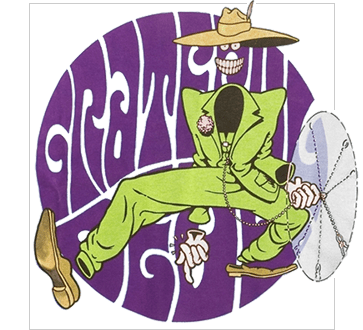
Shakedown street is the area of a Jam Band (e.g. Phish, Widespread Panic) parking lot where the vending takes place. It is named after the Grateful Dead song of the same name and has been popular since the early 1980s. In the Deadhead community, and other likeminded musical scenes, an interesting tailgating culture evolved. More than just a party for fans, it is a way for the faithful to sell wares which in turn fund their tickets and gas to the next concert in order to spend weeks, months, or even entire tours on the road.
Along with the more traditional fare, there is a large selection of vegetarian food such as egg rolls, burritos, pizza, and falafel. Certain illicit foods like hash brownies and ‘ganja gooballs’ are also often found among the foods in the parking lots. Other products available for the tailgaters include handmade jewellery, bumper stickers, t-shirts, or drug paraphernalia.
Posted in Drugs, Food, Money |
Leave a Comment »
April 20, 2011

Oaksterdam is a cultural district on the north end of downtown Oakland, California, where medical cannabis in a variety of competitively priced smokeable and edible preparations is available for purchase in multiple cafes, clubs, and patient dispensaries. Since 2005, cannabis has been legally available to patients with patient identification and physician recommendation at a dispensary in the neighborhood, one of Oakland’s four officially licensed dispensaries under the current municipal ordinance.
Measure Z clubs are businesses that sell cannabis to people over the age of 18. One private club in Oaksterdam sells cannabis and food containing cannabis to adults who do not hold valid physician recommendations for medical marijuana, which are needed to obtain county-issued patient identification cards in California. One such club is named after Oakland’s Measure Z, a city ballot initiative which makes the private sales, cultivation, and possession of cannabis the lowest police priority and mandates that the City of Oakland tax and regulate cannabis as soon as possible under state law.
Posted in Drugs, Health, Money |
Leave a Comment »



 The Daily Omnivore