March 8, 2011
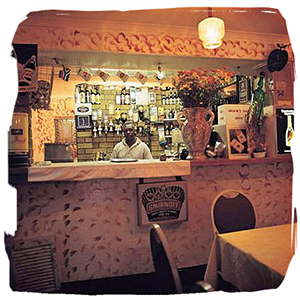
A shebeen [shuh-been] was originally an illicit bar or club where alcoholic beverages were sold without a licence. The term has spread far from its origins in Ireland, to Scotland, Canada, the US, England, Zimbabwe, the Caribbean, Namibia, and South Africa. In South Africa and Zimbabwe, shebeens are most often located in black townships as an alternative to pubs and bars, where under apartheid and the Rhodesian era, black Africans could not enter a pub or bar reserved for whites. Originally, shebeens were operated illegally, selling homebrewed and home-distilled alcohol and providing patrons with a place to meet and discuss political and social issues.
Often, patrons and owners were arrested by the police, though the shebeens were frequently reopened because of their importance in unifying the community and providing a safe place for discussion. During the apartheid era shebeens became a crucial place for activists to meet. They also provided music and dancing, allowing patrons to express themselves culturally, giving rise to the musical genre kwaito. Currently, shebeens are legal in South Africa and have become an integral part of urban culture, serving commercial beers as well as umqombothi, a traditional African beer made from maize and sorghum
Posted in Drugs, Food, World |
Leave a Comment »
March 8, 2011
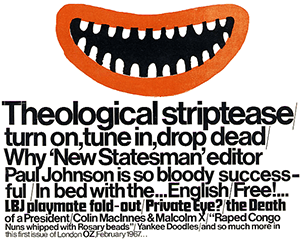
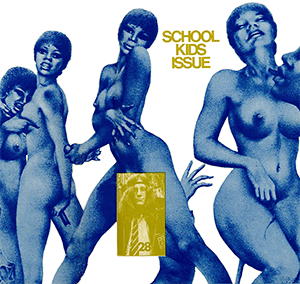
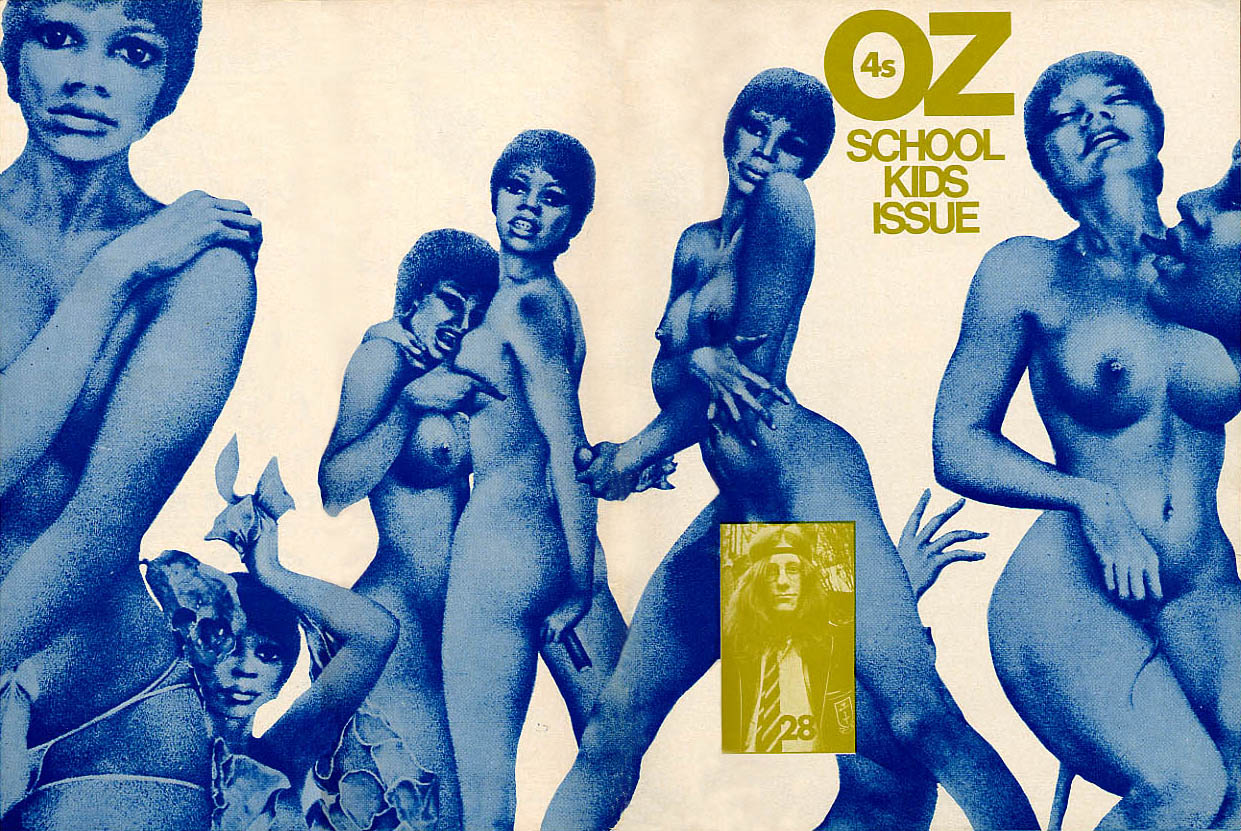
Oz was first published as a satirical humor magazine between 1963 and 1969 in Sydney, Australia and, in its second and better known incarnation, became a ‘psychedelic hippy’ magazine from 1967 to 1973 in London.
Strongly identified as part of the underground press, it was the subject of two celebrated obscenity trials, one in Australia in 1964 and the other in the UK in 1971. On both occasions the magazine’s editors were acquitted on appeal after initially being found guilty and sentenced to harsh jail terms. The central editor throughout the magazine’s life was Richard Neville.
Posted in Art, Drugs, Humor |
Leave a Comment »
March 7, 2011


Hapshash and the Coloured Coat is the name of an influential British graphic design and avant-garde musical partnership between Michael English and Nigel Waymouth, producing psychedelic posters and two albums of underground music. The silkscreen printed posters they created, advertising underground ‘happenings,’ clubs and concerts in London, became so popular at the time that they helped launch the commercial sale of posters as art, initially in fashionable stores such as the Indica Bookshop and Carnaby Street boutiques.
Their posters remain highly sought after: a poster advertising Jimi Hendrix’s 1967 concert at the Fillmore Auditorium in San Francisco, depicting the guitarist as a psychedelic Native American chief with a hunting bow in one hand and a peace pipe in the other, was valued in 2008 at $125,000. Their first album of psychedelic music, produced by a collective in early 1967 and including many famous names, is now seen as being influential on the early works of Amon Düül and other pioneers of German Krautrock, as well as inspiring sections of the Rolling Stones’ Their Satanic Majesties Request album.
Posted in Art, Drugs, Money |
Leave a Comment »
March 7, 2011

Sarsaparilla [sas-puh-ril-uh] is a soft drink, originally made from the Smilax regelii plant, but now often made with artificial flavors. It was popular in the US in the 19th century. According to advertisements for patent medicines of the period, it was considered to be a remedy for skin and blood problems.
In Hollywood westerns from the 1930s to the 1950s, ordering sarsaparilla in a saloon (instead of whiskey) is often met with mockery by the manly cowboys nearby. Sarsaparilla drinks feature widely in American popular culture, particularly in works related to the American West. In the 1957-1961 ABC western television series, ‘Sugarfoot,’ the title character, Tom Brewster, played by Will Hutchins, is a teetotaler who orders sarsaparilla ‘with a dash of cherry’ whenever he enters a saloon.
read more »
Posted in Drugs, Food, Health |
Leave a Comment »
March 7, 2011

Spruce beer is a beverage flavored with the buds, needles, or essence of spruce trees. Spruce beer can refer to either alcoholic or non-alcoholic beverages. A number of flavors are associated with spruce-flavored beverages, ranging from floral, citrusy, and fruity to cola-like flavors to resinous and piney. This diversity in flavor likely comes from the choice of spruce species, the season in which the needles are harvested, and the manner of preparation.
The fresh shoots of many spruces and pines are a natural source of vitamin C. Captain Cook made alcoholic sugar-based spruce beer during his sea voyages in order to prevent scurvy in his crew. Though spruce has sometimes been used as a flavoring ingredient in beer, such as Alba Scots Pine Ale,[and the Alaskan Brewing Company’s Winter Ale, the only beer termed ‘spruce beer’ is Wigram Brewing Company’ Spruce Beer, which is based on Captain Cooks first beer brewed in New Zealand in 1773.
Posted in Drugs, Food, Health |
Leave a Comment »
March 7, 2011

Root beer is a carbonated, sweetened beverage, originally made using the root of a sassafras plant (or the bark of a sassafras tree) as the primary flavor. Root beer, popularized in North America, comes in two forms: alcoholic and soft drink. The historical root beer provided a drink with a very low alcohol content, like a small or ‘near beer’. Although roots are used as the source of many soft drinks in many countries throughout the world (and even alcoholic beverages/beers), the name root beer is rarely used outside North America, Britain, Ireland and the Philippines. Most other countries have their own indigenous versions of root-based beverages and small beers but with different names.
There are hundreds of root beer brands in the United States, and there is no standardized recipe. The primary ingredient, artificial sassafras flavoring, is complemented with other flavors, common ones being vanilla, wintergreen, cherry tree bark, licorice root, sarsaparilla root, nutmeg, acacia, anise, molasses, cinnamon, clove and honey. Homemade root beer is usually made from concentrate, though it can also be made from actual herbs and roots. Both alcoholic and non-alcoholic root beers have a thick and foamy head when poured, often enhanced by the addition of yucca extract.
Posted in Drugs, Food, Money |
Leave a Comment »
March 3, 2011

Seattle Hempfest is an annual event in Seattle, Washington, the world’s largest annual gathering advocating decriminalization of marijuana. Founded in 1991 as the Washington Hemp Expo (attended by 500 people), it has grown into a 2-day annual political rally, concert, and arts and crafts fair with attendance typically over 250,000. Speakers have included Seattle city council member Nick Licata, actor/activist Woody Harrelson, travel writer and TV host Rick Steves, and former chief of the Seattle Police Department Norm Stamper.
Sixty people were cited for illegal marijuana use at the 1997 Hempfest, and about twenty were arrested the following year. Eventually Hempfest and the police reached a modus vivendi: there was only one arrest in 2001. The political context surrounding marijuana in Seattle and Washington has changed considerably over the years. Washington legalized medical marijuana in 1998. In 2003, Seattle passed an initiative that made adult personal use marijuana offenses the city’s lowest law enforcement priority.
Posted in Art, Drugs, Politics |
Leave a Comment »
March 3, 2011

The National Organization for the Reform of Marijuana Laws (NORML) is an American non-profit organization based in Washington, DC whose aim is to move public opinion sufficiently to achieve the legalization of non-medical marijuana in the United States so that the responsible use of cannabis by adults is no longer subject to penalty.
The organization was founded in 1970 by Keith Stroup, funded by $5,000 from the Playboy Foundation. Since then, it has played a central role in the cannabis decriminalization movement.
read more »
Posted in Drugs, Money, Politics |
Leave a Comment »
February 24, 2011

The Marula is a medium-sized dioecious tree, indigenous to Africa. The fruits are used in the liqueur Amarula. The distribution of this species throughout Africa has followed the Bantu people in their migrations, as it has been an important item in their diet since time immemorial. When ripe, the fruits have a light yellow skin, with white flesh, rich in vitamin C, are succulent, tart with a strong and distinctive flavor.
The marula fruit is also eaten by various animals in Southern Africa. In the movie ‘Animals Are Beautiful People’ by Jamie Uys, released in 1974, some scenes portray elephants, warthogs and monkeys becoming intoxicated from eating fermented marula fruit. Later research showed that these scenes were improbable and, in all probability, staged. Elephants would need a huge amount of fermented marulas to have any effect on them, and the amount of water drunk by elephants each day would also dilute the effect.
Posted in Drugs, Food, Science |
Leave a Comment »
February 16, 2011

A zombie walk is an organized public gathering of people who dress up in zombie costumes. Usually taking place in an urban centre, the participants make their way around the city streets and through shopping malls to a public space (or a series of taverns in the case of a zombie pub crawl) in a somewhat orderly fashion.
read more »
Posted in Art, Drugs, Humor |
Leave a Comment »
February 10, 2011
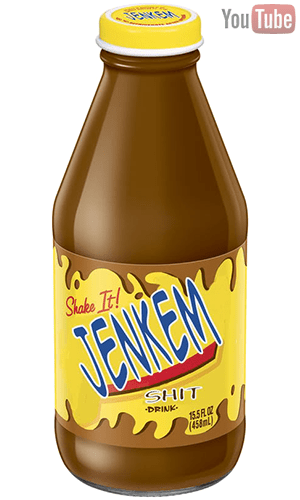
Jenkem is an alleged hallucinogenic recreational drug composed of noxious gas formed from fermented sewage. In the mid to late 1990s, several reports stated that Jenkem was being used by Zambian street children. The surfacing of the drug, or rumors of its existence, has caused at least one US municipality to amend its city ordinance regarding substances that cannot be legally inhaled to include organic substances.
Posted in Drugs, Humor |
1 Comment »
February 3, 2011

Endorphins (‘endogenous morphine’) are proteins that are similar to opioids. They are hormones made by the endocrine system of many vertebrates. When they are released into the body, they cause a sense of well-being. They also act as analgesics, and are sometimes named ‘natural pain killers.’ Endorphins were first found in 1970s. They are produced by the pituitary gland and the hypothalamus during exercise, excitement, pain, consumption of spicy food, love and orgasm, and they resemble the opiates in their abilities to produce analgesia and a feeling of well-being. The sudden release of endorphins during strenuous exercise is sometimes called a ‘runner’s high.’
The term endorphin rush has been adopted in popular speech to refer to feelings of exhilaration brought on by pain, danger, or other forms of stress, supposedly due to the influence of endorphins. When a nerve impulse reaches the spinal cord, endorphins are released which prevent nerve cells from releasing more pain signals. Immediately after injury, endorphins allow animals to feel a sense of power and control over themselves that allows them to persist with activity for an extended time.
Posted in Drugs, Health, Science |
Leave a Comment »




 The Daily Omnivore