September 4, 2013
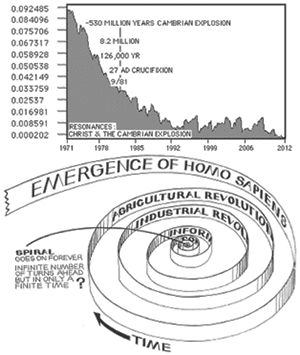
Novelty theory was developed by American psychonaut Terence McKenna to explain the increasing complexity of reality; according to the theory, the universe has a teleological attractor at the end of time that increases interconnectedness. McKenna predicted that a singularity of infinite complexity would be reached in 2012 at which point anything and everything imaginable would occur simultaneously. He referred to this as the Eschaton. He conceived this idea over several years in the early to mid-1970s while using psilocybin mushrooms and DMT.
McKenna viewed the universe as a swarm of matter waves, spiralling down the gradient of their synergetic (energetically favorable) constructive interference. He saw the universe as being ‘pulled from the future toward a goal that is as inevitable as a marble reaching the bottom of a bowl when you release it up near the rim…it comes to rest at the lowest energy state, which is the bottom of the bowl. That’s precisely my model of human history.’
read more »
Posted in Drugs, Philosophy |
Leave a Comment »
August 20, 2013
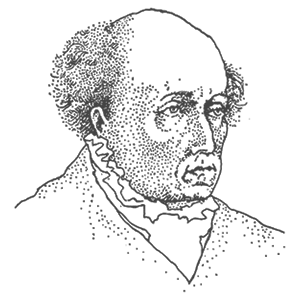
The dose makes the poison, a principle of toxicology, was first expressed by German-Swiss Renaissance physician Paracelsus. It means that a substance can produce the harmful effect associated with its toxic properties only if it reaches a susceptible biological system within the body in a high enough concentration (dose).
The principle relies on the finding that all chemicals—even water and oxygen—can be toxic if too much is eaten, drunk, or absorbed. ‘The toxicity of any particular chemical depends on many factors, including the extent to which it enters an individual’s body.’ This finding provides also the basis for public health standards, which specify maximum acceptable concentrations of various contaminants in food, public drinking water, and the environment.
read more »
Posted in Drugs, Health |
Leave a Comment »
April 30, 2013

Narconon is a Scientology front group that offers purported drug rehabilitation treatment and anti-drug lectures. Both programs promote the ideology of L. Ron Hubbard. Narconon is headquartered in Hollywood and operates several dozen residential centers worldwide, chiefly in the United States and Western Europe. The rehab program has been described as ‘medically unsafe,’ ‘quackery,’ and ‘medical fraud,’ while academic and medical experts have dismissed the educational program as containing ‘factual errors in basic concepts such as physical and mental effects, addiction and even spelling.’
In turn, Narconon has claimed that mainstream medicine is biased against it, and that ‘people who endorse so-called controlled drug use cannot be trusted to review a program advocating totally drug-free living.’ Narconon has said that criticism of its program is ‘bigoted,’ and that its critics are ‘in favor of drug abuse … they are either using drugs or selling drugs,’ while Scientology head David Miscavige attributes criticism to Scientology’s ‘war’ with ‘the mental health field.’
read more »
Posted in Drugs, Philosophy, Politics |
Leave a Comment »
April 19, 2013

Bicycle Day is April 19, 1943; Swiss chemist Albert Hofmann performed a self-experiment to determine the true effects of LSD, intentionally ingesting 250 micrograms of the substance, an amount he predicted to be a threshold dose (an actual threshold dose is 20 micrograms). Less than an hour later, Hofmann experienced sudden and intense changes in perception.
He asked his laboratory assistant to escort him home and, as use of motor vehicles was prohibited because of wartime restrictions, they had to make the journey on a bicycle.
read more »
Posted in Drugs |
Leave a Comment »
April 17, 2013

The Korova Milk Bar (‘korova’ is Russian for ‘cow’) appears in the novel and film ‘A Clockwork Orange’ by Anthony Burgess. It is a twisted version of a milk bar (general store) that serves milk laced with drugs. The novel begins with the droogs (friends) sitting in their favorite hangout, drinking milk-drug cocktails, called ‘milk-plus,’ to hype themselves for the night’s mayhem.
The protagonist and narrator Alex lists some of the (fictitious) ingredients one can request: vellocet (opiate), synthemesc (synthetic mescalines), drencrom (adrenochrome). For another ingredient he advises to, ‘(drink the milk) ‘with knives in it,’ as it ‘would sharpen you up.” By serving milk (instead of alcohol), the bar is able to serve minors. In the film, the bar has furniture in the shape of naked women and the milk is served from their nipples.
Posted in Drugs, Food |
Leave a Comment »
March 24, 2013

Chifir’ is a type of strong tea brewed in Russia. The etymology is uncertain but is thought to come from the word ‘chikhir” meaning a strong Caucasian wine, or a Siberian word for spoiled wine that has become sour and acidic. Chifir’ is typically prepared with either two or three tablespoons of loose tea per person poured on top of the boiled water. It is brewed for 10–15 minutes without stirring – until the leaves drop to the bottom of the cup. Chifir’ drunk without sugar is highly unpleasant; sweets can be held in the mouth before, during or after drinking to soften its bitter taste.
It is similar to Egyptian Sa’idi tea, a somewhat similar beverage (essentially a 1/9-strength recipe, but consumed in larger quantities).
Posted in Drugs, Food, World |
Leave a Comment »
March 11, 2013

Owsley Stanley (1935 – 2011) was a figure of the San Francisco Bay Area counter-culture, playing a pivotal role in the counterculture of the 1960s. As a crafts-person, he became best known simply as ‘Owsley’ – the LSD ‘cook’ (underground chemist). Stanley was the first private individual to manufacture mass quantities of LSD. Between 1965 and 1967, Stanley produced more than 1.25 million doses of LSD.
Under the professional name of ‘Bear,’ he worked with the psychedelic rock band the Grateful Dead’s international fan ‘family.’ Bear was an early soundman for The Grateful Dead, a band he met when Ken Kesey invited them to an Owsley Acid test party. As their sound engineer, Bear frequently recorded live tapes behind his mixing board and helped The Dead become the first performers since Les Paul to custom-develop high-fidelity audio components and sound systems.
read more »
Posted in Drugs, Politics |
1 Comment »
March 10, 2013

Graham Hancock (b. 1950) is a British writer and journalist specializing in unconventional theories involving ancient civilizations, stone monuments or megaliths, altered states of consciousness, ancient myths and astronomical/astrological data from the past.
One of the main themes running through many of his books is the possible global connection with a ‘mother culture’ from which he believes all ancient historical civilizations sprang. Although his books have sold more than five million copies worldwide and have been translated into twenty-seven languages, his methods and conclusions have found little support among academics, his work being labelled ‘pseudoarchaeology.’
read more »
Posted in Drugs, Philosophy |
Leave a Comment »
March 10, 2013

Pharming is a portmanteau of farming and ‘pharmaceutical’ and refers to the use of genetic engineering to insert genes that code for useful pharmaceuticals into host animals or plants that would otherwise not express those genes, thus creating a genetically modified organism (GMO).
The products of pharming are typically recombinant proteins (or their metabolic products), which are proteins that result from the expression of recombinant DNA (molecular cloning in a laboratory brings together genetic material from multiple sources, creating sequences that would not otherwise be found in biological organisms). Recombinant proteins are most commonly produced using bacteria or yeast in a bioreactor.
read more »
Posted in Drugs, Health, Science |
Leave a Comment »
February 13, 2013
A head shop is a retail outlet specializing in drug paraphernalia, as well as counterculture art, magazines, music, clothing, and home decor.
Products available in these outlets typically include pipes; pipe screens; bongs (often called water pipes in countries with drug paraphernalia laws); roach clips; vaporizers; rolling papers; rolling machines; scales or balances; blacklight-responsive posters; incense; cigarette lighters; legal drugs such as whipped-cream chargers (which contain nitrous oxide) and Salvia divinorum (illegal in some countries and US states); and products such as the Whizzinator claiming to give false negative results for drug urinalysis tests.
read more »
Posted in Drugs, Money |
Leave a Comment »
February 12, 2013
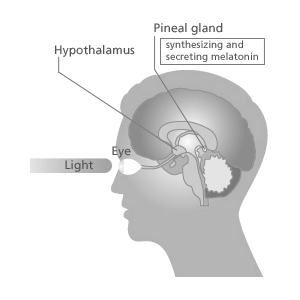
Melatonin [mel-uh-toh-nin] is a naturally occurring hormone found in animals, plants, and microbes. In animals, circulating levels of melatonin vary in a daily cycle, thereby allowing the entrainment of the circadian rhythms of several biological functions.
Many biological effects of melatonin are produced through activation of melatonin receptors, while others are due to its role as a pervasive and powerful antioxidant (a molecule that neutralizes free radicals), with a particular role in the protection of nuclear and mitochondrial DNA. Products containing melatonin have been available over-the-counter in the United States since the mid-1990s. In many other countries, the sale of this neurohormone is not permitted or requires a prescription.
read more »
Posted in Drugs, Health, Science |
3 Comments »
February 10, 2013

Naked Lunch is the 1991 film adaptation written and directed by David Cronenberg, of William S. Burroughs’ novel of the same name. Rather than attempting a straight adaptation, Cronenberg took a few elements from the book and combined them with elements of Burroughs’ life, creating a hybrid film about the writing of the book rather than the book itself. Peter Weller starred as William Lee, the pseudonym Burroughs used when he wrote ‘Junkie.’
Lee is an exterminator who finds that his wife Joan is stealing his insecticide (pyrethrum) to use as a drug. When Lee is arrested by the police, he begins hallucinating because of ‘bug powder’ exposure. He believes he is a secret agent whose controller (a giant bug) assigns him the mission of killing Joan, who is an agent of an organization called Interzone Incorporated. Lee dismisses the bug and its instructions and kills it. He returns home to find Joan sleeping with Hank, one of his writer friends. Shortly afterwards, he accidentally kills her while attempting to shoot a drinking glass off her head in imitation of William Tell.
read more »
Posted in Art, Drugs, Language |
Leave a Comment »


 The Daily Omnivore