February 10, 2013

Naked Lunch is a novel by William S. Burroughs originally published in 1959. The book is structured as a series of loosely-connected vignettes. Burroughs stated that the chapters are intended to be read in any order.
The reader follows the narration of junkie William Lee, who takes on various aliases, from the US to Mexico, eventually to Tangier and the dreamlike Interzone (international zone, a type of extraterritoriality governed by international law). The vignettes (called ‘routines’) are drawn from Burroughs’ own experience in these places, and his addiction to drugs (heroin, morphine, and while in Tangier, ‘Majoun’—a strong marijuana confection—as well as a German opioid, brand name Eukodol, of which he wrote frequently).
read more »
Posted in Drugs, Language, Politics |
Leave a Comment »
February 2, 2013
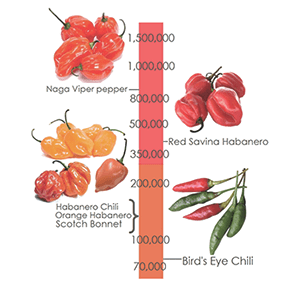
Capsaicin [kap-sey-uh-sin] is a chemical substance. It is responsible for the sense of hotness found in chile peppers. In mammals, it causes a sensation of burning of the tissues it comes in contact with. Capsicain, and other similar substances called capsaicinoids are produced by chile peppers and other plants, probably as deterrents against certain herbivores and fungi. Pure capsaicin is a hydrophobic, colorless, odorless, crystalline to waxy compound.
Capsaicinoids are added to food to make it have a hot taste, but it can also be used as an analgesic (painkiller). Such painkillers are often directly used on the skin. The burning of the capsaicin masks the real pain. Capsicaicin is also the main agent in pepper spray. Capsicain is not soluble in water; it binds to oil and fat. Soap can be used to wash it off. In 2006, it was discovered that the venom of a certain tarantula species activates the same pathway of pain as is activated by capsaicin, the first demonstrated case of such a shared pathway in both plant and animal anti-mammal defense.
read more »
Posted in Drugs, Food |
Leave a Comment »
January 22, 2013
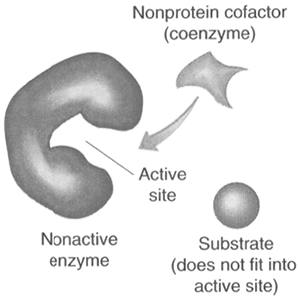
Coenzyme Q10 is an oil-soluble, vitamin-like substance present in most eukaryotic cells, primarily in the mitochondria. Enzymes are protein molecules which work as catalysts (accelerating chemical reactions); coenzymes are are non-protein compounds bound to an enzyme.
They are sometimes referred to as ‘helper molecules.’ CoQ10 aids in cellular respiration (the conversion of sugar into usable energy). It is a component of the electron transport chain and participates in aerobic respiration, generating energy in the form of ATP. Ninety-five percent of the human body’s energy is generated this way. Therefore, those organs with the highest energy requirements—such as the heart, liver and kidney—have the highest CoQ10 concentrations.
read more »
Posted in Drugs, Food, Health |
Leave a Comment »
January 2, 2013
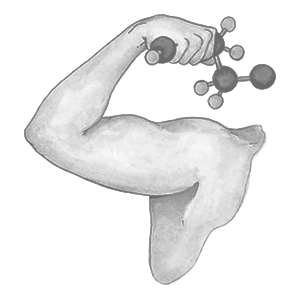
Conjugated [kon-juh-gey-tid] linoleic [li-noh-lee-ik] acids (CLA) are a family acids found mostly in the meat and dairy products derived from ruminants. CLAs can be either cis- or trans-fats.
In 1979, researchers from the University of Wisconsin applied a beef extract to mice skin. The mice were then exposed to a strong carcinogen. When the researchers counted the number of tumors developed by the mice 16 weeks later, they found to their surprise that the mice exposed to the beef extract had 20% fewer tumors. The identity of this anticarcinogen was not discovered until almost a decade later, in 1987.
read more »
Posted in Drugs, Food, Health |
Leave a Comment »
December 19, 2012

The Edgewood Arsenal experiments (also known as Project 112) are said to be related to or part of CIA mind-control programs after World War II, such as MKULTRA. Journalist Linda Hunt, citing records from the U.S. National Archives, revealed that eight German scientists worked at Edgewood, under Project Paperclip (the US program recruiting Nazi scientists after the war).
The experiments were performed at the Edgewood Arsenal, northeast of Baltimore, Maryland, and involved hallucinogens such LSD, THC, and BZ, in addition to biological and chemical agents. Experiments on human subjects utilizing such agents goes back to at least World War I. In the mid-1970s, in the wake of many health claims made from exposure to such agents, including psychotropic drugs administered in later experiments, the U.S. Congress began investigations of misuse of such experiments, and inadequate informed consent given by the soldiers and civilians involved.
Posted in Drugs, Health, War |
Leave a Comment »
December 6, 2012

Cannabinoids [kuh-nab-uh-noid] are a class of diverse chemical compounds that activate cannabinoid receptors (molecules on the surface of a cells in the brain and throughout the body, which receive chemical signals). After the receptor is engaged, multiple intracellular signal pathways are activated; researchers are still unraveling the precise mechanism at work.
Cannabinoid receptors are activated by endocannabinoids (produced naturally in the body), phytocannabinoids (found in plants), and synthetic cannabinoids (produced chemically in a lab). The most notable cannabinoid is the phytocannabinoid tetrahydrocannabinol (THC), the primary psychoactive compound of cannabis. However, there are known to exist dozens of other cannabinoids with varied effects. Before the 1980s, it was often speculated that cannabinoids produced their physiological and behavioral effects via nonspecific interaction with cell membranes, instead of interacting with specific membrane-bound receptors.
read more »
Posted in Drugs, Health, Science |
Leave a Comment »
November 29, 2012

A detection dog or sniffer dog is a dog that is trained to and works at using its senses (almost always the sense of smell) to detect substances such as explosives, illegal drugs, or blood. Hunting dogs that search for game and search dogs that search for missing humans are generally not considered detection dogs.
There is some overlap, as in the case of human remains detection dogs (sometimes called cadaver dogs), trained to detect human remains. They are also used for drug raids to find where the drugs are. In the state of California, dogs are trained to detect the Quagga Mussel on boats at public boat ramps, as it is a invasive species.
read more »
Posted in Drugs, Politics, War |
Leave a Comment »
November 29, 2012
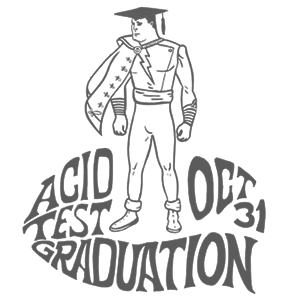
The Merry Pranksters was a cohort that formed around American author Ken Kesey in 1964 and sometimes lived communally at his homes in California and Oregon. The group promoted the use of psychedelic drugs. Their motto was ‘Never Trust a Prankster.’
Kesey and the Merry Pranksters are noted for the sociological significance of a lengthy road trip they took in the summer of 1964, traveling across the United States in a psychedelic painted school bus enigmatically and variably labeled ‘Further.’ Their early escapades were chronicled by Tom Wolfe in ‘The Electric Kool-Aid Acid Test.’ Wolfe also documents a notorious 1966 trip on Further from Mexico through Houston, stopping to visit Kesey’s friend, novelist Larry McMurtry. Kesey was in flight from a drug charge at the time.
read more »
Posted in Drugs, Humor |
Leave a Comment »
November 15, 2012


An entheogen [en-theo-gen] (‘generating the divine within’) is a psychoactive substance used in a religious, shamanic, or spiritual context. Historically, entheogens were mostly derived from plant sources and have been used in a variety of traditional religious contexts.
Entheogens can supplement many diverse practices for healing, transcendence, and revelation, including: meditation, psychonautics, art projects, and psychedelic therapy. Entheogens have been used in a ritualized context for thousands of years. Examples of traditional entheogens include: peyote, psilocybin mushrooms, uncured tobacco, cannabis, ayahuasca, salvia, iboga, morning glory, and Amanita muscaria mushrooms.
read more »
Posted in Drugs, Philosophy, World |
Leave a Comment »
November 8, 2012
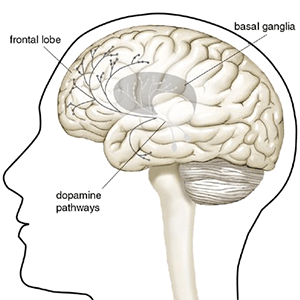
The mesolimbic pathway, sometimes referred to as the reward pathway, is a dopaminergic pathway in the brain. The pathway connects the ventral tegmental area, which is located in the midbrain, to the nucleus accumbens and olfactory tubercle, which are located in the ventral striatum.
The release of dopamine from the mesolimbic pathway into the nucleus accumbens regulates incentive salience (i.e., motivation and desire) for rewarding stimuli and facilitates reinforcement and reward-related motor function learning; it may also play a role in the subjective perception of pleasure. The dysregulation of the mesolimbic pathway and its output neurons in the nucleus accumbens plays a significant role in the development and maintenance of an addiction.
read more »
Posted in Drugs, Health, Science |
1 Comment »
November 8, 2012

Sensitization [sen-si-tuh-zey-shuhn] is an example of non-associative learning (learning involving exposure to a single event) in which the progressive amplification of a response follows repeated administrations of a stimulus. An everyday example of this mechanism is a warm sensation followed by pain caused by constantly rubbing an arm. The pain is the result of the progressively amplified response of the nerve endings.
Sensitization is thought to underlie both adaptive as well as maladaptive learning processes in the organism. Sensitization refers to the process by which a cellular receptor becomes more likely to respond to a stimulus (more efficient). There are a several of different types of sensitization: long-term potentiation, kindling, central sensitization, and drug sensitization.
read more »
Posted in Drugs, Health, Science |
1 Comment »
November 8, 2012
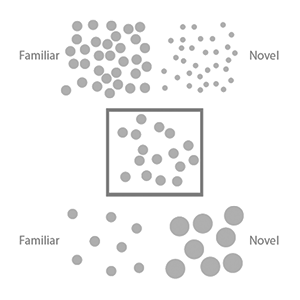
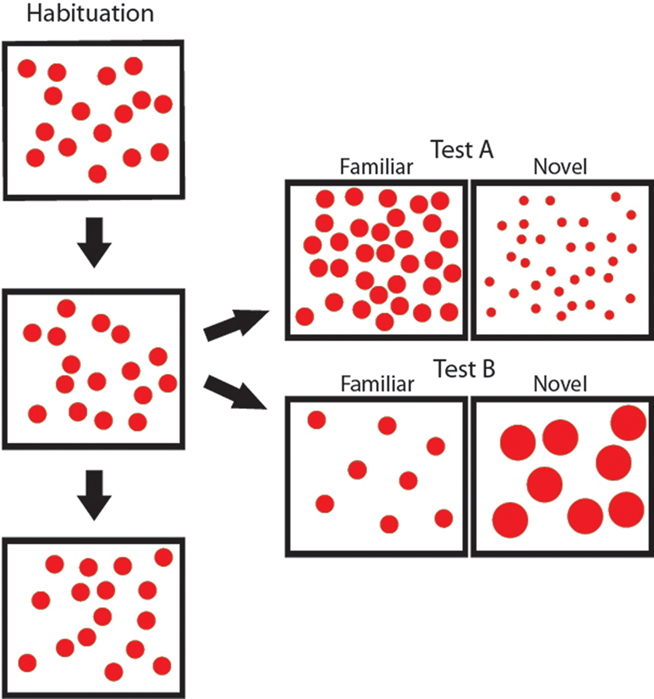
Habituation [huh-bich-oo-ey-shuhn] occurs when an animal responds less to repeated stimuli. It is a primitive kind of learning and a basic process of biological systems. Animals do not need conscious motivation or awareness for habituation to occur; it enables them to distinguish meaningful information from background stimuli. Habituation occurs in all animals, as well as in some large protozoans. The decrease in responding is specific to the habituated stimulus.
For example, if one was habituated to the taste of lemon, their responding would increase significantly when presented with the taste of lime (stimulus discrimination). Two factors that can influence habituation include the time between each stimulus, and the length of time the stimulus is presented. Shorter intervals and longer durations increase habituation, and vice versa.
read more »
Posted in Drugs, Health, Science |
Leave a Comment »


 The Daily Omnivore