October 28, 2012
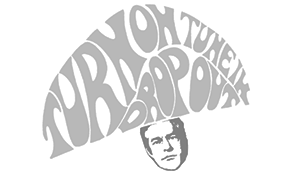

Psychedelia [sahy-ki-deel-yuh] is a name given to the subculture of people who use psychedelic drugs, and a style of psychedelic artwork and psychedelic music derived from the experience of altered consciousness that uses highly distorted and surreal visuals, sound effects and reverberation, and bright colors and full spectrums and animation (including cartoons) to evoke and convey to a viewer or listener the artist’s experience while using such drugs.
A psychedelic experience is characterized by the striking perception of aspects of one’s mind previously unknown, or by the creative exuberance of the mind liberated from its ostensibly ordinary fetters.
read more »
Posted in Art, Drugs, Language |
Leave a Comment »
October 24, 2012

Harm reduction refers to a range of public health policies designed to reduce the harmful consequences associated with human behaviors, even if those behaviors are risky or illegal. Examples of behaviors targeted for harm reduction policies include recreational drug use and prostitution. Criticism of harm reduction typically centers on concerns that tolerating risky or illegal behavior sends a message to the community that these behaviors are acceptable.
In the case of recreational drug use, harm reduction is put forward as a useful perspective alongside the more conventional approaches of demand and supply reduction. Many advocates argue that prohibitionist laws criminalize people for suffering from a disease and cause harm, for example by obliging drug addicts to obtain drugs of unknown purity from unreliable criminal sources at high prices, increasing the risk of overdose and death.
read more »
Posted in Drugs, Politics, Sex |
Leave a Comment »
October 23, 2012

The eight-circuit model of consciousness is a transhuman (an intermediary form between the human and a hypothetical posthuman) theory proposed by Timothy Leary and expanded on by Robert Anton Wilson and Antero Alli. The model describes eight circuits of information (eight ‘brains’) that operate within the human nervous system.
Each circuit is concerned with a different sphere of activity. The lower four, the ‘larval circuits,’ deal with normal psychology, while the upper four, the ‘stellar circuits,’ deal with psychic, mystical, enlightened and psychedelic states of mind.
read more »
Posted in Drugs, Health, Philosophy |
Leave a Comment »
October 23, 2012

Mind at Large is a concept from ‘The Doors of Perception’ and ‘Heaven and Hell’ by Aldous Huxley. This philosophy was influenced by the ideas of philosopher and historian C. D. Broad. Psychedelic drugs are thought to disable filters which block or suppress signals related to mundane functions from reaching the conscious mind.
In this book, Huxley explores the idea that the human mind filters reality, partly because handling the details of all of the impressions and images coming in would be unbearable, partly because it has been taught to do so. He believes that psychotropic drugs can partly remove this filter, which leaves the drug user exposed to ‘Mind at Large.’
read more »
Posted in Drugs, Philosophy |
1 Comment »
October 23, 2012

Hallucinogens [huh-loo-suh-nuh-juhns] are drugs which can cause hallucinations (seeing, hearing, or otherwise perceiving things that are not real). They are a general group of pharmacological agents that can be divided into three broad categories: psychedelics (drugs with perception-altering effects), dissociatives (drugs that produce feelings of detachment – dissociation – from the environment and self), and deliriants (drugs that induce a state of delirium in the user).
These classes of psychoactive drugs have in common that they can cause subjective changes in perception, thought, emotion and consciousness. Unlike other psychoactive drugs, such as stimulants and opioids, these drugs do not merely amplify familiar states of mind, but rather induce experiences that are qualitatively different from those of ordinary consciousness. These experiences are often compared to non-ordinary forms of consciousness such as trance, meditation, dreams, or insanity.
read more »
Posted in Drugs, Health, Philosophy |
Leave a Comment »
October 23, 2012


Psychedelic therapy refers to therapeutic practices involving the use of psychedelic drugs, particularly serotonergic psychedelics such as LSD, psilocybin, DMT, and 2C-B. As an alternative to synonyms such as ‘hallucinogen,’ ‘entheogen,’ ‘psychotomimetic’ and other functionally constructed names, the use of the term ‘psychedelic’ (‘mind-manifesting’) emphasizes that those who use these drugs as part of a therapeutic practice believe these drugs can facilitate beneficial exploration of the psyche.
Proponents of psychedelic therapy also believe psychedelics enhance or unlock key psychoanalytic abilities, and so make it easier for conventional psychotherapy to take place. Psychedelic therapy, in the broadest possible sense of the term, undoubtedly dates from prehistoric knowledge of hallucinogenic plants. Though usually viewed as predominantly spiritual in nature, elements of psychotherapeutic practice can be recognized in the entheogenic or shamanic rituals of many cultures. Shamans have historically been well known throughout the world to mix two or more substances to produce synergistic effects.
read more »
Posted in Drugs, Health, Politics |
Leave a Comment »
October 22, 2012
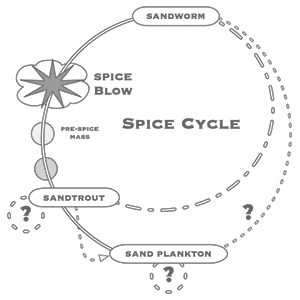
Melange [mey-lahnj] from French ‘mélange’ (‘set of diverse elements’) – also called the ‘spice’ – is the name of the fictional drug central to the ‘Dune’ series of science fiction novels by Frank Herbert, and derivative works.
In the series, the most essential and valuable commodity in the universe is melange, a geriatric drug that gives the user a longer life span, greater vitality, and heightened awareness; it can also unlock prescience (foreknowledge of events) in some humans, depending upon the dosage and the consumer’s physiology. This prescience-enhancing property makes safe and accurate interstellar travel possible. Melange comes with a steep price, however: it is addictive, and withdrawal is fatal.
read more »
Posted in Drugs, Food, Language |
Leave a Comment »
October 22, 2012

The Gin Craze was a period in the first half of the 18th century when the consumption of gin increased rapidly in Great Britain, especially in London. Many people overconsumed and the city had a virtual epidemic of extreme drunkenness; this provoked moral outrage and a legislative backlash that some compare to the modern drug wars.
Parliament passed five major Acts, in 1729, 1736, 1743, 1747 and 1751, designed to control the consumption of gin. Though many similar drinks were available, and alcohol consumption was considerable at all levels of society, it was gin (otherwise known as ‘Mother’s Ruin’ or ‘Madam Geneva,’ a misspelling of the original drink called ‘jenever’) which caused the greatest public concern.
read more »
Posted in Drugs, Money, Politics |
Leave a Comment »
October 18, 2012
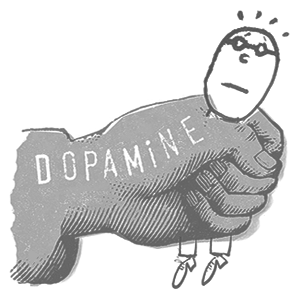
A reward is a appetitive stimulus given to a human or some other animal to alter its behavior. Rewards typically serve as a reinforcers, something that, when presented after a behavior, causes the probability of that behavior’s occurrence to increase.
Note that just because something is labelled a reward does not necessitate it as a reinforcer. A reward can only be said to be a reinforcer if its delivery has increased the probability of a behavior. Certain neural structures, called the reward system, are critically involved mediating the effects of reinforcement.
read more »
Posted in Drugs, Health, Money |
1 Comment »
October 8, 2012
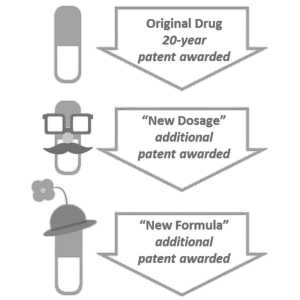
Evergreening refers to a variety of legal and business strategies by which technology producers with patents over products that are about to expire retain rent from them by either taking out new patents or by buying out or frustrating competitors, for longer periods of time than would normally be permissible under the law.
Evergreening is not a formal concept of patent law; it is best understood as a social idea used to refer to the myriad ways in which pharmaceutical patent owners use the law and related regulatory processes to extend their high rent-earning intellectual property rights, otherwise known as intellectual monopoly privileges, particularly over highly profitable ‘blockbuster’ drugs.
read more »
Posted in Drugs, Money, Politics |
Leave a Comment »
October 3, 2012

Alcohol Without Liquid is a process introduced first in Asia and Europe that allows people to take in liquor (distilled spirits) without actually consuming liquid. The machine vaporizes alcohol and mixes it with oxygen, allowing the consumer to breathe in the mixture.
The machine has been dubbed AWOL, a play on the military term AWOL (Absent Without Leave). The AWOL machine produces a very fine alcoholic mist. The continual intake of this mist over a twenty-minute period is the equivalent of taking one shot of distilled spirits. The machine was introduced to the United States in 2004.
read more »
Posted in Drugs, Health, Technology |
1 Comment »
September 11, 2012
Psilocybin [sil-uh-sahy-bin] is a naturally occurring psychedelic compound produced by more than 200 species of mushrooms, collectively known as psilocybin mushrooms. The most potent are members of the genus Psilocybe, such as P. azurescens, P. semilanceata, and P. cyanescens, but psilocybin has also been isolated from about a dozen other genera.
Psilocybin is quickly converted by the body to psilocin, which has mind-altering effects similar to those of LSD and mescaline. The effects generally include euphoria, visual and mental hallucinations, changes in perception, a distorted sense of time, and spiritual experiences, and can include possible adverse reactions such as nausea and panic attacks. Possession of psilocybin-containing mushrooms has been outlawed in most countries, and it has been classified as a scheduled drug by many national drug laws.
read more »
Posted in Drugs, Health, Philosophy |
1 Comment »


 The Daily Omnivore