May 21, 2012

In philosophy, anamnesis [an-am-nee-sis] is a concept in Plato’s epistemological and psychological theory that he develops in his dialogues ‘Meno’ and ‘Phaedo,’ and alludes to in his ‘Phaedrus.’
In ‘Meno,’ Plato’s character (and old teacher) Socrates is challenged by Meno with what has become known as the sophistic paradox, or the paradox of knowledge: ‘And how are you going to search for [the nature of virtue] when you don’t know at all what it is, Socrates? Which of all the things you don’t know will you set up as target for your search? And even if you actually come across it, how will you know that it is that thing which you don’t know?’
read more »
Posted in Death, Education, Philosophy |
Leave a Comment »
May 8, 2012

The Khan Academy is a non-profit educational organization, created in 2006 by American educator Salman Khan (who has three degrees from MIT (a BS in mathematics, a BS in electrical engineering and computer science, and an MS in electrical engineering and computer science), and an MBA from Harvard Business School.
With the stated mission of ‘providing a high quality education to anyone, anywhere,’ the website supplies a free online collection of more than 3,100 micro lectures via video tutorials stored on YouTube teaching mathematics, history, healthcare and medicine, finance, physics, chemistry, biology, astronomy, economics, cosmology, organic chemistry, American civics, art history, microeconomics, and computer science.
read more »
Posted in Education, Language, Money, Technology |
1 Comment »
April 24, 2012

In psychology, fluid and crystallized intelligence (abbreviated Gf and Gc, respectively) are factors of general intelligence originally identified by Raymond Cattell. Concepts of fluid and crystallized intelligence were further developed by Cattell’s disciple John L. Horn. Fluid intelligence or fluid reasoning is the capacity to think logically and solve problems in novel situations, independent of acquired knowledge. It is the ability to analyze novel problems, identify patterns and relationships that underpin these problems, and the extrapolation of these using logic.
It is necessary for all logical problem solving, especially scientific, mathematical and technical problem solving. Fluid reasoning includes inductive reasoning and deductive reasoning. Crystallized intelligence is the ability to use skills, knowledge, and experience. It should not be equated with memory or knowledge, but it does rely on accessing information from long-term memory. Crystallized intelligence is one’s lifetime or intellectual achievement, as demonstrated largely through one’s vocabulary and general knowledge. This improves somewhat with age, as experiences tend to expand one’s knowledge.
read more »
Posted in Education, Games, Science |
Leave a Comment »
April 24, 2012

Automated essay scoring (AES) is the use of specialized computer programs to assign grades to essays written in an educational setting. It is a method of educational assessment and an application of natural language processing. Its objective is to classify a large set of textual entities into a small number of discrete categories, corresponding to the possible grades—for example, the numbers 1 to 6. Therefore, it can be considered a problem of statistical classification.
Several factors have contributed to a growing interest in AES. Among them are cost, accountability, standards, and technology. Rising education costs have led to pressure to hold the educational system accountable for results by imposing standards. The advance of information technology promises to measure educational achievement at reduced cost.
read more »
Posted in Education, Language, Technology |
Leave a Comment »
April 18, 2012

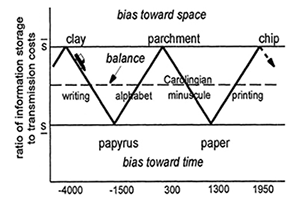
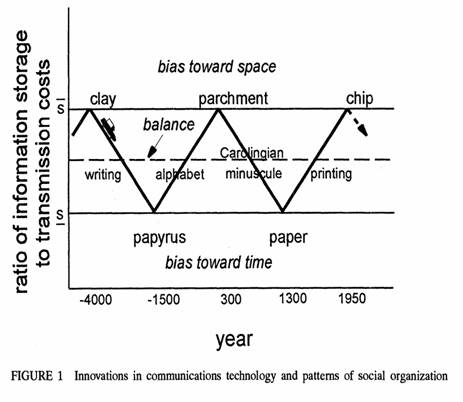
The Canadian economic historian Harold Innis developed the concept of monopolies of knowledge in his later writings on communications; they arise when ruling classes maintain political power through control of key communications technologies. In ancient Egypt, for example, a complex writing system conferred a monopoly of knowledge on literate priests and scribes. Mastering the art of writing and reading required long periods of apprenticeship and instruction, confining knowledge to this powerful class.
This theory suggests that monopolies of knowledge gradually suppress new ways of thinking. Entrenched hierarchies become increasingly rigid and out of touch with social realities. Challenges to elite power are often likely to arise on the margins of society. The arts, for example, are often seen as a means of escape from the sterility of conformist thought.
read more »
Posted in Education, Money, Politics |
Leave a Comment »
April 13, 2012
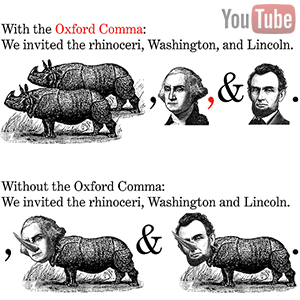
The serial comma (also known as the Oxford comma or Harvard comma) is the comma used immediately before a coordinating conjunction (usually ‘and’ or ‘or’) preceding the final item in a list of three or more items.
For example, a list of three countries can be punctuated as either ‘Portugal, Spain, and France’ (with the serial comma) or as ‘Portugal, Spain and France’ (without the serial comma).
read more »
Posted in Education, Language, World |
1 Comment »
March 25, 2012

The Harvard Lampoon is an undergraduate humor publication founded in 1876. It is the world’s longest continually published humor magazine. It is also the second longest-running English-language humor magazine, after the ‘Yale Record.’ The organization also produces occasional humor books and parodies of national magazines. Much of the organization’s capital is provided by the licensing of the ‘Lampoon’ name to ‘National Lampoon,’ begun by ‘Harvard Lampoon’ graduates in 1970.
The Lampoon is known for its bacchanalian parties, which can result in smashed plates and furniture. Robert K. Hoffman, co-founder of the ‘National Lampoon’ and major donor to the Dallas Museum of Art was a Trustee until his death in 2006, and was declared a Trustee ‘Ad-Infinitum’ a year later. The bone of his pinky finger is said to be encased in a block of lucite in the Harvard Lampoon’s ‘Brainatorium Crypt.’
read more »
Posted in Education, Humor, Language |
Leave a Comment »
March 12, 2012
An opsimath [ahp-se-math] can refer to a person who begins, or continues, to study or learn late in life. Opsimathy was once frowned upon, used as a put down with implications of laziness, and considered less effective by educators than early learning. The emergence of opsimath clubs has demonstrated that opsimathy has shed much of this negative connotation, and that this approach may, in fact, be desirable.
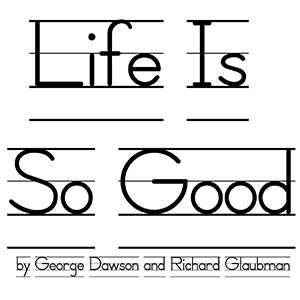
Notable opsimaths include Sir Henry Rawlinson, Grandma Moses, and Cato the Elder who learned Greek only at the age of 80. George Dawson (1898 – 2001) was called ‘America’s favorite poster child for literacy’ after learning to read at the age of 98. His life story, ‘Life Is So Good,’ was published in 2000.
Posted in Education, Language |
Leave a Comment »
March 12, 2012

A polymath [pol-ee-math] (Greek: ‘having learned much’) is a person whose expertise spans a significant number of different subject areas. In less formal terms, a polymath (or polymathic person) may simply be someone who is very knowledgeable. Most ancient scientists were polymaths by today’s standards. The common term Renaissance man is used to describe a person who is well educated or who excels in a wide variety of subjects or fields. The concept emerged from the numerous great thinkers of that era who excelled in the arts and sciences, including Leonardo da Vinci, Michelangelo, Galileo Galilei, Copernicus, and Francis Bacon.
The emergence of these thinkers was likewise attributed to the then rising notion in Renaissance Italy expressed by one of its most accomplished representatives, Leon Battista Alberti (1404–1472): that ‘a man can do all things if he will.’ It embodied the basic tenets of Renaissance humanism, which considered humans empowered, limitless in their capacities for development, and led to the notion that people should embrace all knowledge and develop their capacities as fully as possible. Thus the gifted people of the Renaissance sought to develop skills in all areas of knowledge, in physical development, in social accomplishments, and in the arts. The term has since expanded from original usage and has been applied to other great thinkers before and after the Renaissance such as Aristotle, Johann Goethe, and Isaac Newton.
read more »
Posted in Education, Games, Science |
Leave a Comment »
March 1, 2012

In academic publishing, the least publishable unit (LPU), colloquially ‘publon’ – the smallest measurable quantum of publication, is the minimum amount of information that can generate a publication in a peer-reviewed journal. The term is often used as a joking, ironic, or sometimes derogatory reference to the strategy of pursuing the greatest quantity of publications at the expense of their quality. Publication of the results of research is an essential part of science. The number of publications is sometimes used to assess the work of a scientist and as a basis for distributing research funds. In order to achieve a high rank in such an assessment, there is a trend to split up research results into smaller parts that are published separately, thus increasing the number of publications.
‘Salami publication’ or ‘salami slicing’ is a variant of the smallest-publishable-unit strategy. In salami slicing, data gathered by one research project is separately reported (wholly or in part) in multiple end publications. Salami slicing, apparently named by analogy with the thin slices made from larger pieces of salami meat, is generally considered questionable when not explicitly labeled, as it may lead to the same data being counted multiple times as apparently independent results in aggregate studies.
Posted in Education, Humor, Language, Science |
Leave a Comment »
February 27, 2012
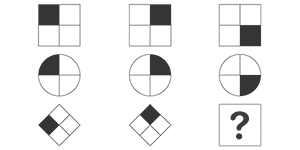
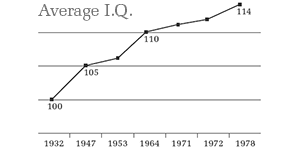
The Flynn effect is the name given to the observed rise in average IQ scores since the beginning of measurements. The rise in most industrialized countries is about three IQ points per decade. In 1984, based political scientist James R. Flynn described the phenomenon, which is named after him.
The rise is mostly due to the test scores of those who scored an IQ below 100. The number of those who are classified as mentally handicapped diminishes from year to year. In contrast, the test scores of those who scored more than 100, does not seem to be affected.
read more »
Posted in Education, Science, World |
Leave a Comment »
February 27, 2012
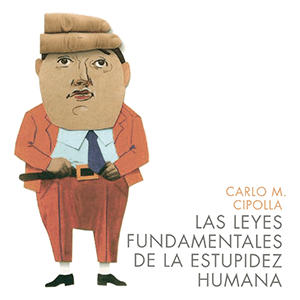
Stupidity is a lack of intelligence, understanding, reason, wit, or sense. It may be innate, assumed, or reactive – ‘being ‘stupid with grief’ as a defence against trauma,’ a state marked with ‘grief and despair…making even simple daily tasks a hardship.’ The root word ‘stupid,’ which can serve as an adjective or noun, comes from the Latin verb ‘stupere,’ for ‘being numb’ or ‘astonished,’ and is related to ‘stupor’ (in Roman culture ”the stupidus of the mimes’ was a sort of professional buffoon – the ‘fall-man,’ the eternal he-who-gets-kicked.’ The word entered the English language in the 16th century; since then, stupidity has become a pejorative appellation for human misdeeds, whether purposeful or accidental, due to absence of mental capacity.
The modern English word ‘stupid’ has a broad range of application, from being slow of mind (indicating a lack of intelligence, care or reason), dullness of feeling or sensation (torpidity, senseless, insensitivity), or lacking interest or point (vexing, exasperating). It can either infer a congenital lack of capacity for reasoning, or a temporary state of daze or slow-mindedness.
read more »
Posted in Education, Health, Humor |
Leave a Comment »


 The Daily Omnivore