February 26, 2012


The wisdom of the crowd is the process of taking into account the collective opinion of a group of individuals rather than a single expert to answer a question. A large group’s aggregated answers to questions involving quantity estimation, general world knowledge, and spatial reasoning has generally been found to be as good as, and often better than, the answer given by any of the individuals within the group.
An intuitive and often-cited explanation for this phenomenon is that there is idiosyncratic noise associated with each individual judgment, and taking the average over a large number of responses will go some way toward canceling the effect of this noise. This process, while not new to the information age, has been pushed into the mainstream spotlight by social information sites such as Wikipedia and Yahoo! Answers, and other web resources that rely on human opinion. In the realm of justice, trial by jury can be understood as wisdom of the crowd, especially when compared to the alternative, trial by a judge, the single expert.
read more »
Posted in Education, Science |
Leave a Comment »
February 13, 2012
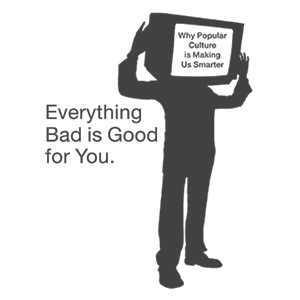
Popular culture studies is the academic discipline studying popular culture from a critical theory perspective. It is generally considered as a combination of communication studies and cultural studies. Following the work of the Frankfurt School, popular culture has come to be taken more seriously as a terrain of academic inquiry and has also helped to change the outlooks of more established disciplines.
Conceptual barriers between so-called high and low culture have broken down, accompanying an explosion in scholarly interest in popular culture, which encompasses such diverse media as comic books, television, and the Internet. Reevaluation of mass culture in the 1970s and 1980s has revealed significant problems with the traditional view of mass culture as degraded and elite culture as uplifting. Divisions between high and low culture have been increasingly seen as political distinctions rather than defensible aesthetic or intellectual ones.
read more »
Posted in Education, Money, Politics |
Leave a Comment »
February 8, 2012

Grigori Perelman (b. 1966) is a Russian mathematician who has made landmark contributions to geometry and topology (the study of geometric deformation). In 1992, Perelman proved the soul conjecture. In 2002, he proved Thurston’s geometrization conjecture. This consequently solved in the affirmative the Poincaré conjecture, posed in 1904, which before its solution was viewed as one of the most important and difficult open problems in topology.
In 2006, Perelman was awarded the Fields Medal, but declined to accept the award or to appear at the congress, stating: ‘I’m not interested in money or fame, I don’t want to be on display like an animal in a zoo.’ In 2010, it was announced that he had met the criteria to receive the first Clay Millennium Prize for resolution of the Poincaré conjecture. He turned down the prize ($1 million), saying that he considers his contribution to proving the Poincaré conjecture to be no greater than that of U.S. mathematician Richard Hamilton.
read more »
Posted in Education, Money, Science |
Leave a Comment »
February 6, 2012
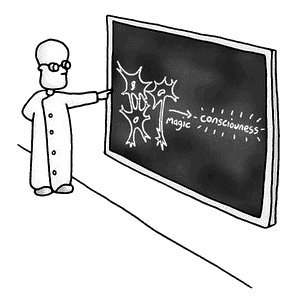
The explanatory gap is the difficulty that physicalist theories have in explaining how physical properties give rise to the way things feel when they are experienced. It is the claim that consciousness and human experiences such as qualia (individual instances of subjective, conscious experience) cannot be fully explained just by identifying the corresponding physical (neural) processes.
Bridging this gap is known as ‘the hard problem.’ The explanatory gap has vexed and intrigued philosophers and AI researchers alike for decades and caused considerable debate.
read more »
Posted in Education, Philosophy, Science |
1 Comment »
January 6, 2012
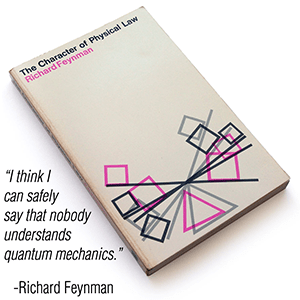
The Latin maxim ignoramus et ignorabimus, meaning ‘we do not know and will not know,’ stood for a position on the limits of scientific knowledge, in the thought of the nineteenth century. It was given credibility by Emil du Bois-Reymond, a German physiologist, in his book ‘On the limits of our understanding of nature,’ published in 1872.
In 1930, mathematician David Hilbert pronounced his disagreement with the maxim in a celebrated address to the Society of German Scientists and Physicians: ‘We must not believe those, who today, with philosophical bearing and deliberative tone, prophesy the fall of culture and accept the ignorabimus. For us there is no ignorabimus, and in my opinion none whatever in natural science. In opposition to the foolish ignorabimus our slogan shall be: Wir müssen wissen — wir werden wissen! (‘We must know — we will know!’).’
read more »
Posted in Education, Philosophy, Science |
1 Comment »
January 6, 2012

Sapere [sap-er-reh] aude [ow-day] is a Latin phrase meaning ‘dare to be wise,’ or more precisely ‘dare to know.’ Originally used by Horace, it is a common motto for universities and other institutions, after becoming closely associated with The Enlightenment by Immanuel Kant in his seminal essay, ‘What is Enlightenment?’
Kant claimed it was the motto for the entire period, and used it to explore his theories of reason in the public sphere. Later, Michel Foucault took up Kant’s formulation in an attempt for a place for the individual in his post-structuralist philosophy and come to terms with the problematic legacy of the Enlightenment.
read more »
Posted in Education, Philosophy, Science |
Leave a Comment »
December 15, 2011

The blue star tattoo legend frequently surfaces in American elementary and middle schools in the form of a flyer that has been photocopied through many generations, which is distributed to parents by concerned school officials. It has also become popular on Internet mailing lists and websites. This legend states that a temporary lick-and-stick tattoo soaked in LSD and made in the form of a blue star (the logo of the Dallas Cowboys is often mentioned), or of popular children’s cartoon characters, such as Mickey Mouse and Bart Simpson, is being distributed to children in the area in order to get them ‘addicted to LSD.’
The legend is present also in Brazil as well as Portugal, at least since the 1970s. Flyers detailing the hoax circulated in the UK during the 1980s and 1990s.
Posted in Drugs, Education |
Leave a Comment »
November 29, 2011

Dwarfs standing on the shoulders of giants (Latin: ‘nanos gigantium humeris insidentes’) is a Western metaphor meaning, ‘One who develops future intellectual pursuits by understanding the research and works created by notable thinkers of the past,’ a contemporary interpretation. However, the metaphor was first recorded in the twelfth century and attributed to Bernard of Chartres. It was famously uttered by seventeenth-century scientist Isaac Newton. In Greek mythology the blind giant Orion carried his servant Cedalion on his shoulders.
‘Bernard of Chartres used to say that we are like dwarfs on the shoulders of giants, so that we can see more than they, and things at a greater distance, not by virtue of any sharpness of sight on our part, or any physical distinction, but because we are carried high and raised up by their giant size.’
read more »
Posted in Education, Philosophy, Science |
1 Comment »
November 25, 2011

Big History is a field of historical study that examines history on large scales across long time frames through a multidisciplinary approach, focusing on both the history of the non-human world and on major adaptations and alterations in the human experience. It arose as a distinct field in the late 1980s and is related to, but distinct from, world history, as the field examines history from the beginning of time to the present day. In some respects, the field is thus similar to the older universal history (the presentation of the history of humankind as a whole, as a coherent unit).
Big history looks at the past on all time scales, from the Big Bang to modernity, seeking out common themes and patterns. It draws on the latest findings from many disciplines, such as biology, astronomy, geology, climatology, prehistory, archeology, anthropology, cosmology, natural history, and population and environmental studies. Big History arose from a desire to go beyond the specialized and self-contained fields that emerged in the 20th century and grasp history as a whole, looking for common themes across multiple time scales in history. Conventionally, the study of history concerns only the period of time since the invention of writing, and is limited to past events relating directly to the human race; yet this only encompasses the past 5,000 years or so and covers only a small fraction of the period of time that humans have existed on Earth, and an even smaller fraction of the age of the universe.
Posted in Education, Science |
Leave a Comment »
November 25, 2011
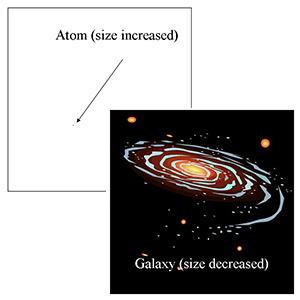
A Short History of Nearly Everything is a popular science book by American author Bill Bryson that explains some areas of science, using a style of language which aims to be more accessible to the general public than many other books dedicated to the subject.
‘A Short History’ deviates from Bryson’s popular travel book genre, instead describing general sciences such as chemistry, paleontology, astronomy, and particle physics.
read more »
Posted in Education, Language, Science |
Leave a Comment »
November 22, 2011
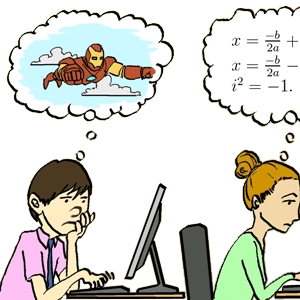
Sluggish Cognitive Tempo (SCT) is an unformalized descriptive term which is used to better identify a subgroup within the formal subgroup ‘ADHD-PI predominantly inattentive.’ SCT is not recognized in any standard medical manuals such as the DSM-IV or the ICD-10. In many ways, those who have an SCT profile have the opposite symptoms of those with classic ADHD: instead of being hyperactive, extroverted, obtrusive, and risk takers, those with SCT are drifting, introspective and daydreamy, and feel as if ‘in the fog’ (although in excited states, an SCT patient behaves very similarly to a traditional ADHD patient). They also don’t have the same risk factors and outcomes.
A key behavioral characteristic of those with SCT symptoms is that they are more likely to appear to be lacking motivation. They lack energy to deal with mundane tasks and will consequently seek things that are mentally stimulating because of their underaroused state, an intense craving for emotional and intellectual stimulation. Those with SCT symptoms show a qualitatively different kind of attention deficit that is more typical of a true information input-output problem, such as memory retrieval and active working memory, and display a wavering ‘up and down’ mental pattern with extremely variable levels of intense thought, hyperactivity, failing memory, and sexual appetite. Conversely, those with the other two subtypes of ADHD are characteristically excessively energetic and have no difficulty processing information.
read more »
Posted in Education, Health |
1 Comment »
November 9, 2011

The Mozart effect can refer to: A set of research results that indicate that listening to Mozart’s music may induce a short-term improvement on the performance of certain kinds of mental tasks known as spatial-temporal reasoning; popularized versions of the theory, which suggest that ‘listening to Mozart makes you smarter, or that early childhood exposure to classical music has a beneficial effect on mental development. The term was first coined by Alfred A. Tomatis who used Mozart’s music as the listening stimulus in his work attempting to cure a variety of disorders.
The approach has been popularized in a book by Don Campbell, and is based on an experiment published in ‘Nature’ suggesting that listening to Mozart temporarily boosted scores on one portion of the IQ test. As a result, the Governor of Georgia, Zell Miller, proposed a budget to provide every child born in Georgia with a CD of classical music. Subsequent studies have had limited success duplicating the Mozart effect, and its validity is debated.
Posted in Art, Education, Health |
Leave a Comment »



 The Daily Omnivore