November 9, 2011
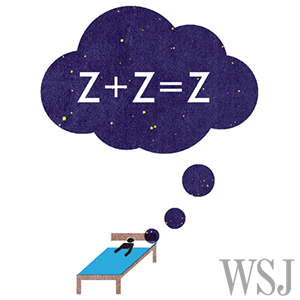
Sleep-learning (also known as hypnopædia [hip-noh-pee-dee-uh]) attempts to convey information to a sleeping person, typically by playing a sound recording to them while they sleep. This now-discredited technique was supposed to be moderately effective at making people remember direct passages or facts, word for word. Since the electroencephalography studies by Charles W. Simon and William H. Emmons in 1956, learning by sleep has not been taken seriously. The researchers concluded that learning during sleep was ‘impractical and probably impossible.’ They reported that stimulus material presented during sleep was not recalled later when the subject awoke unless alpha wave activity occurred at the same time the stimulus material was given. Since alpha activity during sleep indicates the subject is about to awake, the researchers felt that any learning occurred in a waking state.
In Aldous Huxley’s 1932 novel ‘Brave New World,’ hypnopaedia is used for the conditioning of children by future culture. In the novel, sleep-learning was discovered by accident when a Polish boy named Reuben Rabinovitch was able to recite an entire radio broadcast in English after a radio receiver was left on in his sleep. The boy was unable to comprehend what he had heard via hypnopædia, but it was soon realized that it could be used to effectively make suggestions about morality.
Posted in Education, Humor, Language |
1 Comment »
November 8, 2011
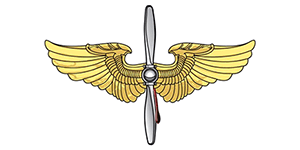

Blood wings is a traditional initiation rite that is endured by many graduates of the United States Army Airborne School and sometimes practiced in other elite military training environments, including the Army Aviation and Aviation Logistics community. It is called ‘blood pinning’ in the United States Marine Corps. Although it is rare, some Air Force Academy cadets receive their upper-class Prop and Wings insignia via the blood wings tradition. Upon receiving the Parachutist Badge, an instructor or comrade of the graduate places the pins of the badge pointing into the chest of the graduate. The badge is then slammed against the graduate’s chest, resulting in the pins being driven into the flesh. If the graduation is affiliated with a particular unit number (unit 15, for example), then the pin will often be pounded deeper into the muscle the same number of times (15 times in this case).
The origins of this tradition are unknown, but most likely date back to World War II paratrooper training. This practice is fairly secretive and sparked controversy recently when knowledge of it reached the public, which is often critical about painful forms of hazing. Blood wings are against Armed Forces Policy and are prohibited. Recipients of blood wings consider it a highly honorable rite of passage. The offer of blood wings is usually presented by a superior to an elite soldier who has reached a significant career transition point. The superior would probably have had the same honor at his own graduation in the past. The risky offer of blood wings to a transitioning soldier is considered an honor, but the graduate nearly always has the option to reject the offer.
Posted in Education, War |
Leave a Comment »
November 8, 2011

Hazing is a term used to describe various ritual and other activities involving harassment, abuse or humiliation used as a way of initiating a person into a group. Hazing is seen in many different types of groups, including in gangs, clubs, sports teams, military units, and workplaces. In the United States it is often associated with fraternities and sororities.
Hazing is often prohibited by law and may be either physical (violent) or mental (degrading) practices. It may also include nudity or sexually oriented activities. Hazing often serves a deliberate purpose, of building solidarity. Persons who go through a great deal of trouble or pain to attain something tend to value it more highly than persons who attain the same thing with a minimum of effort.
read more »
Posted in Education, Games, Politics |
Leave a Comment »
October 23, 2011

A pub quiz is a quiz held in a public house (or pub for short). Origins of the pub quiz are unclear but there is little evidence of them existing before 1970 in the United Kingdom. Pub quizzes (also known as live trivia, or table quizzes) are often weekly events and will have an advertised start time, most often in the evening. While specific formats vary, most pub quizzes depend on answers being written in response to questions which may themselves be written or announced by a quizmaster.
Generally someone (either one of the bar staff or the person running the quiz) will come around with pens and quiz papers, which may contain questions or may just be blank sheets for writing the answers on. A mixture of both is common, in which case often only the blank sheet is to be handed in. Traditionally a member of the team hands the answers in for adjudication to the quiz master or to the next team along for marking when the answers are called.
read more »
Posted in Education, Games, Humor |
Leave a Comment »
October 23, 2011


A factoid [fak-toid] is a questionable or spurious (unverified, false, or fabricated) statement presented as a fact, but without supporting evidence. The word can also be used to describe a particularly insignificant or novel fact, in the absence of much relevant context. The word is defined as ‘an item of unreliable information that is repeated so often that it becomes accepted as fact.’
The term was coined by Norman Mailer in his 1973 biography of Marilyn Monroe. He described a factoid as ‘facts which have no existence before appearing in a magazine or newspaper,’ and created the word by combining ‘fact’ and the ending -‘oid’ to mean ‘similar but not the same.’ ‘The Washington Times’ described Mailer’s new word as referring to ‘something that looks like a fact, could be a fact, but in fact is not a fact.’
read more »
Posted in Education, Humor, Language |
1 Comment »
October 23, 2011

The Liberal Arts is a curriculum of seven subjects, the first three of which are called the trivia (grammar, rhetoric and logic). Its literal meaning in Latin could have been, ‘appropriate to the street corner, commonplace, vulgar.’
In medieval Latin, it came to refer to the lower division of the Liberal Arts (the other four were the quadrivium, namely arithmetic, geometry, music, and astronomy, which were more challenging). Hence, trivial in this sense would have meant ‘of interest only to an undergraduate.’ The meaning ‘trite, commonplace, unimportant, slight’ occurs from the late 16th century, notably in the works of Shakespeare.
read more »
Posted in Education, Games, Humor |
1 Comment »
October 23, 2011

The liberal arts (Artes Liberales) are a curriculum that imparts general knowledge and develops the student’s rational thought and intellectual capabilities, unlike the professional, vocational, and technical curricula emphasizing specialization. The contemporary liberal arts comprise studying literature, languages, philosophy, history, mathematics, and science.
However, in classical antiquity, it denoted the education worthy of a free person (Latin: liber, ‘free’). Contrary to popular belief, freeborn girls were as likely to receive formal education as boys, especially during the Roman Empire—unlike the lack-of-education, or purely manual/technical skills, proper to a slave. The ‘liberal arts’ or ‘liberal pursuits’ were already so called in formal education during the Roman Empire.
read more »
Posted in Education, Philosophy, Science |
Leave a Comment »
October 7, 2011

Eric Harris and Dylan Klebold were American high school seniors who committed the Columbine High School massacre. They killed 13 people and injured 24 others, before committing suicide. According to early accounts of the shooting, Harris and Klebold were very unpopular students and frequent targets of bullying at their high school. They eventually began to bully other students; writing journal entries about how they themselves had bullied younger students and ‘fags.’ Initially, the shooters were believed to be members of a clique that called themselves the Trenchcoat Mafia, a small group of Columbine’s self-styled outcasts who wore heavy black trench coats.
The Trenchcoat Mafia was originally a group of gamers who hung out together and started wearing trenchcoats after one of the members received a cowboy duster as a Christmas Gift. They adopted the name Trenchcoat Mafia after jocks began to call them that. Investigation revealed that Harris and Klebold were only friends with one member of the group, and that most of the primary members of the Trenchcoat Mafia had left the school by the time that Harris and Klebold committed the massacre. Most did not know the shooters and none were considered suspects in the shootings or were charged with any involvement in the incident.
Posted in Death, Education, Politics |
Leave a Comment »
August 15, 2011

In mathematics education, number sense can refer to ‘an intuitive understanding of numbers, their magnitude, relationships, and how they are affected by operations.’ Some definitions emphasize an ability to work outside of the traditionally taught algorithms, e.g., ‘a well organized conceptual framework of number information that enables a person to understand numbers and number relationships and to solve mathematical problems that are not bound by traditional algorithms.’
There are also some differences in how number sense is defined in the field of mathematical cognition. For example, Gersten and Chard say number sense ‘refers to a child’s fluidity and flexibility with numbers, the sense of what numbers mean and an ability to perform mental mathematics and to look at the world and make comparisons.’ Researchers consider number sense to be of prime importance for children in early elementary education, and the National Council of Teachers of Mathematics has made number sense a focus area of pre-K through 2nd grade mathematics education. An active area of research is to create and test teaching strategies to develop children’s number sense.
Posted in Education, Science |
1 Comment »
June 13, 2011

Autodidacticism [aw-toh-dahy-dak-tuh-siz-uhm] is self-education or self-directed learning. In a sense, autodidacticism is ‘learning on your own’ or ‘by yourself,’ and an autodidact is a person who teaches him or herself something. Self-teaching and self-directed learning are contemplative, absorptive processes. A person may become an autodidact at nearly any point in his or her life. While some may have been educated in a conventional manner in a particular field, they may choose to educate themselves in other, often unrelated areas.
In the field of mathematics, Srinivasa Ramanujan (1887 – 1920) was an Indian autodidact who, with almost no formal training, made substantial contributions to number theory.
read more »
Posted in Education, Science |
Leave a Comment »
May 20, 2011

An adult prom is a social event that is almost perfectly similar to a high school prom in terms of themes and attire, except that adult proms usually serve alcohol, and most require those attending to be at least 21 years of age to attend. They have become increasingly common, especially in the United States, and usually are hosted as fundraisers for charities.
A slightly different take on the adult prom is that of the disabilities prom, dedicated to providing a prom experience to disabled adults at no charge to the attendees. These events are most often organized by non-profit organizations focusing on the disabled, or large churches.
Posted in Education, Games, Humor |
Leave a Comment »
May 20, 2011
Wear Sunscreen is the common name of an essay titled ‘Advice, like youth, probably just wasted on the young’ written by Chicago Tribune columnist Mary Schmich, and published in 1997, but often erroneously attributed to a commencement speech by author Kurt Vonnegut.
Both its subject and tone are similar to the 1927 poem ‘Desiderata.’ The most popular and well-known form of the essay is the music single ‘Everybody’s Free (To Wear Sunscreen),’ released in 1998, by Baz Luhrmann.
Posted in Education, Humor, Philosophy |
Leave a Comment »


 The Daily Omnivore