
Deutsche Physik (literally: ‘German Physics’) or ‘Aryan Physics’ was a nationalist movement in the German physics community in the early 1930s against the work of Albert Einstein and other modern theoretically based physics, labeled ‘Jewish Physics’ (German: ‘Jüdische Physik’). The term was taken from the title of a 4-volume physics textbook by Philipp Lenard in the 1930s.
This movement began as an extension of a German nationalistic movement in the physics community which went back as far as World War I. In 1915, during fighting between the German army and Belgian resistance fighters after the German invasion in Belgium, the library of the Katholieke Universiteit in Leuven caught fire when German troops looted and set fire to the town. The loss of the library led to a protest note by British scientists, which was signed also by eight distinguished British scientists, namely William Bragg, William Crookes, Alexander Fleming, Horace Lamb, Oliver Lodge, William Ramsay, Baron Rayleigh, and J.J. Thomson, and in which it was assumed that the war propaganda mentioned corresponded to real behavior of German soldiers.
read more »
Deutsche Physik
Assemblage

Assemblage [uh-sem-blij] refers to a text ‘built primarily and explicitly from existing texts in order to solve a writing or communication problem in a new context.’ The concept was first proposed by Johndan Johnson-Eilola (author of ‘Datacloud’) and Stuart Selber in the journal, ‘Computers & Composition,’ in 2007. The notion of assemblages builds on remix practices, which blur distinctions between invented and borrowed work.
Johnson-Eilola and Selber discuss the intertextual nature of writing, and they assert that participation in existing discourse necessarily means that composition cannot occur separate from that discourse. They state that ‘productive participation involves appropriation and re-appropriation of the familiar’ in a manner that conforms to existing discourse and audience expectations.
read more »
Edupunk

Edupunk is an approach to teaching and learning practices that result from a do it yourself (DIY) attitude. ‘The New York Times’ called it ‘an approach to teaching that avoids mainstream tools like PowerPoint and Blackboard, and instead aims to bring the rebellious attitude and D.I.Y. ethos of ’70s bands like The Clash to the classroom.’
The term was first used in 2008 by Jim Groom in his blog, and covered less than a week later in the ‘Chronicle of Higher Education.’ Edupunk arose in objection to the efforts of government and corporate interests in reframing and bundling emerging technologies into cookie-cutter products with pre-defined application—somewhat similar to traditional punk ideologies.
Reliability of Wikipedia


The reliability of Wikipedia (primarily of the English-language edition), compared to other encyclopedias and more specialized sources, is assessed in many ways, including statistically, through comparative review, analysis of the historical patterns, and strengths and weaknesses inherent in the editing process unique to Wikipedia.
Several studies have been done to assess the reliability of Wikipedia. A notable early study in the journal ‘Nature’ said that in 2005, ‘Wikipedia scientific articles came close to the level of accuracy in Encyclopædia Britannica and had a similar rate of ‘serious errors.’ The study was disputed by ‘Encyclopædia Britannica,’ and later ‘Nature’ responded to this refutation with both a formal response and a point-by-point rebuttal of Britannica’s main objections.
read more »
Is Google Making Us Stupid?
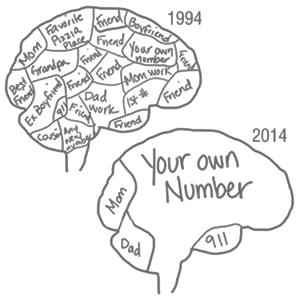
‘Is Google Making Us Stupid? What the Internet is doing to our brains’ is a magazine article by technology writer Nicholas G. Carr highly critical of the Internet’s effect on cognition. It was published in ‘The Atlantic’ magazine as a six-page cover story in 2008.
Carr’s main argument is that the Internet might have detrimental effects on cognition that diminish the capacity for concentration and contemplation. Despite the title, the article is not specifically targeted at Google, but more at the cognitive impact of the Internet and World Wide Web.
read more »
Religiosity and Intelligence

The relationship between religiosity and intelligence is the subject of much research and controversy. Although IQ is a clearly operationalized measure, some professionals believe that IQ is given too much attention over other measures of human ability. Also, religiosity studies can be too broadly defined, and must be careful to identify relationships between beliefs, sentiments, and practices. Studies have begun to explore the link between religiosity and issues related to intelligence, such as educational level.
Research shows that the poorest countries are consistently the most religious, and experts have proposed that religions may play more functional roles there. Various studies further suggest that intuitive thinking styles (as opposed to reflective, questioning, analytical thinking styles) tend to increase belief in gods, and decrease the likelihood of changing views held in childhood. Intuitive thinking styles may also lead to more convicted beliefs in general. In other words, IQ could correlate with atheism, not simply because of raw cognitive ability, but because higher IQs lead to more critical analysis.
read more »
Brain Fitness

The term brain fitness reflects a hypothesis that cognitive abilities can be maintained or improved by exercising the brain, in analogy to the way physical fitness is improved by exercising the body.
Although there is strong evidence that aspects of brain structure remain plastic (changeable) throughout life, and that high levels of mental activity are associated with reduced risks of age-related dementia, scientific support for the concept of ‘brain fitness’ is limited. The term is virtually never used in the scientific literature, but is commonly used in the context of self-help books and commercial products which first came into play in the 1980s.
read more »
George Dantzig

George Dantzig (1914 – 2005) was an American mathematical scientist who solved two unsolved problems in statistical theory, which he had mistaken for homework after arriving late to a lecture of UC Berkeley statistician Jerzy Neyman. Dantzig was the Professor Emeritus of Transportation Sciences and Professor of Operations Research and of Computer Science at Stanford.
Born in Portland, Oregon, George Bernard Dantzig was named after George Bernard Shaw, the Irish writer. His father, Tobias Dantzig, was a Baltic German mathematician and linguist, and his mother, Anja Dantzig (née Ourisson), was a French linguist. Dantzig’s parents met during their study at the Sorbonne, where Tobias studied mathematics under Henri Poincaré.
read more »
The Body

The Body is a 1970 scientific documentary film directed and produced by Roy Battersby. In the film, external and internal cameras are used to showcase different parts of the human body. The film’s narrators, Frank Finlay and Vanessa Redgrave, provide insightful commentary that combines the knowledge of world renowned human biologists and anatomical experts.
Unlike similar films of this subject matter ‘The Body’ strives for an entertaining presentation of the human anatomy, and avoids monotone narration. The film’s soundtrack, ‘Music from the Body,’ was composed by Ron Geesin and Roger Waters, and includes songs that were literally made using the human body as a medium.
Mindset List

The Mindset List is an annual compilation of the values that shape the worldview (or ‘mindset’) of students about 18 years old and entering college and, to a lesser extent, adulthood. It is co-authored by Ron Nief, ‘Public Affairs’ Director Emeritus, and Tom McBride, Professor of English and Keefer Professor of Humanities, both at Beloit College in Wisconsin.
It originated in 1997 as an e-mail forward, without author credits, passed on by then College Statistician Richard Miller to Ron Nief, who passed it on to peers at other schools. The first Beloit-created Mindset List appeared in the fall of 1998 after requests from peers who mistook the forward as having originated with Nief. It now appears every August as American first-year students enter college.
Self-handicapping

Self-handicapping is the process by which people avoid effort in the hopes of keeping potential failure from hurting self-esteem. It was first theorized by Edward E. Jones and Steven Berglas, according to whom self-handicaps are obstacles created, or claimed, by the individual in anticipation of failing performance. Self-handicapping can be seen as a method of preserving self-esteem but it can also be used for self-enhancement and to manage the impressions of others.
This conservation or augmentation of self-esteem is due to changes in causal attributions or the attributions for success and failure that self-handicapping affords. There are two methods that people use to self-handicap: behavioral and claimed self-handicaps. People withdraw effort or create obstacles to successes so they can maintain public and private self-images of competence.
read more »
Motivation
Motivation is the psychological feature that arouses an organism to action toward a desired goal and elicits, controls, and sustains certain goal directed behaviors. For instance: an individual has not eaten, he or she feels hungry, and as a response he or she eats and diminishes feelings of hunger. There are many approaches to motivation: physiological, behavioral, cognitive, and social. It is the crucial element in setting and attaining goals—and research shows that subjects can influence their own levels of motivation and self-control.
A 2007 paper, ‘Where the Motivation Resides and Self-Deception Hides: How Motivated Cognition Accomplishes Self-Deception,’ examined how people remain blind to the motives underlying their flattering self-construals, attitudes, and social judgments. Motivated cognition accomplishes the goal of self-deception. Self-serving conclusions are produced and the influence of such distortions remains hidden from conscious awareness because of the ubiquitous presence and specialized nature of motivated cognition.
read more »


 The Daily Omnivore